If you’ve ever stood beside a heavy duty tractor hitching up a 40-ton farm trailer, a soil tillage implement, or a hay baler for a long day in the fields, you’ve probably wondered how that massive piece of machinery moves attachments that weigh more than three pickup trucks. As someone who’s spent 12 years supplying heavy duty tractors to farms, construction sites, and infrastructure contractors across North America, I’ve seen firsthand that the hydraulic system isn’t just a “side feature” on these machines—it’s the reason they do the work they were built to do. Today, I want to break down exactly what kind of hydraulic system heavy duty tractors have, how it’s built to hold up to the abuse of daily use, and why that’s non-negotiable for anyone who relies on this equipment to get the job done. Heavy Duty Tractors

First, let’s get one thing straight: heavy duty tractor hydraulics are not the same as the tiny, finicky systems you might find on a lawn tractor or a small skid-steer. Those systems are designed for light, intermittent use, but a full-sized agricultural or construction tractor works 12+ hour days, through dust, mud, extreme temperatures, and constant high pressure. Every component in a heavy duty tractor’s hydraulic setup is sized and engineered for consistent, high-load operation—no shortcuts, no cheap parts.
The core of every modern heavy duty tractor hydraulic system is a closed-center load-sensing (CCLS) design. I’ve heard a lot of new operators mix this up with the older open-center systems that were standard on tractors built before the early 2000s, and the difference is night and day. Open-center systems work by circulating hydraulic fluid through a core passage when no tools are in use, which wastes fuel and generates unnecessary heat. For small jobs, that might be fine, but when you’re pulling a 30-foot disc harrow or lifting a 5,000-pound loader bucket up a dusty hillside, that wasted energy adds up fast. Closed-center load-sensing systems fix that by only pumping the exact amount of fluid needed for the task at hand. A sensor on each hydraulic line sends real-time data about how much pressure the implement needs back to the tractor’s control module, and the main pump adjusts its output instantly. That means less fuel use (we’re talking 15-20% better efficiency over open-center setups, per the OEM specs I work with every day) and less wear and tear on the whole system. We see this pay off in the field: customers who upgraded from open-center tractors to our CCLS models often tell us they go through 20-30 fewer gallons of fuel per week during harvest season.
Next, the pumps. Heavy duty tractors use two primary pump types for hydraulics, depending on the model’s intended use: gear pumps and piston pumps. Gear pumps are the workhorses—simple, durable, and ideal for low-to-medium pressure applications like power steering or the basic hitch for a small trailer. They don’t have a lot of moving parts, so they’re less likely to break when they get sand or mud in the housing. But for high-pressure, high-demand jobs like lifting a front loader bucket or running a continuous-flow seeder, piston pumps are non-negotiable. These pumps use precision-machined cylinders and pistons to generate pressures up to 5,000 PSI—enough to bend a steel pipe if something goes wrong. Our heavy line of tractors for construction and large-scale farming use variable-displacement piston pumps with built-in pressure relief valves, so if you accidentally push the bucket against a tree or a rock, the system automatically shuts off excess pressure to prevent damage. I’ve seen way too many farms go with the cheaper gear pump alternative for their construction tractors, only to blow a seal or crack a pump housing within a year because they’re pushing the system too hard.
Then there’s the control system. You won’t find old-fashioned levers on our tractors anymore—modern heavy duty tractor hydraulic controls are a mix of electronic and mechanical, designed for precision. The main three-point hitch (the system that connects implements like plows, sprayers, and balers) is controlled electronically, with an in-cab joystick or touchscreen that lets you adjust depth, lift height, and speed with millimeters of accuracy. For example, if you’re planting corn, you can set the hitch to stay exactly 2 inches above the soil line, even on uneven terrain, which means more uniform planting depth and higher yields. The auxiliary hydraulic circuits—used for tools like log splitters, concrete mixers, or snow blowers—are operated with either electronic switches or proportional valves, so you can control the flow rate to match the tool you’re using. One of our construction clients told me last year that the hydraulic control system on our tractors cut their setup time for new projects by 40%, because they don’t have to manually adjust valves and pressure settings every time they switch from digging trenches to lifting steel beams.
But no hydraulic system works without reliable fluid and filtration, and this is an area where a lot of operators cut corners. Heavy duty tractor hydraulics use a specialized, high-viscosity hydraulic fluid designed to handle extreme temperatures—from -20°F in the northern Great Plains winter to over 100°F in the desert Southwest summer. The fluid has to lubricate the pump, valves, and cylinders while also transmitting pressure, so using the wrong fluid (like generic motor oil) will cause premature wear and system failure. The filtration system is even more important: heavy duty tractors have two stages of hydraulic filters: a suction filter at the pump inlet that keeps large debris out, and a return filter that catches tiny particles as the fluid cycles back to the reservoir. We recommend customers change their hydraulic fluid and filters every 500 operating hours, not every year like some small equipment guidelines say. I’ve seen customers push that to 800 hours because they thought they could get away with it, and within a month, they had a contaminated piston pump that cost $12,000 to replace. That’s a mistake that costs way more than the cost of regular maintenance.
Another key component is the reservoir and cooling system. Heavy use generates a lot of heat in hydraulic fluid, and if that heat isn’t dissipated, the fluid breaks down, seals harden, and the system loses pressure. Our tractors have hydraulic reservoirs sized to hold 15-20 gallons of fluid, with integrated cooling lines that run through the tractor’s engine radiator. Some of our high-demand models for large-scale farming also add auxiliary oil coolers for tractors that run 16+ hour days during planting or harvest. I learned this the hard way early in my supply career: I delivered a new tractor to a wheat farm in Kansas in 2018, and the owner told me it kept overheating when he ran the combine attachment all day. It turned out the standard cooling system wasn’t enough for the 12-hour continuous use, so we retrofitted an auxiliary cooler at no extra cost, and he hasn’t had an issue since. That’s the kind of detail we pay attention to when designing and supplying our tractors—we don’t just sell a machine that works for 8 hours a day; we sell one that works for 16.
Now, let’s talk about how these systems are built for durability. Heavy duty tractor hydraulics have to handle constant shock, vibration, and contamination, so every component is made from heavy-gauge steel, with corrosion-resistant coatings to stand up to mud, fertilizer, and salt. Hoses are reinforced with multiple layers of steel braid, not just rubber, and rated for 5,000 PSI pressure, so they don’t burst when you’re lifting a heavy load over rough ground. Valves and cylinders are precision-machined from cast iron, with seals made from high-grade polyurethane that resists wear from abrasive fluid and extreme temperatures. We also include a secondary safety valve on all hydraulic circuits, which acts as a backup if the main pressure regulator fails—this is non-negotiable for jobs where a sudden drop in pressure could cause an implement to fall and injure someone or damage equipment.
One question I get all the time is: do all heavy duty tractors have the same hydraulic system? The short answer is no, and that’s why it’s so important to match the system to your specific needs. A tractor used exclusively for farm work, doing tillage, planting, and hay baling, will have a medium-capacity CCLS system with two auxiliary circuits. A tractor used for construction, moving heavy equipment, running concrete pumps, or digging trenches, will have a high-capacity system with three or four auxiliary circuits, higher pressure ratings, and extra cooling. A forestry tractor used for logging will have even more robust hydraulics, with reinforced cylinders to handle the extreme weight of logs and tree shears. That’s why as a supplier, I never sell a one-size-fits-all hydraulic system—we work with customers to assess their daily workload, the size of their implements, and the conditions they work in, then build or spec the hydraulic system that fits their needs.
I’ve been in this industry long enough to know that a hydraulic system failure is more than an inconvenience—it costs you time and money. If your tractor goes down during harvest, you’re losing thousands of dollars every day your fields aren’t being planted or cut. If it goes down on a construction project, you’re paying workers to stand around instead of building. That’s why we design our heavy duty tractor hydraulics to be reliable, easy to maintain, and built to last. We offer 24/7 support for all the tractors we supply, so if you have a hydraulic issue in the field, we can send a technician to diagnose it within hours, or ship replacement parts overnight.
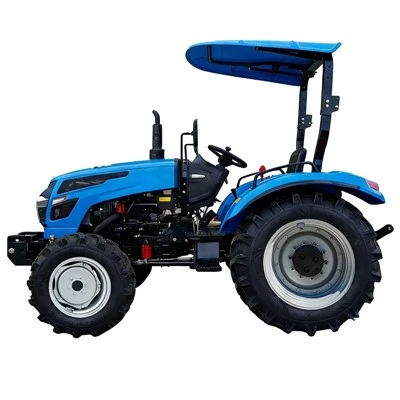
If you’re in the market for a heavy duty tractor and want to talk through what kind of hydraulic system will work best for your operation, I’d be happy to chat. We can go over your daily tasks, the implements you use, and the conditions you work in, and help you find a tractor that’s built to handle the job. Don’t settle for a system that’s underbuilt or too generic—your work depends on equipment you can trust.
Compact Tractor References:
- Heavy Duty Hydraulic Systems: Design, Selection, and Operation, 2nd Edition
- Agricultural Equipment Technology Association (AEAT) 2022 Report on Hydraulic Efficiency in Tractors
- Construction Industry Hydraulic System Best Practices, National Aggregates Association, 2021
- Fluid Power Society Standards for Heavy Duty Tractor Hydraulics, 2020 Edition
Shandong Woye Heavy Industry Co., Ltd.
As one of the most experienced heavy duty tractors manufacturers in China, we ensure reliable supply for global partners. We warmly welcome you to wholesale high-grade heavy duty tractors for sale here from our factory. Quality products and reasonable price are available.
Address: No. 7999, Health East Street, Qingchi Street, High Tech Zone, Weifang City, Shandong Province, China
E-mail: info@woyemachinery.com
WebSite: https://www.woyeagro.com/
