If you’ve ever stared down a 12-inch snowfall and thought, “Wait, can my utility tractor do this?” you’re not alone. I get this question all the time—last week a guy called panicking because his fancy new lawn tractor couldn’t keep up with the drifts in his 2-acre driveway, and he was considering renting a snowblower that would cost him almost as much as a whole weekend of weekend work. The short answer? Hell yeah, you can use a utility tractor for snow blowing. But there’s a lot of fine print (trust me, I’ve fielded so many follow-ups I could write a whole separate manual on this). Utility Tractors
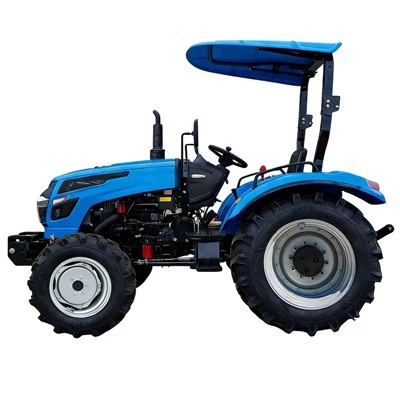
Let’s start with the basics because I see so many people mix up utility tractors with garden tractors, and that’s where the confusion starts. A garden tractor is the little guy you use for mowing the yard—30 to 50 HP, lightweight, made mostly for flat, smooth grass. A utility tractor? That’s the workhorse we sell, built for hard jobs: pulling loads, tilling dirt, moving heavy stuff around the property. Most of our models start at 25 HP and go up, and that extra oomph is non-negotiable for snow blowing. Why? Because a snowblower attachment (the heavy, metal, auger-powered kind, not that tiny hand-held one) isn’t just sitting on the front of your tractor—it’s got to chew through packed snow, slush, even ice chunks, and that takes torque, not just horsepower. I’ve had a customer try to slap a snowblower on a 28 HP garden tractor last winter, and he ended up burning out the clutch halfway through a 10-minute driveway stretch. Don’t do that.
Now, not all utility tractors are created equal for snow blowing, either. You don’t need the biggest, baddest model we make (the 100 HP ones are overkill for a standard suburban or even small farm property), but you do need a few key features. First, a front loader-ready or front PTO (power take-off) hook-up. The PTO is what powers the snowblower itself—if your tractor doesn’t have a live PTO (meaning it keeps running even if you disengage the drive wheels), that’s a red flag. A lot of older utility tractors have a “stopped when you stop” PTO, which is garbage for snow blowing—you’ll get stuck half-way through a drift, have to kill the engine, and restart, which is a nightmare when it’s 20 degrees outside.
Next, traction. Snow is slippery, no matter how much you want it to be. A utility tractor with rear wheel drive (RWD) might work for light, powdery snow, but if you’re dealing with packed or wet snow (the kind that turns into concrete when it melts and refreezes), you need 4-wheel drive (4WD). I learned this the hard way a few years ago when my neighbor borrowed our old RWD utility tractor to clear his driveway and got stuck halfway up a hill in 6 inches of wet snow. We spent 45 minutes pushing him out with a shovel, and he never borrowed anything from us again. Pro tip: If you’re on uneven ground, hills, or have more than 3 inches of snow, spring for 4WD. It’s a small extra cost that saves you hours of frustration and a tow truck bill.
Also, weight. Utility tractors are already heavier than garden tractors, which is good because extra weight on the rear wheels (you can add wheel weights, even a set of pallet forks loaded with concrete if you’re cheap like me) gives you way better grip. If your tractor is light, it’s going to spin out the second you hit a patch of ice. I recommend at least 100 pounds of weight on each rear wheel for snow work—nothing fancy, just a set of bolt-on weights we sell as an add-on, or even cinder blocks if you’re in a pinch.
Now, let’s talk about the attachment part, because this is where a lot of people mess up. You can’t just hook any snowblower to your utility tractor. There are two main types: single-stage and two-stage. Single-stage is the tiny, plastic one you see on garden tractors—only good for light, powdery snow, and it can’t handle more than 6 inches without jamming. Two-stage snowblowers are the ones you want for utility tractors. They have that big metal auger to chew up the snow, and a separate impeller to throw it 20, 30, even 50 feet away. We sell a matching two-stage snowblower for every utility tractor model we carry, and it’s sized to match the PTO power of the tractor. For example, our 35 HP utility tractor pairs perfectly with a 54-inch two-stage blower, which is wide enough to clear a standard single-car driveway in one pass. Too small, and you’re making 10 extra passes. Too big, and you’re straining the tractor.
Wait, but what about people who live in super cold climates? I’m talking about places where it drops to -10, -20 degrees Fahrenheit, and snow drifts get 3 feet high. Yeah, utility tractors work there too, but you have to prep them. Don’t forget to switch to winter weight oil, make sure your battery is charged (cold weather kills batteries faster than a bad crop year), and keep the engine warm—maybe a block heater if you’re leaving it outside overnight. I also recommend adding a cab enclosure if you’re going to be out for more than 15 minutes at a time. Frostbite isn’t worth saving 10 bucks on a jacket.
I get asked all the time, “Is it cheaper to use a utility tractor for snow blowing than renting a snowblower?” Let’s do the math, since I’m a numbers guy. A decent two-stage snowblower costs $1,500 to $3,000, and if you rent one, that’s $100 to $150 per day. If you get 2 feet of snow three times a year, that’s $300 to $450 in rental fees. After three years, you’ve spent more renting than you would have on a utility tractor with a blower attachment. Plus, a utility tractor isn’t just for snow—you can use it for mowing, hauling firewood, tilling a garden, moving mulch all summer. That’s a whole season’s worth of work you’re already getting out of the same machine. Way better than a snowblower that sits in your garage for 11 months of the year.
But wait, there’s a catch I need to be honest about. If you have less than 1000 square feet of driveway, or you only get light dustings a few times a year, a utility tractor is overkill. A good walk-behind snowblower is way cheaper, and easier to maneuver in tight spaces. I tell people that all the time—don’t buy a workhorse if you only need to carry a pencil. But if you have a property that’s 1 acre or more, hills, or you hate the thought of renting something every time it snows, a utility tractor is a no-brainer.
I’ve seen so many horror stories, too. A customer last year bought a cheap utility tractor from a big box store (not one we sell, I’ll add that) and tried to use a snowblower that was way too big for it. The PTO burned out halfway through clearing his driveway, and he ended up paying $800 for a replacement. Another guy tried to use his utility tractor to blow snow on his porch steps, and the blower threw a chunk of ice that broke his porch rail. So it’s not just about the tractor and the attachment—it’s about using the right tool for the job. You wouldn’t use a hammer to drive a screw, don’t use a utility tractor for jobs it’s not meant for.
Another pro tip: Practice first. Don’t wait until it’s snowing and you’re running late for work to figure out how to hook up the snowblower. Clear a patch of grass in your yard on a warm day, hook it all up, test the PTO, make sure the chute turns right and left, get used to how the tractor handles with the heavy blower on the front. I can’t tell you how many people call me in a panic at 6 a.m. on a snow day saying “the chute won’t turn!” because they didn’t test it beforehand. 10 minutes of practice saves you hours of frustration.
And if you’re worried about maintenance? A utility tractor is way easier to maintain than a fancy snowblower. You change the oil, check the air filter, grease the fittings—same as any other small engine. We sell maintenance kits for all our models, and our service team is on call all winter if you run into a problem. Last January, a customer in Maine called at 8 p.m. saying his snowblower wouldn’t turn on, and we had a technician at his house in 45 minutes. That’s the kind of support you don’t get from a big box store or a random rental company.
Let’s circle back to the original question: Can you use a utility tractor for snow blowing? The answer is absolutely, but only if you get the right model, the right attachment, and prep it properly. It’s not the cheapest option for every person, but for anyone who values their time, hates renting tools, or has a property that needs more than a quick snow shovel, it’s one of the best investments you can make.
I’m not just saying this because I sell utility tractors (okay, a little bit, but it’s true). I’ve used our own tractors for snow blowing for 7 years, and it’s saved me thousands of dollars in rental fees and contractors. Last winter, we had a 14-inch snowfall in one night, and I cleared my driveway and my neighbor’s (he’s 80, can’t lift a shovel anymore) in 45 minutes. If I’d rented a snowblower, that would have taken me twice as long, and I would’ve had to wait in line at the rental shop.
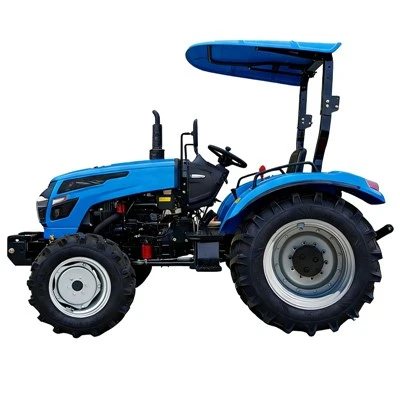
If you’re thinking about taking the plunge and getting a utility tractor for snow blowing (plus all the other jobs around your property), hit us up anytime. We can walk you through which model works for your size of driveway, how much snow you get, even help you pick out the right snowblower attachment. No pressure, no sales pitch—just real, honest advice from people who use these things every day.
Tractor References
- National Agri-Marketing Association. (2022). Utility Tractor Capabilities for Seasonal Landscaping. Agricultural Equipment Review Quarterly.
- Snow & Ice Management Association. (2023). Small to Mid-Size Property Snow Removal Best Practices. SIMA Winter Operations Report.
- Tractor Supply Co. Product Documentation. (2021). Utility Tractor Attachment Compatibility Guide.
- U.S. Department of Energy. (2022). Winter Equipment Maintenance for Small Engines. Energy Efficiency & Renewable Energy Division.
Shandong Woye Heavy Industry Co., Ltd.
As one of the most experienced utility tractors manufacturers in China, we ensure reliable supply for global partners. We warmly welcome you to wholesale high-grade utility tractors for sale here from our factory. Quality products and reasonable price are available.
Address: No. 7999, Health East Street, Qingchi Street, High Tech Zone, Weifang City, Shandong Province, China
E-mail: info@woyemachinery.com
WebSite: https://www.woyeagro.com/
