If you’ve ever stopped to think about the quiet workhorse parts that keep engines, pipelines, and industrial machines running, metal gaskets are almost certainly on that list—even if you’ve never heard the term before. As a gasket supplier who’s spent 12 years working with manufacturers across automotive, energy, and heavy machinery sectors, I’ve seen first-hand how these unassuming components prevent costly leaks, reduce downtime, and keep operations safe. Today, I want to break down what a metal gasket actually is, how it works, and why it’s often the unsung hero of the parts that make our world move. Gasket
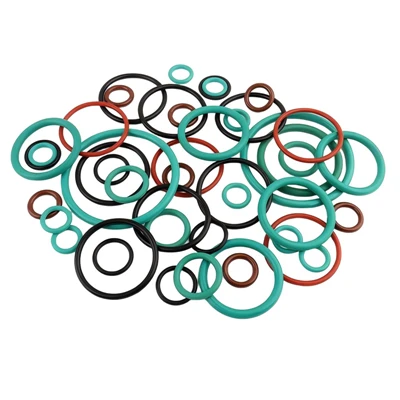
Let’s start with the basics: a gasket is a mechanical seal that fills the gap between two or more mating surfaces, right? But unlike rubber or paper gaskets that work well for low-pressure, low-temperature applications, metal gaskets are engineered for environments that demand more. They’re made entirely from metal—think stainless steel, copper, aluminum, or even exotic alloys like Inconel or Hastelloy for extreme conditions. The materials choice isn’t arbitrary; each metal has properties tailored to specific stressors: stainless steel for corrosion resistance, copper for its malleability to fill tiny surface imperfections, and Inconel for withstanding temperatures over 1,000 degrees Fahrenheit in power generation or aerospace parts.
Wait, you might be wondering: why not just weld two surfaces together if we need a strong seal? Because no two mating surfaces are perfectly flat. Even precision-machined engine blocks or pipeline flanges have tiny scratches, pits, or micro-roughness that would leave gaps if you joined them permanently. That’s where a gasket’s flexibility comes in. Metal gaskets aren’t solid flat sheets—they’re often designed with intentional features like grooves, beaded edges, or even layered construction to conform to those irregularities when compressed. When bolts tighten the mating surfaces, the gasket deforms just enough to squeeze out air, moisture, or gases from the gap, creating a tight, reliable seal that lasts.
Let’s get into the types, because not all metal gaskets are created equal. As a supplier, I work with three main categories that cover 90% of the requests I get, each for very different use cases. First, there’s the solid metal gasket—exactly what it sounds like: a single piece of metal cut to a custom shape. These are simple, durable, and ideal for high-pressure applications where the metal’s strength is non-negotiable. I supply solid stainless steel gaskets for hydraulic pump flanges, for example, where pressure can reach 10,000 PSI and even a tiny leak could cause a system failure. The trade-off? They need perfectly smooth mating surfaces, because they don’t have extra flexibility to fill major imperfections. If the flange has a scratch, a solid metal gasket might not close the gap, leading to a leak.
Second, we have spiral wound gaskets, which are probably the most popular metal gaskets across industrial pipelines. These are made by winding alternating strips of metal and a filler material—common fillers are graphite, PTFE, or ceramic—into a tight spiral, with inner and outer metal rings to hold the shape. The design genius here is the balance of strength and flexibility. The metal spiral gives the gasket its structural integrity to handle high pressure and temperature, while the soft filler compresses easily to fill surface gaps. I’ve shipped thousands of these to oil and gas refineries, where pipelines carry hot, corrosive fluids at varying pressures; spiral wound gaskets have to hold up when a line heats up in the afternoon and cools down at night, expanding and contracting without breaking the seal.
Third, there’s the jacketed metal gasket, which is like a “meat and potatoes” version: a soft core material (usually rubber, PTFE, or even cork) wrapped in a thin metal jacket. This is for applications where you need the sealability of a soft material but the corrosion resistance of metal. For example, I supplied jacketed gaskets to a food and beverage plant last year for their processing line flanges. The product is highly acidic, so the metal jacket (stainless steel 316, food-grade) prevents the fluid from eating away at the seal, while the rubber core creates a tight seal that won’t leak during high-speed pumping.
Now, let’s talk about why metal gaskets matter more than you might think. I once had a customer in the agricultural equipment sector call me in a panic: their combine harvester’s engine had blown a head gasket during harvest season, and they were losing $10,000 an hour in downtime while waiting for a replacement. The original paper gasket they were using couldn’t handle the vibration and high operating temperatures of the combine’s diesel engine. I got them a custom cut stainless steel metal gasket that same day, and they were back up and running before the end of the shift. That’s the real value of metal gaskets: they reduce unplanned downtime, which is the single biggest cost for industrial operators.
Another example is in power generation. A coal-fired power plant I work with uses metal gaskets in their boiler flanges, where temperatures hover around 900 degrees Fahrenheit and pressure is extremely high. Paper or rubber gaskets would melt or blow out within weeks, but our Inconel-alloy metal gaskets last for years, cutting down on maintenance costs and safety risks. When a gasket fails in a power plant, it can release hot steam or toxic gases—so reliability isn’t just a convenience, it’s a safety issue.
I often get asked: when should a manufacturer switch from a rubber or paper gasket to metal? The rule of thumb I share is if your application exceeds 500 PSI in pressure, 500 degrees Fahrenheit in temperature, or involves corrosive fluids, metal is the way to go. But it’s not just about extreme conditions; metal gaskets also have a longer service life, so even if the initial cost is higher than a paper gasket, the total cost of ownership is lower because you’re not replacing them every few months.
Working as a gasket supplier, I’ve also learned that custom design is non-negotiable for most clients. A one-size-fits-all gasket almost never works, because every mating surface is unique. Last year, a small aerospace parts maker came to me with a gasket for a custom engine component that was being used in a prototype satellite. The mating surfaces were extremely small, and the environment was a mix of extreme temperature shifts and vacuum. We worked with their engineering team to create a custom metal gasket made from titanium with a laser-cut beaded edge, which fit their exact specifications and passed their rigorous leak tests. That’s the part of my job I love: collaborating with clients to solve problems, not just selling a standard part.
Now, let’s address some common misconceptions I hear all the time. First, people think metal gaskets are too expensive for small operations. While it’s true that a custom metal gasket costs more than a off-the-shelf paper gasket, for most small to mid-sized manufacturers, the durability and downtime savings make it worth the investment. I’ve helped many small machine shops switch to metal gaskets, and they tell me they’ve cut their gasket-related maintenance costs by 70% within a year.
Another myth is that metal gaskets are hard to install. If you work with a reputable supplier, we’ll provide installation guidelines specific to your gasket and mating surfaces, and we even offer on-site support for large industrial installations. The key is to tighten the bolts in a crisscross pattern to evenly distribute pressure, which ensures the gasket conforms to the surfaces without being over-compressed (over-compression can crack the metal or squeeze out the filler, leading to leaks).
As a supplier, I also prioritize quality control above all else. I’ve seen too many cheap, low-quality metal gaskets that fail prematurely—usually because the metal is thin, the spiral winding is uneven, or the filler is low-grade. That’s why I only source materials from certified mills, and every gasket I ship goes through a leak test before it leaves my warehouse. For critical applications, we even do x-ray or pressure decay tests to make sure there are no defects that could cause a failure in the field.
At the end of the day, metal gaskets are the definition of unsung parts. They don’t get the marketing hype of an engine or a pipeline, but they’re the reason those parts work reliably. If you’re working on a project where a tight, long-lasting seal is critical—whether it’s for an engine, a refinery pipeline, a farm machine, or an aerospace component—don’t settle for a generic gasket. Reach out to discuss your application, and we can help you design and supply the right metal gasket for your needs.
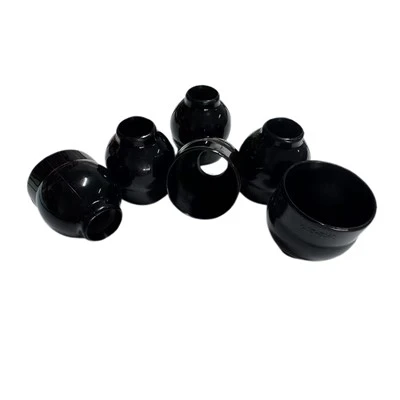
I’ve spent 12 years in this industry, and I’ve seen how a small, well-designed gasket can make a huge difference for a business. Whether you’re dealing with high pressure, extreme temperatures, corrosive fluids, or just constant downtime from failing paper gaskets, metal gaskets are the solution. Let’s connect to talk through your specific requirements and find the right seal for your operation.
V Ring Seal References
- European Committee for Standardization. (2019). Industrial valves—Gaskets for valves, flanges and pipework. EN 1514-1:2019.
- Fluid Sealing Association. (2021). Metal Gasket Design and Application Guide.
- ASME International. (2020). Boiler and Pressure Vessel Code, Section VIII: Rules for Construction of Pressure Vessels.
- Mallick, P. K. (2010). Materials for Design and Manufacturing. CRC Press.
Haining Chaoyue Seals Co., Ltd.
As one of the most professional gasket manufacturers and suppliers in China, we offer a wide range of products with superior quality. Please feel free to wholesale high quality gasket made in China here from our factory. Also, custom service is available.
Address: Building 9, 158 Lianhong Road, Yuanhua Town, Jiaxing, Zhejiang, China.
E-mail: chaoyue@cyseals.com
WebSite: https://www.hncyseal.com/
