Hey everyone, let’s talk about something we all deal with, whether you’re a weekend warrior tackling yard work, a contractor loading supplies for a job, or even someone moving heavy stuff around your property: wheelbarrows. They’re such a workhorse tool, right? But here’s the thing—lift a load wrong, and you’re not just risking a bruised back, you could end up sidelined for days, messing up your whole schedule. And as a wheelbarrows supplier, I’ve seen it all: people grabbing a pile of rocks, heaving it into the barrow like it’s no big deal, then wincing halfway through the wheeling because their lower back’s screaming. Today, I’m breaking down exactly how to lift a heavy load in a wheelbarrow safely—no fluff, just stuff that actually works, based on what pro contractors and physical therapists actually recommend. Let’s dive in. Wheelbarrows
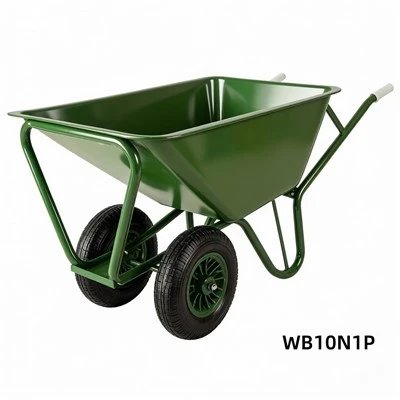
First off, let’s get one thing straight: the wheelbarrow’s design is there to make heavy loads lighter, but only if you use it right. Too many people treat it like a bucket you lift manually, and that’s where the mistake starts. Before you even touch the load, you need to do a quick pre-check—no skipping this. I’ve had customers come to me saying “my wheelbarrow’s fine” then later complain about wobbly wheels that made lifting way harder. So, what’s the pre-check? First, make sure the wheel is inflated properly—most wheelbarrows take a standard tire, so check the pressure (usually around 30 PSI, but your model might differ). A flat or under-inflated wheel doesn’t roll smoothly, which means you’re wasting more energy lifting and pushing, plus it can throw off your balance. Next, check the handles: are they tight, no wiggling? Loose handles mean you can’t get a steady grip, which is a disaster when you’re trying to stabilize a heavy load. And one quick thing—clear the area around the wheelbarrow of any debris, sticks, or mud. You don’t want to step on a loose rock mid-lift and trip.
Now, the load itself. This is the biggest mistake I see: people overload the wheelbarrow “because it’s heavy,” but that’s the opposite of smart. Your average wheelbarrow can hold 5 to 8 cubic feet, but weight-wise, max out at 300 lbs—any more than that, and even a strong person is straining. Wait, but what counts as too heavy? Let’s do quick math: a cubic foot of wet dirt is like 70 lbs, dry dirt is 75 lbs, gravel’s around 100 lbs. So if you’re loading gravel, don’t fill the tub all the way—leave 2 to 3 inches of space at the top. Why? Because if you overfill, the load shifts when you start moving, and that shift throws off your balance. It’s way easier to add a little more than to fix a load sliding backward (and trust me, a load sliding on you mid-lift is scary). Also, sort your load: don’t mix heavy stuff (like rocks or concrete chunks) with light stuff (mulch or leaves). Heavy things belong lower in the tub, light stuff on top. That keeps the center of gravity low, which is key for safety. Speaking of center of gravity—when you place the load, keep it as close to the wheel as possible. The wheel is the fulcrum, right? So if the weight’s near the wheel, you’re not lifting 100 lbs with your back; you’re using the wheel as a boost. If you pile all the weight at the back, suddenly that 200 lbs feels like 500 lbs because you’re having to lift it all with your hands and back. I’ve had so many people test this: load heavy stuff up front, and they can wheel it all day; load it at the back, and they’re huffing after 10 feet. Game changer.
Now, the actual lift step. This is where 90% of back injuries happen. People bend over at the waist, grab the handles, and yank up—boom, there’s the herniated disc. Physical therapists will tell you: the correct lift for any heavy object is to bend at your knees, not your back. But let’s make that specific to wheelbarrows, because it’s not exactly the same as lifting a box off the ground. Let’s walk through it, step by step. First, position yourself so you’re facing the wheelbarrow, feet shoulder-width apart—one foot a little in front of the other, that’s your stable base. Don’t stand way off to the side; you need to be aligned with the handles so you don’t twist your body when lifting. Now, lower your body by bending your knees, not rounding your back. Your back should stay straight, like a plank—think of pulling your belly button in toward your spine to keep it engaged. Reach down and grab the handles firmly, not loosely. You want a grip that’s tight enough so the barrow doesn’t slip, but not so tight you strain your forearms. Now, when you lift, use your legs. Push through your heels, straighten your knees, and stand up. Don’t twist your body while lifting—if you need to adjust the load, do it after you’re standing, not mid-lift. And here’s a pro tip from the contractors I work with: when you lift, the wheelbarrow should start tilting slightly on its own, not because you’re yanking it. If you’re having to heave to get it off the ground, that load is too heavy—either remove some stuff, or get a buddy to help.
Once you’re wheeling it, safety doesn’t stop there. A lot of people think “I lifted it right, so the rest is easy” but bad wheeling can still lead to injury or spills. First, don’t rush. Take small, steady steps, especially over uneven ground. Uneven ground makes the wheelbarrow rock, which can shift your load and throw you off balance. Also, look where you’re going, not at your feet—your core is your balance, and looking forward helps you keep your torso aligned. Another thing: when you’re going up or down stairs, or a slope, tilt the wheelbarrow backward so the load is even closer to the wheel, and use one hand on the handles, one hand on the back of the tub for support. Going uphill? Lean forward a little (but don’t bend your back) and take slow steps. Going downhill? Lean back slightly, so the weight’s not pulling you forward, and keep the wheel moving slow—don’t let it pick up speed, that’s how you tip over. And if you need to stop, don’t just drop the handles. Slowly lower the wheelbarrow back to the ground by bending your knees, same as when you lifted it. Set it down gently, don’t let it slam.
Wait, what if you’re dealing with a really heavy load—like 500 lbs of gravel for a driveway, or concrete bags for a patio? No shame in asking for help. But if you have to do it alone, use a trick I’ve seen a lot of my customers use: use a ramp. A small metal or wood ramp set up next to the wheelbarrow lets you slide heavy items (like concrete blocks) into the tub instead of lifting them. That takes a ton of strain off your back. Also, some wheelbarrows have reinforced tubs for heavier loads—if you’re regularly moving over 300 lbs, you might want to check out a heavy-duty wheelbarrow, which is built for that kind of weight. As a supplier, I always tell folks: don’t use a standard garden wheelbarrow for construction stuff, that’s a quick way to bend the tub or break the handles.
Now, let’s talk about common mistakes people make that lead to injury. First, lifting with your back, not your legs—we already covered that, but it’s worth repeating. I’ve had a guy come to me last month, complaining his back hurt so bad he couldn’t mow his lawn for a week, and when I asked how he lifted his wheelbarrow, he said “I just bent over and pulled.” Duh, obviously. Second, overloading—another guy, same story, he filled his wheelbarrow so full of dirt it was spilling over, and when he turned a corner, the load slid backward, and he had to yank the handles to keep it from tipping, which tore a muscle in his arm. Third, twisting while lifting or wheeling—if you need to change direction, turn your whole body, not just your waist. That’s a quick way to strain an oblique or herniate a disc. Fourth, ignoring your form because you’re tired. By the end of the day, your energy’s low, so you start cutting corners—bending over, rushing, overloading. That’s when injuries happen, so take breaks when you need to, even if it’s just 2 minutes to stretch your back.
Now, let’s get real: wheelbarrows are such a simple tool, but their misuse causes way more injuries than people realize. Physical therapists say that back injuries from lifting heavy objects (including wheelbarrow loads) are one of the most common reasons people miss work, and most of them are totally preventable. It’s not about being strong—it’s about working with the tool, not against it. And as a wheelbarrows supplier, that’s why I push people to use these tips: not just to sell more wheelbarrows, but because I’ve seen how a good tool paired with good habits makes all the difference.
Wait, I should also mention stretching before you start. No one wants to do a 10-minute yoga warm-up, but 2 minutes of simple stretches for your legs and back go a long way. Stretch your hamstrings by touching your toes (keep your back straight), do a few knee bends, and twist your torso gently side to side. That loosens your muscles so they’re less likely to strain when you lift.
Another thing: if you’re going to be moving heavy loads regularly, maybe invest in a wheelbarrow with pneumatic tires that are extra thick, or even a garden cart instead of a wheelbarrow—some people find cart handles easier to manage for heavy loads. But that’s a side note, back to safety.
Let me wrap this up. The key steps are: pre-check your wheelbarrow, choose the right load (don’t overdo it, keep heavy stuff low and near the wheel), lift with your knees not your back, keep your core engaged, wheel slowly and steadily, and don’t be afraid to ask for help or use the right tool for the job.
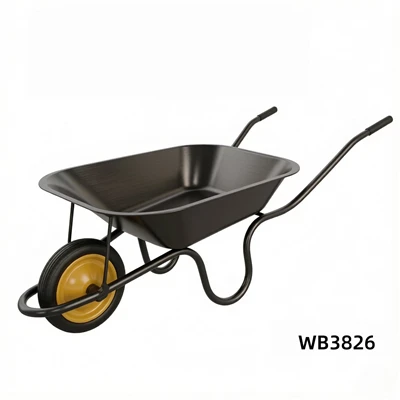
If you’re in need of a sturdy, reliable wheelbarrow that’s built to handle heavy loads without failing, we’ve got you covered. We stock a range of wheelbarrows from light-duty garden models to heavy-duty construction ones, all designed with safety and durability in mind. Whether you’re a DIYer tackling a big yard project or a contractor looking for tools that won’t let you down, we’re here to help you pick the right one. To discuss your needs or place an order, feel free to reach out.
Work Seat Carts References: American Council on Exercise (2023). Safe Lifting Techniques for Back Health; Occupational Safety and Health Administration (OSHA, 2022). Manual Lifting and Load Handling Guidelines; National Gardening Association (2024). Tool Safety for Yard Work.
Qingdao Herzhe Tools Manufacturing Co., Ltd.
Qingdao Herzhe Tools Manufacturing Co., Ltd. is one of the most professional wheelbarrows manufacturers and suppliers in China. We have world-leading production equipment and strong manufacturing capabilities. Please feel free to buy advanced wheelbarrows at competitive price from our factory.
Address: No. 406 Shuangfushan Road, Baoshan Town, Qingdao CHINA
E-mail: herzhetool@163.com
WebSite: https://www.herzhetoolsmfg.com/
