If you’ve ever worked in textiles, apparel manufacturing, or even consumer safety testing, you know that fabric flammability isn’t just a regulatory box to check—it’s a non-negotiable standard that keeps people safe. For years, I’ve run a business supplying fabric flammability testers, and one question I get more than any other from both new and long-time clients is this: “What does linearity even mean when measuring flammability performance?” It’s a great question, and it’s one that’s too often glossed over in product manuals or quick sales calls. Linearity isn’t just a technical buzzword—it’s the reason your test results will hold up during an audit, or why you won’t have to re-run batches after a failed regulatory check. Let me break this down like I do for a new lab manager who’s just uncrated their first tester. Fabric Flammability Tester
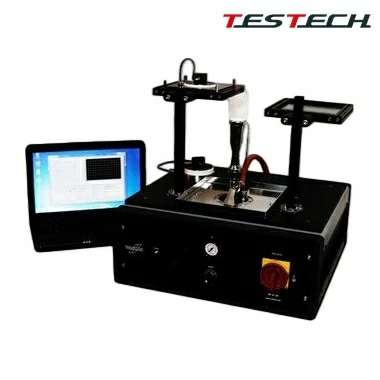
First, let’s start with the basics: what a fabric flammability tester does, at its core. These machines replicate real-world ignition scenarios—think a stray match, a candle flame, a spark from a heater, even a smoldering cigarette—on fabric samples of a set size, held under consistent conditions. Every test measures two key metrics: how long the fabric burns after the ignition source is removed (called after-flame time, or AFT), and how far it chars or continues to burn along its length (after-burn distance, ABD). Regulators like ASTM, ISO, CPSC, and EN all set hard limits on these numbers—for example, ASTM D1230 for apparel fabrics caps after-flame time at 7 seconds for most adult wear, while ISO 15025 has different thresholds for protective workwear.
Linearity, in the context of this tester, is how consistently the machine’s measurement of these two metrics aligns with real performance, across the full range of possible flammability results. Wait, that’s a simpler way to put it than I used to, when I was first learning the science. Let’s make that concrete. Suppose you run five test samples of 100% cotton fabric, which is highly flammable, and five samples of treated polyester, which is much less flammable. A linear tester will measure the AFT of the cotton at an average of 12 seconds, the treated polyester at an average of 2 seconds, and the difference between those two numbers will be proportional to their actual flammability difference—no gaps, no outliers that make no sense, because the machine is calibrated to react the same way at both ends of the scale. If a machine was non-linear, it might measure the cotton’s AFT as 12 seconds, but the treated polyester as 4 seconds—meaning it’s not distinguishing between low and high flammability evenly, and your results will be skewed.
Let me explain why this matters so much for a tester. I’ve had a customer come to me a few years back—they were a small apparel manufacturer in the Southeast, making kids’ sleepwear. They were using a cheaper tester they’d bought online for a fraction of my price, and they kept getting inconsistent results. One week, their treated pajama fabric passed with a 1.8-second AFT; the next week, the same fabric, same batch, same test setup, came back at 5 seconds. They thought the fabric treatment was bad, so they dumped $10,000 worth of stock before they realized their old tester’s linearity was garbage. The machine’s sensors that tracked after-flame time were calibrated wrong at mid-range, so it was under-measuring low flammability and over-measuring high flammability. By the time they came to me, they’d almost shut down over a $500 tester. That’s the kind of story that makes me passionate about explaining linearity clearly—not as a tech term, but as something that protects your business.
Now, how do we, as tester suppliers, ensure that our machines have good linearity? It starts with the calibration standards, which aren’t the same as basic calibration. Most labs know you need to calibrate your testers regularly, but linearity calibration is a separate step that uses reference materials with known, certified flammability values. For fabric flammability testers, we use what are called “standard reference fabrics” (SRFs) that are tested and certified by national metrology institutes—like the National Institute of Standards and Technology (NIST) in the US, or the European Reference Materials (ERM) body. These SRFs have documented after-flame times and char lengths, covering the full range of flammability you’d ever test: from highly flammable cotton, to moderately flammable polyester, to highly flame-retardant treated fabric. When we calibrate a tester for linearity, we run 10 replicates of each SRF, then check if the machine’s measurements match the certified values evenly across the range.
A common mistake cheap suppliers make is only calibrating at one point on the scale—say, using just the highly flammable cotton. That works for that sample, but it doesn’t tell you anything about how the machine will measure low-flammability samples. So that’s why you get the inconsistency I mentioned earlier. At my company, we run linearity checks across five different SRF points before we ship any tester to a customer. We also provide a calibration log that lists the linearity results, so labs can prove to auditors that their equipment is accurate across all performance ranges. That’s not just a nice-to-have—it’s a regulatory requirement in 90% of the countries we work with.
Wait, let’s get into the science a little deeper, for those who want the details. Linearity in measurement is defined by the correlation coefficient (R²) of the measurements against the reference standard. For a fabric flammability tester, we aim for an R² of 0.99 or higher—meaning 99% of the variation in our measurements is explained by the actual flammability of the fabric. Anything below 0.95 is considered non-linear, and results will be unreliable. For example, if you have an R² of 0.90, that means 10% of your results are due to machine error, not actual fabric performance. Over hundreds of tests, that adds up to a lot of rejections or passes that don’t reflect reality.
Another place linearity shows up is in the char length measurement. Char length is the distance the flame travels along the fabric sample after ignition, right? A linear tester will measure char length consistently: if one SRF has a char length of 10 cm, and another has 2 cm, the difference between their measured lengths will be exactly proportional. A non-linear tester might measure the 10 cm sample at 9 cm and the 2 cm sample at 3 cm—so it’s over-measuring low char lengths, leading you to think a fabric is more flammable than it is, and potentially passing a fabric that should be failed. I’ve seen that happen with a medical device supplier who uses flame-retardant fabric for hospital gowns. They had to re-test 200 gowns because their old tester was non-linear, leading them to reject a batch that actually met standards—costing them $15,000 in downtime and rework.
What about common misconceptions? A lot of customers think that “accuracy” is the same as linearity, but they’re different. Accuracy is how close your measurement is to the true value. Linearity is how consistent your accuracy is across the full range. You could have a tester that’s accurate only at the high flammability end, and way off at the low end—that’s accurate but non-linear. Or you could have a tester that’s slightly off across all ranges, but consistently so—That’s linear, just slightly biased, which you can correct with a simple adjustment. That’s an important distinction, because it means linearity is the foundation of reliable test results. Without good linearity, accuracy doesn’t matter.
Another point that’s specific to fabric flammability testing: the environmental conditions can affect linearity, too. Wait, right—humidity and temperature in the testing room, and even the fabric’s moisture content, can change how flammable a sample is. But a good tester’s linearity should account for that, or at least be calibrated to work within standard environmental ranges. For example, if you test fabric in a room that’s too humid, cotton won’t burn as hot, so its AFT will be lower. A linear tester will adjust its measurements to reflect that, or at least be calibrated to give consistent results regardless of minor environmental shifts. Cheap testers often don’t have that built-in adjustment, so their linearity drops when conditions change. We build our testers with integrated environmental sensors that account for temperature and humidity, so linearity stays consistent even if the room fluctuates a few degrees or points of humidity.
Let me talk about how this plays out in real testing workflows, because that’s what matters to customers. If you’re a lab testing 50 fabric samples a day, you don’t want to stop and re-run samples because your machine gives inconsistent results. A linear tester will give you one set of results that you can trust, so you can report them to your clients or regulators without hesitation. That saves time, reduces waste, and keeps your operation running smoothly. For small manufacturers, that’s huge—they don’t have a dedicated testing team wasting time on bad data. For big brands like Nike or Patagonia, they need test results that are accepted across multiple countries, which means the tester has to meet strict linearity standards to comply with ASTM, ISO, CPSC, and EN.
I should also mention how we verify linearity over time, because a lot of people think calibration is a one-time thing. Linearity can drift over time, especially if a tester is used heavily, or if it’s moved or bumped. That’s why we recommend a linearity check every six months, along with regular calibration. We provide our customers with easy-to-use reference fabrics and a step-by-step guide to run the check themselves, or they can send their tester back to our service team for a full linearity audit. That way, they never end up in the situation where I saw the apparel manufacturer in, throwing out good stock or shutting down over bad data.
Wait, let’s circle back to the customer question that started this. When a customer asks “What is the linearity of the measurement of a Fabric Flammability Tester?” the answer isn’t just a technical definition—it’s the reason your test results are reliable, legally defensible, and won’t cost you thousands in avoidable mistakes. It’s the difference between a tester that’s a tool to keep your products safe, and a paperweight that causes more problems than it solves.
Let me add a recent example to make this real. Last quarter, we sold a tester to a fire safety lab that tests materials for the US military. They told us their old tester had an R² of 0.89 for linearity measurements—below the 0.99 standard we require. They were having to re-run 15% of all their tests because of inconsistent results, and their auditors were questioning their data. We installed our tester, ran the linearity calibration with NIST-traceable SRFs, and their first round of tests had an R² of 0.998. They told us that cut their testing time by 20%, because they didn’t have to re-run samples anymore, and their audit went through without a single question about their flammability data. That’s the impact linearity has.
Now, I don’t want to make it sound like linearity is the only factor that makes a good fabric flammability tester. You also need consistent ignition sources, precise sample dimensions, and reliable sensors to track flame time and char length. But linearity is the backbone—if that’s off, nothing else matters. You can have the best ignition source in the world, but if your machine can’t measure the difference between a 1-second AFT and a 5-second AFT correctly, you’re wasting your time.
For anyone out there who’s shopping for a fabric flammability tester, here’s my advice: don’t just look at the price, or the features list. Ask the supplier about linearity. Ask for the correlation coefficient (R²) they guarantee, ask if they use NIST-traceable reference materials for calibration, and ask for proof of linearity checks. A good supplier won’t hesitate to share that information—if they’re cutting corners, they won’t want to talk about linearity at all.
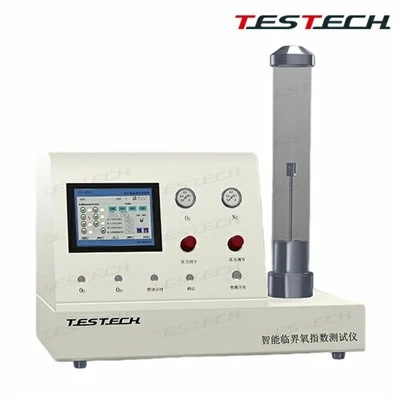
At the end of the day, every fabric flammability test is about one thing: keeping people safe. Whether it’s a kid’s pajama, a hospital gown, a work uniform, or a military tent, the test results have to be right. Linearity is the part of the tester that makes sure those results are accurate, consistent, and trustworthy. If you’re looking for a fabric flammability tester that delivers reliable linearity, or if you have questions about how linearity affects your testing workflow, I’m here to chat. We work with labs, manufacturers, testing facilities, and all kinds of organizations that need consistent, defensible flammability data—we can help you find a solution that fits your needs, no matter the size of your operation.
Fabric Flammability Tester References
- American Society for Testing and Materials (ASTM). Standard Test Method for Flame Resistance of Apparel Materials (Vertical Configuration). ASTM D1230, 2021.
- International Organization for Standardization (ISO). Protective Clothing for Protection Against Heat and Flame – Test Method for Vertical Flame Spread. ISO 15025, 2016.
- National Institute of Standards and Technology (NIST). Standard Reference Materials for Flammability Testing of Textiles. NIST SRM 2871, 2019.
- European Committee for Standardization (CEN). Fire Tests – Ignitability of Building Products. EN 13823, 2020.
- Taylor, J.R. An Introduction to Error Analysis: The Study of Uncertainties in Physical Measurements. 2nd ed., University Science Books, 1997.
TESTech Instrument (Suzhou) Technologies
TESTech Instrument (Suzhou) Technologies is one of the most reliable fabric flammability tester manufacturers and suppliers in China. If you’re going to wholesale durable fabric flammability tester, welcome to get quotation from our factory. For price consultation, contact us.
Address: 8/F, R&D and Production Workshop No. 5, Jiangsu Guoqian Technology Innovation Industrial Park, 168 Lüliangshan Road, Huqiu District, Suzhou, Jiangsu Province, China
E-mail: sales@testech.com.cn
WebSite: https://www.testechfiretest.com/
