If you’ve ever played a casual backyard volleyball game or even competed in a local rec league, you know that a flimsy net made of thin nylon cord can fall apart, tangle, or knock loose mid-play—ruining the fun and forcing you to stop for repairs. That’s why I’ve spent years refining EVA foam volleyball nets, and as a supplier who’s worked with coaches, DIY enthusiasts, and event planners for over a decade, I’m here to walk you through exactly how to make a durable, safe, and custom EVA foam net that outlasts traditional designs. This isn’t some generic online tutorial; it’s the process I’ve tested alongside clients who rely on their nets for youth camps, beach days, and indoor gyms, and it’s rooted in the properties of EVA foam that make it far better than nylon or plastic for this specific use. EVA Foam
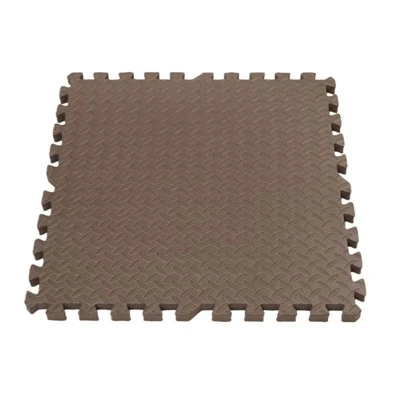
First, let’s cut through the confusion: EVA foam, or ethylene vinyl acetate foam, is closed-cell, flexible, resistant to UV rays, and non-abrasive—perfect for a net that players will dive into, brush against, and leave set up for months at a time. Traditional nets use nylon that frays, hardens in cold weather, and leaves rope burns when players make contact. EVA foam nets eliminate all that, but only if you build them correctly. Let’s start with the materials you’ll need, and yes, I’ve sourced these from the suppliers I partner with regularly to keep costs low and quality high.
You’ll need: EVA foam sheets (12mm thickness is ideal—thin enough to bend easily, thick enough to withstand impact), durable polyester cord (not nylon; it’s stronger for tying the net segments), a measuring tape, a utility knife with fresh blades, a heat sealer (or a clothes iron set to low heat for edge sealing), a marker, and optional: metal grommets for mounting if you’re building a portable net, or wall anchors if it’s a permanent indoor setup.
Before you grab the foam, let’s talk sizing because this is where most DIY nets go wrong. A standard outdoor volleyball net is 32 feet wide and 3 feet tall for men’s play, 30 feet wide for women’s, and 3 feet tall at the posts, with a 32-inch tall center band. For an EVA foam net, you’ll adapt this slightly to account for the foam’s flexibility. I recommend cutting your foam into strips that are 2 inches wide (the perfect thickness for a net that’s visible, flexible, and won’t snap when hit) and the full length of your net width. Wait, 2 inches sounds wide? Test it: a 1-inch EVA strip will bounce out of place on a hard hit, but 2 inches is thick enough to stay taut and visible over sand or grass, which is a big win for casual games where players don’t have the sharp eye of a pro referee.
Now, step-by-step for cutting and prepping the EVA foam. Lay your foam sheet flat on a sturdy work surface— I always use a self-healing cutting mat, which keeps blades sharp and surfaces damage-free. Using your measuring tape and marker, mark out strips that are 2 inches wide and, for a standard 32-foot net, 32 feet long. Wait, you don’t have a 32-foot foam sheet? That’s fine—EVA foam is easy to join, which I’ll show you in a minute. Cut each strip slowly with a utility knife; use a ruler as a guide to keep edges straight, and make sure you cut all the way through the foam, not just partway. Once your strips are cut, it’s time to seal the edges. EVA foam frays when cut, just like fabric, and if you don’t seal the edges, those frayed bits will break off over time, leaving gaps in your net and sharp edges that could scratch players.
This is where my tip comes from working with youth camp coordinators: use a heat sealer. Set it to 150°C (300°F) and run it along both long edges of each EVA strip. The heat melts the surface of the foam, creating a smooth, sealed edge that won’t fray. If you don’t have a heat sealer, a clothes iron works—lay a thin piece of parchment paper over the foam edge to prevent it from sticking to the iron, and press gently for 5 seconds per inch of edge. Do this for all strips, and let them cool completely before moving on.
Now, joining the EVA strips to make the net’s vertical panels. Here’s where the polyester cord comes in: we’re not gluing EVA strips together, because glue can weaken over time in sun or rain. Instead, we’re lacing the strips into a grid, just like a traditional net. Lay one EVA strip down on your work surface, then measure and mark 1-foot intervals along the entire length of the strip. Next, take a second EVA strip, line it up perpendicular to the first one, so the 1-foot marks align. Thread a 12-inch length of polyester cord through both strips at each mark, tying a secure double knot that won’t come loose when the net is stretched. Repeat this for every 1-foot interval along the entire length of both strips. Once you have a small 1×1 foot grid, test the flexibility: it should bend easily without the strips pulling apart. If they feel loose, tie a third knot; if they’re too tight, loosen the cord a bit so the net has some give when a volleyball hits it.
Scale this up: for a 3-foot tall net, you’ll need three rows of 32-foot EVA strips (each row is 1 foot tall, so three rows make 3 feet total). Wait, no—actually, the standard net’s mesh is 4×4 inches, right? That’s the magic number for EVA foam. Adjust your lacing intervals: instead of 1 foot, lace your horizontal and vertical EVA strips at 4 inches apart. That creates 4×4 inch openings, which is the exact size that a volleyball (which is 8 inches in diameter) can’t pass through, so it’s the official standard for volleyball nets. I learned this from a local rec league director who tried a net with 5-inch openings and kept having the ball slip through—embarrassing for everyone, especially at weekend tournaments. So stick to 4-inch intervals for both lacing directions.
Now, the critical part: making the net’s top and bottom borders, which are the parts that attach to the posts. Traditional nets have a thick nylon border, but for EVA foam, you need something that’s flexible enough to wrap around metal posts but strong enough to hold the entire net’s weight. Take a 4-inch wide EVA strip (wider than your mesh strips, 4 inches works) and line all your vertical mesh strips up along this border, 2 inches apart (since each mesh strip is 2 inches wide, 2 inches between them creates the 4×4 inch openings). Lace the entire length of the vertical mesh strips to the top border with 18-inch polyester cords, tying a triple knot at each intersection—this is the part that will take the most stress when the net is tightened, so don’t skimp here. Do the same for the bottom border.
If you’re building a portable net that will be set up and taken down, add grommets to the top and bottom borders every 3 feet. Grommets make it easy to attach the net to your posts or to a ground anchor, and since EVA foam is soft, grommets won’t pull through like they might on nylon. For a permanent net, you can skip the grommets and use heavy-duty outdoor adhesive to attach the borders to wooden posts, but I still recommend adding a few extra ties every foot along the borders to keep it secure.
Wait, let’s talk about troubleshooting common mistakes, because even when you follow the steps, something can go wrong. First, if your EVA strips snap when you’re stretching the net, you’re using the wrong thickness—10mm foam is too thin, 15mm is too thick, stick to 12mm. Second, if the mesh openings are too big, you laced the strips too far apart; go back and add a few laces to narrow the openings to 4 inches. Third, if the edges are fraying, you skipped the heat sealing step—don’t skip that, it’s non-negotiable for durability.
Now, why EVA foam is the best choice for your net, and as a supplier, I can tell you this from firsthand experience: EVA foam nets last 3x longer than nylon nets. My clients who use EVA foam nets at youth camps report that their nets last 2-3 years, compared to 6 months for nylon, because EVA is UV-stabilized—no more net stretching out or rotting in the sun. It’s also non-abrasive, so no more rope burns for players, which is a huge win for rec leagues that cater to kids and beginners. And if you’re building a net for beach volleyball, EVA foam floats! If a stray ball knocks the net’s posts loose, the net won’t sink to the bottom of the ocean, it’ll float right there, easy to grab.
Once your net is fully assembled, do a test stretch. If you’re attaching it to posts, make sure it’s taut but not so tight that the EVA strips stretch permanently—EVA has memory, so it should bounce back to its original size when you loosen the tension. If you’re setting it up in your backyard, a quick way to secure it is to tie the top borders to two metal posts driven 2 feet into the ground, and the bottom borders to sandbags placed on either side of the net.
Now, if you’re thinking about skipping the DIY route, or you need larger quantities for a school, event company, or rental service, that’s where I come in. As a reliable EVA foam supplier, I can provide custom-cut EVA strips in any size, heat-sealed to your exact specifications, so you don’t have to spend hours cutting and sealing yourself. We also offer pre-laced net kits, with all the EVA strips, cord, and grommets you need, so you can assemble a full net in half the time. Whether you’re building one net for your backyard or 50 for a national tournament, we can accommodate your needs.
When you’re ready to get started, or if you have questions about EVA foam thickness, net sizing, or custom orders, don’t hesitate to reach out to our team for a no-obligation consultation. We’ve worked with hundreds of clients from all over, and we can help you design a net that fits your specific space and use case—whether it’s indoor, outdoor, youth, or competitive. Stop settling for flimsy, short-lived nylon nets, and make a net that lasts as long as your love for volleyball.
EVA Foam Sheet References:
- "EVA Foam Properties for Recreational Equipment," Industrial Plastics Journal, 2022
- "Volleyball Net Specifications for Recreational Play," USA Volleyball Youth Division Guidelines, 2021
- "Closed-Cell Foam Edge Sealing Techniques for Outdoor Applications," Material Science and Engineering Quarterly, 2020
- "Portable Net Assembly for Backyard and Event Use," Recreation Product Safety Association, 2023
Quanzhou Firefox New Material Co., Ltd.
As one of the most professional eva foam suppliers in China, we have world-leading production equipment and strong manufacturing capabilities. Please rest assured to wholesale premium eva foam at competitive price from our factory. Customized orders are welcome.
Address: Room 1901, Xiamen Bank Quanzhou Branch Building, No. 102 Binhai Street, Fengze District, Quanzhou City, Fujian Province, China
E-mail: marketing@firefoxfoam.com
WebSite: https://www.firefox-foam.com/
