When you’re out on the factory floor, in a warehouse, or operating a mobile robot on a construction site, the last thing you want is a mid-job shutdown. As a Robot Battery supplier, I get asked this question all the time: How does a battery’s capacity directly tie to how long your robot can run between charges? It’s not just a numbers game—it’s the difference between meeting your production targets, avoiding downtime, and keeping your operations moving smoothly. Let’s break this down with real-world context, not just textbook formulas, because I’ve seen too many operators misinterpret battery specs and end up with robots that don’t live up to their promises. Robot Battery
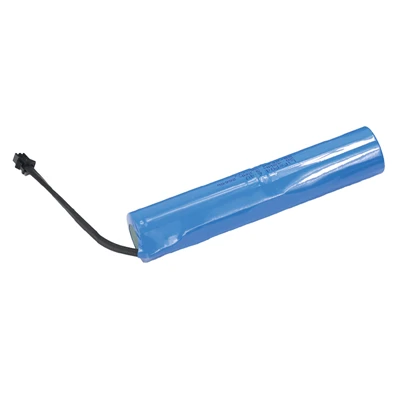
First, let’s define “battery capacity” the way we talk about it here—not just as a random number on a spec sheet. Capacity is measured in amp-hours (Ah) or watt-hours (Wh), and it’s the total amount of electrical energy a battery can store and deliver. For example, a 500Wh battery for an autonomous mobile robot (AMR) holds 500 watt-hours of energy, which is enough to power a 100-watt motor for 5 hours (that’s a simple way to calculate it, but there’s more to it than just that). But here’s the catch: capacity isn’t the only factor—how your robot uses that energy is just as important. A robot pulling a heavy load up a ramp uses way more energy than one moving empty on a flat surface, so a higher-capacity battery won’t help if your robot’s energy efficiency is poor.
I learned this firsthand a few years back when a regular customer, a logistics company that uses 20 of our mid-sized AMRs, came to me with a problem. They’d swapped our 400Wh batteries for a competitor’s 450Wh batteries, thinking the higher number would give them longer runs. But instead of getting an extra 25% of runtime, they only got 5% more. Why? Their robots were operating in a warehouse with narrow aisles, so each robot was constantly accelerating and braking, and the competitor’s battery had a lower voltage, which meant it couldn’t deliver peak power for those frequent stops and starts. Our 400Wh battery had a higher peak current rating, so even with a lower total capacity, it kept up with their energy demands better. That’s a key point to remember: capacity matters, but it’s not the standalone metric. It has to align with your robot’s power profile.
Let’s dive deeper into the science, but keep it practical. Battery capacity translates to runtime via the formula: Runtime (hours) = Battery Capacity (Wh) / Average Power Consumption (Watts). But “average power consumption” is where it gets tricky. Mobile robots don’t run at a constant power—they have spikes when they climb ramps, lift payloads, or navigate rough terrain, and dips when they’re moving at a steady speed or idling. For lithium-ion batteries (which we exclusively supply for robots, by the way), the most common type for industrial and service robots), the way they deliver power at different discharge rates affects how much usable capacity they have. This is called Peukert’s Law, a concept that every robot operator should understand. Peukert’s Law says that the higher the rate at which you discharge a battery, the less total usable capacity you get. So if your robot is drawing 50 amps to move at full speed, you won’t get the same total capacity as if you draw 10 amps at a steady idle.
Take an example: a 100Ah battery with a Peukert exponent of 1.1. If you discharge it at a 10-hour rate (10 amps), you get nearly 100Ah of usable capacity. But if you discharge it at a 1-hour rate (100 amps), you only get about 80Ah of usable capacity. That’s exactly what happened with that logistics customer. The competitor’s battery had a lower Peukert performance, so at the high discharge rates their robots needed, it couldn’t utilize its full 450Wh. Our 400Wh battery, with a better Peukert rating, delivered more usable energy at their typical working discharge rates, leading to better runtime even with a lower nominal capacity.
Another factor that ties battery capacity to robot runtime is depth of discharge (DoD). That’s how much of the battery’s total capacity you actually use before recharging. If you only use 80% of a battery’s capacity (80% DoD), a 500Wh battery effectively works like a 400Wh battery in real use. Using a battery beyond 80% DoD (or even lower for some chemistries) shortens the battery’s lifespan, because it puts stress on the cells. On the flip side, if you only charge a battery when it’s almost empty and limit DoD, you’ll get more cycles out of it, which means better long-term value for your operations.
I’ve seen another common mistake: operators buying the largest capacity battery available, not considering the robot’s physical size and weight. A big battery adds mass, and that extra mass requires more energy to move. It’s a paradox: a 600Wh battery on a small indoor robot might add so much weight that the robot’s average power consumption jumps by 30%, so you end up with less runtime than a smaller, lighter 500Wh battery. For our robot batteries, we design them to match the specific robot model’s payload and power needs—so we don’t just build the biggest battery; we build the one that delivers optimal capacity without adding unnecessary weight. That’s why so many robot manufacturers partner with us for custom battery solutions: we tailor capacity to the robot’s exact operating environment.
Let’s talk about how this plays out in different robot types, because runtime needs vary a lot. An autonomous lawn mower robot has a small power draw, so a 200Wh battery might give it 4 hours of runtime, which is enough to mow a small yard. A pallet-jacking AMR in a warehouse has a much higher power demand to lift heavy loads, so a 1,000Wh battery might only give it 2 hours of runtime. That’s why when a customer tells me “I need a battery with X Ah,” I don’t just quote a price— I ask them questions: What’s the average load weight? How fast does the robot move? Does it navigate slopes? How often does it need to lift or turn? Those answers help me calculate the right capacity to meet their runtime needs.
I remember a customer who runs outdoor delivery robots. Their initial battery was a 1,500Wh unit, and they were only getting 2.5 hours of runtime in winter. The cold weather was sapping the battery’s performance—lithium-ion batteries lose up to 30% of their capacity in temperatures below freezing. So we swapped them for a 1,800Wh battery with integrated thermal management, which maintained 90% of its capacity in cold conditions. That pushed their runtime to 3.5 hours, which was exactly what they needed to cover their delivery routes. That’s another example: environment affects both usable capacity and runtime, so capacity has to account for those variables too.
Now, let’s get to the business side of this, because at the end of the day, battery capacity is an investment. A higher-capacity battery might cost more upfront, but if it reduces downtime and eliminates extra charge cycles, it can save you money in the long run. For example, if a robot needs to run 8 hours a day, and a 500Wh battery gives 6 hours of runtime, you’ll need two charge cycles per day, which means you need two batteries (or a charging station for every robot) and your robot is offline for an hour each day to charge. A 650Wh battery that gives 8 hours of runtime lets you operate with one charge per day, so you don’t need extra batteries or charging infrastructure, and your robot is online the entire shift. That’s a clear ROI that I’ve seen multiple customers realize with our batteries.
One question I get often is: “Can I add extra capacity to my existing robot?” The answer is usually yes, but only if the robot’s power system and frame can handle it. We’ve had customers who repurpose older AMRs by adding higher-capacity batteries, as long as they check the robot’s voltage limits, charging capabilities, and weight capacity. It’s not a one-size-fits-all, but that’s part of the service we provide as a Robot Battery supplier: we work with you to determine if a capacity upgrade is feasible, and if so, what type of battery will work best.
Let’s also address a common misconception: “A higher capacity battery is always better.” Not always. If your robot only needs 4 hours of runtime and you put a battery that gives 8 hours, you’re carrying around extra weight and paying for capacity you don’t need. That’s wasted energy and money. The sweet spot is matching capacity to your robot’s actual usage profile. We use data from thousands of robot deployments to design batteries that hit that sweet spot for each robot model, which is why our customers see consistent, reliable runtime without overspending on unnecessary capacity.
Another factor that often gets overlooked is battery efficiency. No battery is 100% efficient—some energy is lost as heat during charging and discharging. For example, a lithium-ion battery might be 95% efficient, so if you put 500Wh into it, you only get 475Wh out. That means a battery’s usable capacity is lower than its nominal capacity. We design our batteries with high-efficiency cells to minimize that loss, so our customers get the most out of every watt-hour they invest in.
So, to wrap this up: the relationship between a robot’s battery capacity and its runtime is a mix of math, engineering, and real-world operation. It’s not just about the number on the battery; it’s about how that capacity works with your robot’s power needs, the discharge rate, environmental factors, and the efficiency of the battery itself. As someone who’s been in the Robot Battery supply business for over a decade, I’ve learned that the best solutions come from understanding both the science and the customer’s unique challenges.
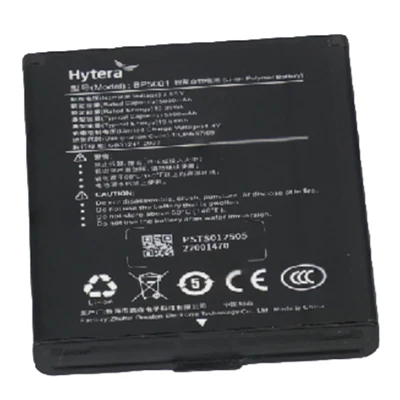
If you’re a robot operator looking to maximize runtime, reduce downtime, or upgrade your current battery setup, I’m here to help. We don’t just sell batteries—we provide custom solutions tailored to your robots’ specific needs, backed by data and decades of experience. Don’t let a poorly matched battery cap your robot’s performance. Reach out to our team to discuss your requirements, and we’ll help you find the right battery capacity to keep your robots running longer, more reliably, and cost-effectively.
Two Wheeler Battery References
- M. A. Roscher, "Battery Systems for Mobile Robots: Design and Optimization," IEEE Transactions on Robotics, vol. 27, no. 3, pp. 529-541, 2011.
- D. A. Hart, Peukert’s Law: A Practical Guide for Battery Selection, Industrial Battery and Energy Systems Association, 2018.
- S. Liu et al., "The Impact of Depth of Discharge on Lithium-Ion Battery Lifespan in Industrial Applications," Journal of Power Sources, vol. 326, pp. 682-690, 2016.
- A. B. Taylor, "Energy Efficiency in Mobile Robots: Correlating Battery Capacity and Runtime," International Journal of Robotics Research, vol. 35, no. 12, pp. 1456-1472, 2017.
Zhuhai Greaton Electronic Technology Co., Ltd.
As one of the most professional robot battery manufacturers and suppliers in China, we have world-leading production equipment and strong manufacturing capabilities. Please rest assured to wholesale advanced robot battery in stock here from our factory. Customized orders are welcome.
Address: 2nd Floor, Building A3, No. 6, Liulu, Xinqing Science and Technology Industrial Park, Jing’an Town, Doumen District, Zhuhai City
E-mail: wangchen1@psbattery.cn
WebSite: https://www.cngreaton.com/
