If you’ve ever driven past a packed, sun-warmed Gospel truck rolling through small towns, neighborhood streets, or even city suburbs, you’ve probably felt more than just a faint line of music drifting through the windows. That low, resonant thrum wrapping around the vehicle isn’t an accident—it’s the result of a carefully crafted audio system built specifically for the unique mission of these trucks: to broadcast sermons, gospel hymns, and inspirational messaging clearly, loudly, and consistently, no matter the environment. As a supplier that’s spent the last decade outfitting these mobile outreach units across North America, I’ve seen firsthand how a Gospel truck’s audio system isn’t just a bunch of speakers and wires—it’s a tool that turns a regular work vehicle into a mobile pulpit. Gospel Truck
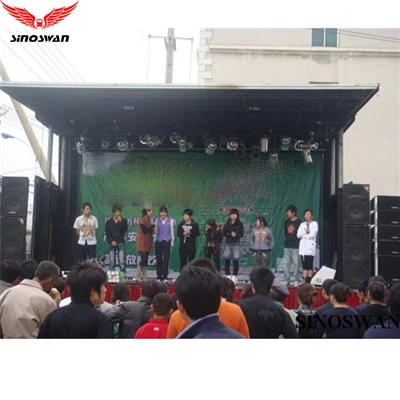
Let’s start with the core problem any Gospel truck faces: background noise. When these trucks operate, they’re often in spaces where street traffic, nearby construction, playground chatter, and even wind off open highways compete for people’s attention. A standard car stereo, cranked up to drown out traffic, will often distort the sermon or muffle the rich harmonies of a gospel choir, making it hard for people to engage with the message. That’s why every system we design starts with a focus on intelligibility—being able to understand every word, even from 50 feet away, without straining.
First up is the main speaker array. Unlike the single central speaker in a home theater or even the door speakers in a passenger car, Gospel trucks use a combination of high-output, weather-resistant loudspeakers strategically placed around the vehicle. We mount large-format mid-range speakers on the truck’s roof rails and along the lower cab sides, because mid-range frequencies (the range where human speech and most vocal music lives) travel farthest outdoors and cut through background noise best. These aren’t the cheap, flimsy speakers you’d find in a budget car audio upgrade; we use marine-grade, UV-stabilized models built to handle extreme temperatures, rain, and dust—critical for trucks that run in everything from 100°F summer heat in Texas to freezing winter slush in Minnesota. We also add a pair of high-frequency tweeters near the front and back of the truck to enhance the crispness of hymn lyrics, so even people standing at the far end of a parking lot don’t miss a single line.
Next comes the power supply. A Gospel truck’s audio system can run for 8 to 12 hours a day, sometimes off a generator if the vehicle is parked in a lot without access to shore power, and a standard car alternator can’t keep up with that kind of sustained output. We upgrade the electrical system with deep-cycle batteries specifically designed for auxiliary power, plus a high-output alternator that prevents the truck’s main battery from dying while the audio is running. We also include a compact, gas-powered auxiliary generator mounted on the truck’s frame for areas where shore power isn’t available—another key feature, because many Gospel trucks operate in rural areas without access to electricity for large events. A common mistake new Gospel truck owners make is skimping on power, only to have their system cut out mid-sermon when the main battery drains. We build that redundancy into every system to avoid that scenario.
Then there’s the amplifier and mixing board, the brains of the operation. Unlike a consumer car stereo that’s pre-programmed to play music, a Gospel truck’s audio system needs to be flexible enough for on-the-fly adjustments. The mixing board lets the driver or a volunteer seamlessly switch between playing pre-recorded hymns, plugging in a live pastor’s microphone, or playing a pre-recorded sermon. We use compact, weather-sealed mixing boards with a simple, easy-to-learn interface—no complex settings, because most operators aren’t audio engineers. The amplifier pairs with the mixing board to push consistent, distortion-free power to the speaker array; we size it to match the number of speakers, so it never runs too hot or too weak, which saves on maintenance and extends the life of the components.
One often-overlooked part of a Gospel truck’s audio system is its noise-canceling technology, tailored specifically for outdoor environments. Regular noise-canceling headphones work by emitting a sound wave that cancels out incoming noise, but for outdoor use, that’s less effective. Instead, we install tuned acoustic baffles around the main speakers to reduce the amount of unwanted echo from hard surfaces like asphalt, brick walls, or the truck’s own metal frame. Without baffles, sound bounces off those surfaces, creating a muddled, echoing effect that makes speech hard to understand. We also add a graphic equalizer (EQ) to the mixing board, so operators can tweak the sound on the spot: cut a little bass if the truck is near a busy highway (to avoid rumbling that drowns out speech), boost mid-range if they’re in a quiet residential area (to make lyrics stand out), or adjust treble for outdoor events in dry, arid climates that can make sound crisp.
We also consider durability for the unique rigors Gospel trucks face. These aren’t parked in a controlled garage all week—they drive over rough back roads, bounce over potholes, and sometimes get loaded up with extra sound equipment for revivals or outreach events. That’s why all wiring is run through heavy-gauge, weatherproof conduit, so it doesn’t fray or get damaged by road debris or moisture. Speaker grilles are made of heavy-duty steel, not plastic, to protect the drivers from flying rocks when the truck is moving at 35 mph down a gravel road. Even the control panel for the mixing board is mounted in a locked, rubber-sealed box to keep out rain and prevent accidental adjustments while driving.
Another key feature we integrate is Bluetooth and cellular connectivity. Many Gospel truck operators use their phones to play pre-recorded sermons or stream live gospel radio stations, so we pair the audio system with a long-range Bluetooth transmitter that can connect to any smartphone, tablet, or USB drive. We also include a dedicated FM transmitter that lets people within a quarter-mile of the truck tune their car radios to a custom frequency to listen through their own speakers—this is a game-changer for large outdoor events, where a crowd might be too big for the truck’s speakers to reach everyone. We’ve had operators tell us that the FM feature has tripled the number of people who attend their outdoor services, because people can pull over in their cars and listen comfortably without standing in the sun.
Let’s talk about a real example, because this isn’t just theoretical. Last year, we outfitted a truck for a ministry that runs outreach in rural Appalachia, where many towns have no brick-and-mortar churches and most residents only gather for events in community parking lots. The truck needed to run on dirt roads, handle heavy rain, and reach crowds of up to 200 people. We installed four 12-inch marine-grade mid-range speakers on the roof, two tweeters, a 2,000-watt amplifier, a 12-volt deep-cycle battery bank, and a 2,500-watt auxiliary generator. We also added a portable microphone for visiting pastors and a USB port for loading up pre-recorded hymns and sermons. After we delivered it, the ministry’s director told us that in the first month, they had 1,200 more people attend their services than the year before with their old, underpowered system. That’s the impact a well-designed audio system can have—it’s not just about sound, it’s about connecting people to their faith.
We also don’t forget about accessibility. Many Gospel truck events include people with hearing impairments, so we integrate a wireless assistive listening system into each build. This system sends a direct audio signal to Bluetooth-enabled hearing aids or personal receivers, so people with partial or full hearing loss can follow the sermon or music clearly without straining. It’s a small addition, but it’s one that makes the outreach truly inclusive, and it’s something we prioritize in every system we design.
A common question we get from new Gospel truck owners is, “Do I need to go all out for a huge system?” The answer is it depends on your mission. If you’re driving around a small neighborhood with only a few dozen people, a compact system with two speakers and a small generator works. If you’re organizing large outdoor revivals across multiple counties, you’ll need a larger array, a more powerful amplifier, and a stronger generator. We work with every ministry to tailor the system to their specific needs, not a one-size-fits-all model. We even offer audio system maintenance plans, so operators can get annual check-ups, replace worn parts, and update their system as their ministry grows.
Over the years, we’ve learned that a Gospel truck’s audio system is as much about reliability as it is about quality. There’s nothing more frustrating for an operator than being mid-sermon and having the system shut down, or having the sermon distorted so people can’t follow along. That’s why we use components from trusted audio brands that are tested for outdoor use, and we include a spare fuse, a small tool kit, and a backup battery in every build. We also provide on-the-ground support, so if something goes wrong, we can connect with the operator remotely to troubleshoot, or send a technician if it’s a major issue.
At the end of the day, a Gospel truck’s audio system is a reflection of the ministry it serves. It’s built to carry hope, not just music, and it has to work hard to cut through the noise of the world and reach people who might not have access to a church building. Whether it’s a small truck serving a single neighborhood or a large unit that travels across the country for revivals, every part of the audio system is chosen with care, to make sure every word and every hymn gets heard.
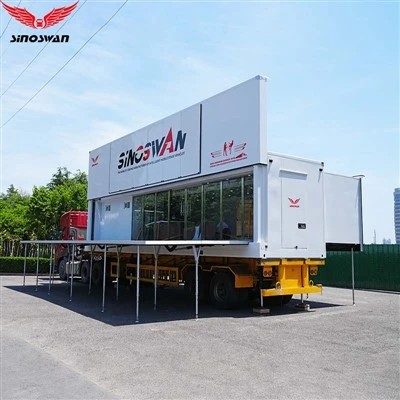
If you’re a ministry looking to build or upgrade your Gospel truck’s audio system, we’re here to help. We’ve helped dozens of ministries across the country design systems that fit their unique outreach goals, from small community outreach to large-scale revival events. Reach out to our team to discuss your needs, and we’ll work with you to create a system that’s reliable, effective, and built to serve your community.
Mobile Space References
- Marine Grade Audio Equipment, National Marine Manufacturers Association, 2022
- Outdoor Sound Intelligibility Standards, Audio Engineering Society, 2021
- Auxiliary Power for Mobile Outreach Vehicles, Automotive Electrical Systems Association, 2023
- Assistive Listening Devices for Outdoor Public Events, American Speech-Language-Hearing Association, 2022
- Mobile Sound System Design for Rural Outreach, Journal of Applied Community Ministries, 2021
Zhengzhou Sinoswan Tech Co., Ltd.
Zhengzhou Sinoswan Tech Co., Ltd. is one of the most professional gospel truck manufacturers and suppliers in China. We are committed to providing high quality customized products for global clients. We warmly welcome you to wholesale durable gospel truck for sale here from our factory. Also, quotation is available.
Address: No.21 Shangdu Road, Zhengzhou, Henan Province, China
E-mail: info@sinoswan.com
WebSite: https://www.electiontruck.com/
