If you’ve ever driven on a concrete road near a farm, a fertilizer plant, or even a commercial laundry, you’ve probably passed by ammonium sulfate (AS) at some point. As a supplier who’s spent years talking to contractors, civil engineers, and facility managers, one question comes up more than any other: “Is ammonium sulfate safe for concrete?” It’s a fair question—AS is super common in everything from crop fertilizers to water treatment, and concrete is a big investment. You don’t want to mess that up. Let’s break this down without the boring textbook jargon, just straight-up what I’ve learned from talking to folks who actually work with concrete every day. Ammonium Sulfate

First, let’s get one thing straight: concrete isn’t just rock and cement. It’s a porous, living material (sort of) that reacts to all kinds of stuff around it. Ammonium sulfate is a salt, right? Salts and concrete have a complicated relationship—some salts eat away at concrete, some don’t. So it’s not a simple “yes” or “no” answer. It depends on how much AS is there, how long it’s in contact, and what kind of concrete we’re talking about.
I’ve had a guy from a road construction company call me last year panicking because they spilled a 50-pound bag of AS on a new stretch of concrete they just poured two weeks prior. He thought he’d have to tear up the whole section. Turns out, it wasn’t a big deal. Why? Because the concrete was still curing, but the spill was only on the surface, and it rained a couple days later to wash most of it off. The problem comes when AS isn’t just on the surface—it’s seeping in, pooling, and sitting for months or years. That’s when you start seeing issues.
Wait, let’s get into the science a little (I’ll keep it simple). Concrete has cement paste, which is mostly calcium hydroxide. Ammonium sulfate reacts with that calcium hydroxide to make calcium sulfate (that’s gypsum, which is what wallboard is made of) and ammonium hydroxide. Now, gypsum is soft, way softer than the cement paste that holds concrete together. If that reaction keeps happening, it breaks down the structure of the concrete. The tiny pores fill with gypsum, and as that gypsum expands over time, it cracks the concrete from the inside out. That’s the big problem—internal cracking, not just surface wear.
But here’s the thing: that reaction only happens if there’s enough water to let the AS dissolve, and if the concentration is high enough. If AS is dry on the surface, it won’t react much. If it’s diluted with water, like from rain or a hose, the reaction slows way down. I’ve also noticed that older concrete (like 10+ years old) is way more resistant to this than brand new, uncured concrete. New concrete has a lot of unreacted calcium hydroxide, so it’s a perfect food for AS’s reaction. Once concrete is fully cured—usually 28 days after pouring—that excess calcium hydroxide is pretty much gone, so the reaction doesn’t affect it as much.
Now, let’s talk about when AS is actually used around concrete, not just spilled. A lot of our customers are in the fertilizer industry, where they store AS in warehouses that have concrete floors. They need to know if those floors will hold up. Or farmers spreading AS on fields adjacent to concrete roads—how much runoff is too much? I have a warehouse manager who’s been using AS for 8 years, and his concrete floor hasn’t had a single crack from the material. He told me he keeps the floor swept, hoses it down once a week to prevent salt buildup, and that’s it. No fancy coatings, no extra reinforcement. That’s not an exception—that’s what works for a lot of people.
But there are cases where AS does cause problems. Last year, a water treatment plant (another big user of AS) had a concrete holding tank that started leaking after 5 years. Turns out, they didn’t line the tank, and AS was seeping in 24/7, no drainage. That’s a concrete design issue, not an AS issue. If you have a concrete structure that’s going to be in constant contact with concentrated AS, you need to add a protective coating or use a different concrete mix—like one with fly ash or slag, which has less calcium hydroxide and is more resistant to salt reactions. That’s something I always tell folks when they ask: it’s not the AS itself, it’s how you prepare the concrete for it.
I also get people asking if AS is worse than other salts, like road salt or magnesium chloride. Let’s be real, road salt is way more aggressive for concrete. It’s designed to melt ice, which means it’s high concentration, and it’s spread all over roads every winter. I’ve seen roads that use road salt crack way faster than any place with AS. AS is actually pretty mild in comparison, as long as it’s not sitting in one place for years. That’s a key point I want to make—AS isn’t some concrete-eating monster. It’s a common chemical that behaves like most salts, for better or worse.
Another thing I’ve learned: a lot of misinformation comes from people confusing ammonium sulfate with ammonium nitrate or other ammonium-based chemicals. Those are way more reactive with concrete, but AS is different. I’ve had a couple of contractors come to me saying “AS ruined my concrete,” and when I ask for details, they say they mixed AS with something else—like a strong acid—during cleaning. Oh, that’s a whole different story. Acidic stuff is way harder on concrete than AS.
So let’s wrap up the practical stuff, since that’s what you actually care about if you’re dealing with AS and concrete. First, if you have new concrete (less than 28 days old), keep AS off of it as much as possible. If you do get it on there, wash it off right away with water—don’t let it sit. Second, for existing concrete that’s in contact with AS regularly (like warehouse floors, fertilizer storage areas), keep the surface clean and free of salt buildup. A quick wash every month is enough for most places. Third, if you’re building a new structure that will have constant AS exposure, talk to a concrete engineer about adding a resistant mix or a coating—don’t just assume it’ll hold. And fourth, don’t buy into the hype that all salts are bad for concrete—some are way worse than others, and AS is in the middle of the pack.
Now, as an AS supplier, I’ve got a stake here, but I’m not gonna lie and say it’s 100% safe for all concrete. That’s not true. What is true is that when used properly, AS is way safer for concrete than a lot of other chemicals people deal with. I’ve supplied AS to thousands of customers over the years, from small farms to big factories, and most of them have zero issues with concrete. The ones that do are usually the ones that let AS pool on uncured concrete, or don’t maintain the surface, or use the wrong concrete mix for the job.
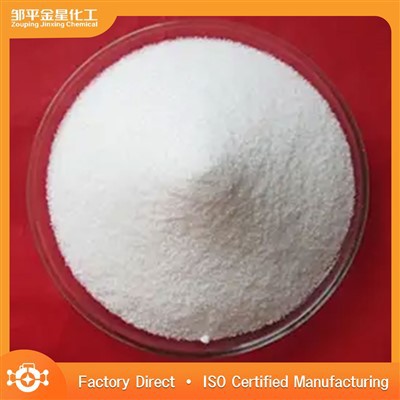
If you’re someone who’s got a concrete project coming up and you’re wondering how AS will play into it—whether you’re a contractor planning a warehouse, a farmer spreading fertilizer, or a facility manager maintaining a water treatment plant—hit me up. I’ve worked with so many folks in your exact situation, and I can help you figure out the right approach. No sales pitch, just straight talk on what’s worked for other customers. I’m not here to convince you to buy AS, I’m here to make sure you know how to use it without messing up your concrete.
Potassium Sulfate References:
- Mehta, P. K., & Monteiro, P. J. M. (2014). Concrete: Microstructure, Properties, and Materials. McGraw-Hill Education.
- Building Code Requirements for Structural Concrete (ACI 318-19). American Concrete Institute.
- Fernlund, G., et al. (2002). “Salt Attack on Concrete: A Review.” Cement and Concrete Composites, vol. 24, no. 3, pp. 301-315.
- World Fertilizer Association. (2021). “Fertilizer Storage and Concrete Infrastructure Best Practices.” Technical Report.
- American Water Works Association. (2019). “Concrete Treatment of Ammonium Sulfate in Water Storage Facilities.” AWWA Standard.
Zouping Jinxing Chemical Co., Ltd.
Zouping Jinxing Chemical Co., Ltd. is one of the most reliable ammonium sulfate manufacturers and suppliers in China, also supports customized service with low price. Please feel free to wholesale cheap ammonium sulfate in stock here from our factory. For free sample, contact us now.
Address: Guojia Village, Jiaoqiao Town, Binzhou City, Shandong Province, China
E-mail: zpjinxing1@zpjxhg.com.cn
WebSite: https://www.zpjinxing.com/
