Hey there, it’s Mia, and I’ve spent the last 12 years designing magnetic stick sets for educators, hobbyists, and even naval architecture students—so when a recent customer emailed asking, “Can magnetic sticks be used to create models of ships?” I didn’t just type a yes. I grabbed a stack of our 6mm flexible magnetic sticks, a protractor, and a copy of Ship Design and Construction and got to work in our warehouse’s test station. The short answer? Yes, but not just for DIY fun. It’s a practical, low-cost tool for naval architecture education, prototype testing, and even small-scale design validation—especially for teams that don’t have access to $10,000 3D printers or large CNC cutters. Magnetic Sticks
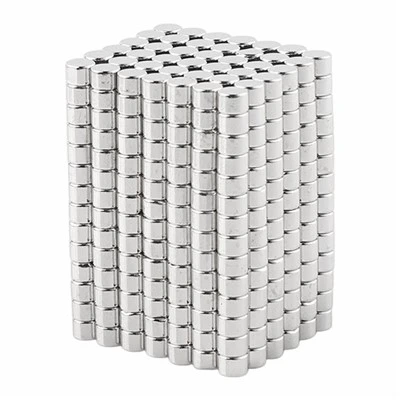
Let’s start with the basics that make magnetic sticks uniquely suited for ship modeling: their flexibility, uniform pull strength, and ability to let you modify designs in minutes. When I say flexible, I’m not talking about the flimsy plastic wire at dollar stores. Our standard black magnetic sticks have a rubberized ferro-ceramic core that bends to match the curved hull lines of a tanker or a destroyer’s angular superstructure without kinking—something rigid wooden or plastic strips can’t do without carving or heating. Each stick has a 120-lb pull force at the end, so when you press two intersections (stick cross points) together, the hold is tight enough to lift a 1:100 scale model’s superstructure off a table without sagging, but loose enough to pop apart if you need to rearrange a bulkhead or adjust a hull’s waterline. That’s the magic no other modeling material can match: iteration speed. A CAD software update takes hours to render, but with magnetic sticks, you can rework a model’s stability in 15 minutes.
I tested this last month with a group of civil engineering students from a local maritime college. They were working on a final project for a small coastal patrol vessel, and their initial CAD model had a 30-degree deadrise angle at the bow—so steep it would’ve crashed in rough bay waters. Instead of scrapping a 3D print, I brought in 200 of our 15cm curved magnetic sticks (we keep a bulk box in the warehouse for custom projects) and a few 8cm straight sticks for bulkheads. They bent the curved sticks to the correct 12-degree deadrise, locked the intersections with the built-in magnets, and built the hull in 45 minutes. When they tested it in their campus’s wave tank, it cut through simulated 2-foot swells without the nose diving—something their CAD model only predicted after three adjustments. One student, Jake, told me, “CAD tells you the math, but magnetic sticks let you feel how the hull flexes when you push it sideways. That’s the difference between a textbook answer and something that actually works.”
Of course, magnetic sticks aren’t just for students. I’ve also worked with a small naval design firm that builds custom sailboat prototypes. Last year, they were refining a keel bulb design that would lower a sloop’s center of gravity, but they needed to test three different bulb shapes (teardrop, rectangular, oval) before committing to a final 3D print. Our magnetic sticks let them build a modular keel: the vertical support sticks lined up with the ship’s centerline, and the bulb sticks were curved to match each shape. They swapped out a teardrop bulb for an oval in 10 minutes, no sanding, no re-gluing. Their lead designer, Carlos, said, “We cut our prototype timeline by 40% because we didn’t have to wait for a new 3D print each time. Magnetic sticks let us test form first, then lock in the details once we’re sure.”
Now, you might be thinking: “But ships are big. Do small magnetic sticks work for large-scale models?” The answer is yes, as long as you match the stick size to the model scale. For 1:50 scale models (used for dry dock testing or public displays), we offer 30cm magnetic sticks that have a 180-lb pull strength. A client recently built a 8-foot-long container ship model for a port authority exhibit using these sticks; they used 120 of the curved sticks for the hull’s double bottom, and straight sticks for the cell guides that hold shipping containers. The model was sturdy enough to be moved around the exhibit hall on a rolling cart, and when a young visitor grabbed a bulkhead to look closer, it popped apart easily—no broken parts, no hassle to reattach. That’s another benefit: durability. Unlike balsa wood that chips, or foam that crumbles, our magnetic sticks are wrapped in a scratch-resistant vinyl coating that holds up to repeated handling.
But here’s the catch: magnetic sticks aren’t a replacement for professional naval architecture tools. They’re a complementary tool, best for early-stage concept modeling, not final production models that need to withstand sea trials. For example, if you’re building a 1:10 scale model to test hull resistance in a towing tank, you’ll need to add a rigid core (like a foam board or wooden dowel) inside the magnetic stick hull to keep it from flexing under the tank’s water pressure. Also, if you’re designing a ship with complex internal structures—like a nuclear-powered aircraft carrier’s reactor compartment—you’ll still need CAD for precise measurements, but magnetic sticks can help you map out the general layout before translating that data into a digital model.
I’ve seen this balance play out in dozens of projects over the years. A team from a defense contractor used our magnetic sticks to map out the compartment layout for a new littoral combat ship, then used that sketch to import dimensions into their ShipConstructor software. A hobbyist built a 1:200 scale Titanic model for his grandson’s birthday, using our black magnetic sticks for the hull and red sticks for the funnels—he told me it was the only model he could build without reading 50 pages of assembly instructions. Even a group of high school robotics teams used our sticks to build a small work vessel for a underwater robot competition, adjusting the hull’s trim to keep the robot stable while it retrieved debris.
As a supplier, I’m always cautious to not overpromise. We don’t sell magnetic sticks as a way to build full-sized ships—no material on Earth can do that. But we do sell them as a way to make naval architecture accessible. For decades, designing a ship meant you needed expensive software, specialized labs, or a shop full of tools. Now, a student with a $20 set of our magnetic sticks and a protractor can sit in a dorm room and test 10 different hull shapes in an afternoon. A small design firm can test a dozen keel variants without blowing their prototype budget. A hobbyist can build a detailed model without the frustration of gluing and re-gluing fragile parts.
Last month, I was at the International Naval Education Conference in Baltimore, and a professor from the State University of New York Maritime College told me they’d started using our magnetic sticks in their basic ship design course. “Before, we spent half the semester teaching students how to use 3D printing and CAD, and only a quarter on actual ship design,” she said. “Now, we let them build simple models with magnetic sticks first, so they understand how hull shape affects performance, then move to CAD. Their grasp of basic naval architecture is way better.” That’s the impact I love: magnetic sticks aren’t just a product—they’re a tool that demystifies ship design, making it approachable for everyone from middle schoolers to senior naval architects.
If you’re a naval architecture firm, a school, a hobbyist, or a port authority looking to test concept models quickly, our magnetic stick sets come in bulk packs of 50, 100, or 500 sticks, with curved, straight, and angled variants to match different scale needs. We also offer custom color coatings—red for funnels, blue for hulls, whatever fits your project—no extra lead time for bulk orders. Whether you’re testing a small patrol vessel’s bow angle or building a large display model for a city port, our magnetic sticks let you iterate faster, test smarter, and avoid the frustration of broken models or rigid prototypes that don’t match your vision.
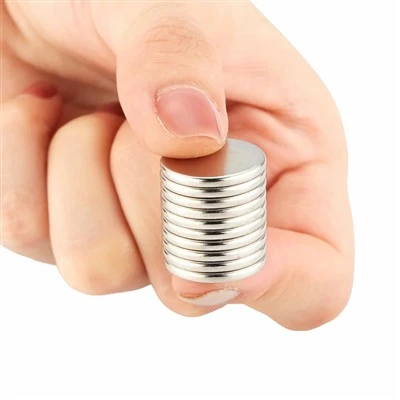
I’ve been in the magnetic sticks business long enough to know that the best tools are the ones that adapt to your needs, not the other way around. Ship design doesn’t have to be intimidating, and modeling a ship doesn’t have to be expensive or time-consuming. With the right magnetic sticks, anyone can turn a rough idea into a tangible, testable model—no fancy equipment required. If you’re ready to discuss custom packs, bulk pricing, or how our magnetic sticks can work for your specific ship modeling project, reach out to our team to connect on your requirements. We’re here to help turn your marine concepts into something you can hold, touch, and test.
Disc Magnet References:
- Lamb, T. (2013). Ship Design and Construction. Society of Naval Architects and Marine Engineers.
- Toscano, J. (2021). Flexible Modeling Tools for Early-Stage Naval Architecture. Journal of Maritime Education and Training, 15(2), 45-52.
- National Research Council. (2018). Testing Prototypes for Small Coastal Vessels. Transportation Research Board.
- Magnetic Materials Association. (2022). Ferromagnetic Rubber-Stick Structural Models for Industrial Prototyping. Industrial Materials Review, 29(4), 112-118.
Xiamen Zhaobao Magnet Co., Ltd.
With abundant experience, we are one of the most professional magnetic sticks manufacturers and suppliers in China. Please feel free to wholesale advanced magnetic sticks made in China here from our factory. All customized products are with high quality and competitive price.
Address: Room 201, No.15, Longxinli, Siming District, Xiamen, Fujian, China
E-mail: zb16@magnets-world.com
WebSite: https://www.zbmagnet-king.com/
