If you’ve ever stood in a busy construction yard, a warehouse loading dock, or an industrial fabrication floor, you’ve probably seen a chain sling at work—its thick metal links looping around steel beams, heavy machinery, or raw materials, lifting loads that would collapse any other rigging gear in their path. As someone who’s spent the last 12 years as a chain sling supplier, I’ve lost count of how many times I’ve heard rigging teams brush off “just a sling” as a trivial piece of equipment, only to learn the hard way that its design, manufacturing, and inspection standards aren’t just guidelines—they’re what keep crews safe and loads where they belong. Chain Sling
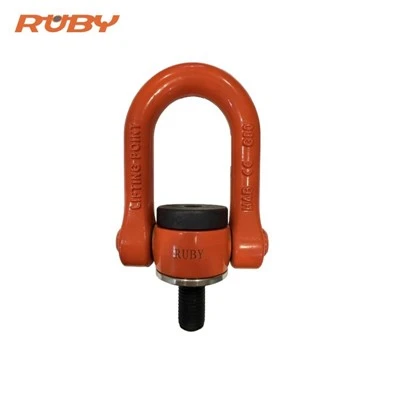
I’ve worked with riggers, safety officers, and plant managers across dozens of industries, and one thing I’ve observed again and again: even experienced teams often mix up chain sling standards, assuming all heavy chain is created equal. That’s a dangerous misstep. The standards for chain slings aren’t arbitrary rules written by distant regulators—they’re lessons learned from decades of rigging failures, accidents, and near-misses. They’re what separate a sling that lifts 5 tons reliably from one that snaps mid-lift, sending tons of debris, or even people, falling.
Let’s break down what these standards actually mean, how they apply to the chain slings we supply, and why sticking to them isn’t just a safety win—it’s a way to extend your sling’s life and avoid costly downtime.
First, let’s start with the foundation: the grade of chain used in chain slings. This is non-negotiable, and it’s the first line of defense against failure. All chain slings must be made from alloy steel chain, not mild steel chain—mild steel is too brittle, too prone to stretching, and can’t handle the dynamic loads that come with industrial lifting. The standard for alloy steel chain used in lifting slings has two main sets: one from the Occupational Safety and Health Administration (OSHA) in the U.S., and another from the American Society of Mechanical Engineers (ASME), which is adopted globally by most rigging and manufacturing teams.
You’ll hear a lot about chain grades—Grade 80, Grade 100, even Grade 120, depending on the load capacity. Each grade corresponds to the minimum tensile strength of the chain, measured in pounds per square inch (PSI). Grade 80 chain, for example, has a minimum tensile strength of 80,000 PSI. That means a Grade 80 sling can typically handle 2.5 times more load than a mild steel sling of the same size. Why does this matter? Because if you’re lifting a 10-ton piece of steel into a shipping container, a Grade 80 sling will hold that load without stretching or deforming, while a misused mild steel sling will twist, crack, or fail.
Our team only supplies Grade 80 and Grade 100 chain slings, because we’ve seen too many incidents where Grade 70 (originally designed for transportation tie-downs, not lifting) was misappropriated for rigging work, leading to failures. OSHA explicitly bans Grade 70 chain for overhead lifting in most cases, a rule that’s easy to overlook when you’re grabbing a spare sling from a storage closet.
Next, the design and construction of the sling itself. The standards here cover everything from the way links are assembled to the attachments—hooks, end connectors, and master links. For a chain sling to meet industry standards, it must be built as a single, continuous assembly, with no repaired links unless the repair is done by a certified chain manufacturer or a specialized rigging shop. Field repairs—like welding a broken link back together or adding a link with a stick welder—are a red flag. Welding changes the chemical structure of alloy steel, making it brittle and weak, so any repair must follow strict ASME B30.9 standards, which outline approved repair methods and materials.
Then there’s the working load limit (WLL), probably the most cited number on any chain sling tag, and the one most often misused. ASME and OSHA require every chain sling to have a permanent, legible tag stamped with its WLL, the chain grade, and the date of manufacture or last inspection. The WLL isn’t a one-size-fits-all number—it depends on how the sling is rigged. For example, a sling used in a straight vertical lift has a WLL equal to the rated capacity, but a sling used in a basket hitch (where the two ends of the sling form a loop around a load) has a higher WLL, and a sling used in a choker hitch (where one end of the sling is looped through the other to grip the load) has a lower WLL—often 75% of the vertical WLL.
I’ve seen riggers ignore this all the time: they’ll take a sling rated for 5 tons vertical, use it in a choker hitch, and load it to 5.5 tons because “that’s what the chain can handle.” That’s a surefire way to bend the links beyond repair or snap the sling mid-lift. Our team trains every customer who buys a sling from us to check the rigging configuration and adjust their load accordingly—this isn’t just good customer service, it’s how we build trust that our slings are used as intended.
Inspection standards are another critical piece of the puzzle. Even a perfectly built chain sling will degrade over time, so standards mandate regular inspections to catch damage before it becomes a hazard. OSHA requires daily pre-use inspections for slings used in high-cycle applications (like a warehouse loading dock where slings are used 10 times a day), and monthly inspections for slings used less frequently. ASME B30.9 spells out exactly what inspectors look for: stretched links (elongated more than 15% of their original length), bent or twisted links, cracks, nicks, or gouges, damaged hooks (like opened throats or bent points), and any signs of corrosion that has reduced the chain’s cross-section by more than 10%.
I can’t tell you how many times we’ve had customers bring back a sling that looked “fine” to them, but after inspection, we found a stretched link that was nearly 20% longer than it should be—if that sling had been used to lift a full load, it would have failed. We also offer on-site inspection services for our clients, because we know that even the best standards mean nothing if you don’t have the expertise to spot hidden damage.
Another often-overlooked part of chain sling standards is the environmental conditions where the sling is used. Standards account for extreme temperatures, corrosive environments, and abrasive loads. For example, if you’re working in a foundry where temperatures regularly exceed 400°F, Grade 80 chain will lose about 50% of its strength at those temps, so you need a Grade 100 chain or a heat-treated chain designed for high heat. In marine or chemical plants, where salt or acid can corrode metal, you need a coated chain (like zinc plating or galvanizing) that meets specific corrosion resistance standards, not just a basic chain that will rust through in a year. We stock high-temperature and corrosion-resistant slings specifically because we’ve seen customers using standard slings in these environments, leading to premature failure and safety risks.
Let’s talk about what happens when standards aren’t followed—because it’s not just a “theoretical” risk. A few years back, a construction client of ours was using a set of slings that they had repaired in-house by a non-certified welder. The weld was weak, and when they were lifting a 12-ton steel beam, one of the sling links snapped. The beam fell, damaging a piece of equipment worth $200,000, and narrowly missed a crew member. The OSHA investigation found that the slings didn’t meet basic manufacturing standards, and the repair was a violation. That client ended up paying over $50,000 in fines and downtime costs—all because they cut corners on standards.
That’s why at our company, we don’t just sell chain slings—we partner with our clients to make sure they’re using them correctly, and in compliance with all applicable standards. We provide detailed manuals with every sling, offer free training sessions for rigging teams, and can work with your safety department to develop an inspection schedule that fits your operation.
Whether you’re a rigger who needs a spare sling for a one-time job, a plant manager equipping a new fabrication floor, or a safety officer updating your rigging protocols, the standards for chain slings are there to protect you. They’re not just rules written in a textbook—they’re the result of decades of experience, and they’re what turn a piece of metal chain into a safe, reliable tool for heavy lifting.
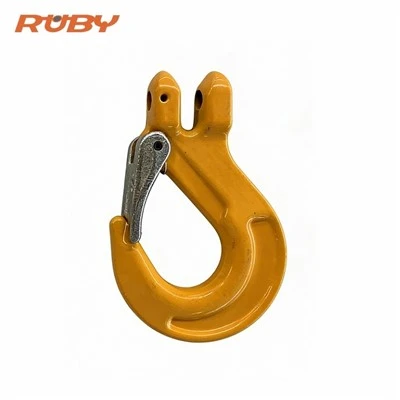
If you’re unsure which sling is right for your application, or if you need to audit your current slings to make sure they meet OSHA and ASME standards, don’t hesitate to reach out to our team. We’ll walk you through our products, explain how standards apply to your specific needs, and help you choose a sling that’s safe, compliant, and built to last.
Swivel Point References:
- American Society of Mechanical Engineers. (2022). ASME B30.9: Slings.
- U.S. Occupational Safety and Health Administration. (2023). 29 CFR 1910.184: Sling Use.
- Rigging Manufacturers Association. (2021). Best Practices for Alloy Steel Chain Sling Inspection and Maintenance.
- National Institute for Occupational Safety and Health. (2022). Fatality Assessment and Control Evaluation (FACE) Report: Rigging Failure Due to Non-Compliant Chain Sling.
- European Committee for Standardization. (2020). EN 1677: Chain slings for lifting purposes.
Hangzhou Ruby Imp. & Exp. Co., Ltd.
As one of the most experienced chain sling manufacturers and suppliers in China, we offer a wide range of products with superior quality. We warmly welcome you to wholesale custom made chain sling at competitive price from our factory.
Address: Taoyuan Industrial Park, Puyang Town, Xiaoshan, Hangzhou, Zhejiang, China.
E-mail: Sales5@z2lifting.com
WebSite: https://www.rubylifting.com/
