If you’ve ever worked with industrial automation, robotics, or high-precision machinery, you know servo motors are the unsung heroes of smooth, accurate operation. These motors power everything from assembly line robots to medical device positioning systems, and their performance hinges on tiny, often overlooked components: the bearings. As a servo motor bearings supplier who’s spent 12 years troubleshooting with factory maintenance teams and design engineers across 17 countries, I’ve seen firsthand how even the slightest imbalance in these bearings can derail an entire production line. Today, I want to pull back the curtain on this underdiscussed issue, break down what unbalanced bearings actually do to a servo motor, and share the real-world impacts that have sent clients scrambling to replace worn or misaligned bearings before it’s too late. Servo Motor Bearings
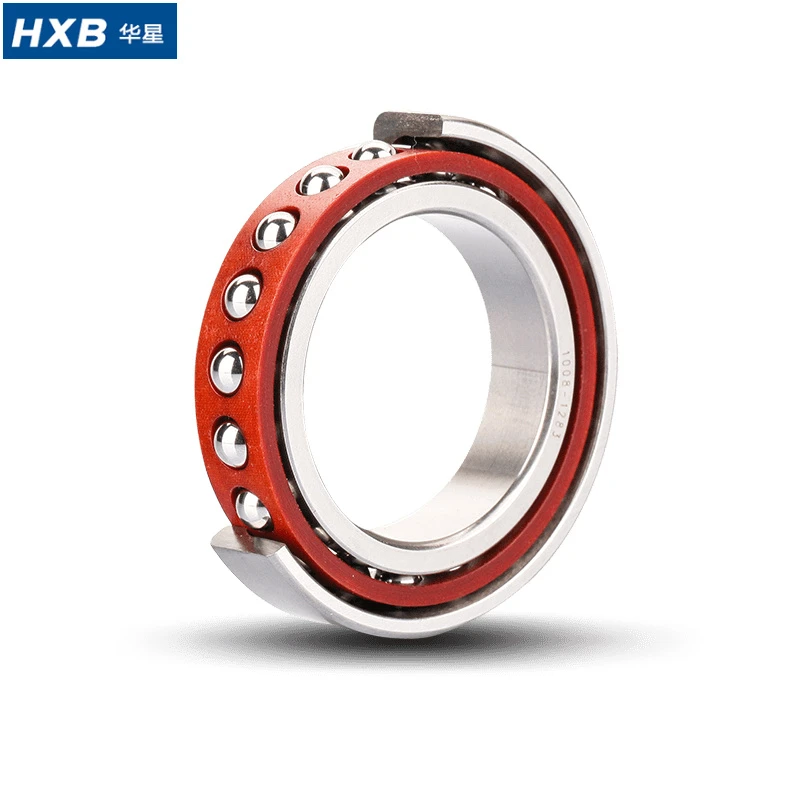
First, let’s cut through the industry jargon to define what we’re talking about here. When we refer to “unbalanced bearings” in a servo motor, we’re not just talking about the surface roughness you might notice on a old bicycle wheel. We’re referring to three distinct, related issues that often overlap: mass imbalance, misalignment, and material degradation that changes the bearing’s center of gravity. Unlike industrial bearings that run at constant, low speeds, servo bearings operate at ultra-high speeds (often up to 10,000 RPM or more) and handle dynamic, directional loads—think a robotic arm swinging 180 degrees in half a second, or a CNC machine adjusting its spindle position in milliseconds. Even a 0.0005mm shift in a bearing’s inner ring or a minor irregularity in its rolling elements can throw the entire system out of balance.
Let’s start with the most immediate and visible impact: increased vibration. Vibration from a servo motor isn’t just a nuisance—it’s the first warning sign that bearings are unbalanced. A few years back, I worked with a medical device manufacturer that was scrapping 15% of its surgical guidewires because of positioning errors, and no one could figure out why. The assembly line’s servo motor was running a 3-second cycle, picking up a tiny wire, positioning it for laser welding, and releasing it. The maintenance team checked the motor’s encoder, its drive signal, and even the laser calibration—everything came back within spec. When I brought a portable vibration analyzer to the floor, I saw a 12x spike in vibration at the motor’s operating speed, localized exactly to the drive bearing. We pulled the bearing, and found a single tiny indentation on the inner ring from a manufacturing flaw that had thrown its mass off by just 0.02 grams. At 8,000 RPM, that tiny imbalance created a centrifugal force equivalent to 1.8 kg of load pushing against the motor shaft every second. That vibration was shaking the entire robotic arm, causing the wire to shift during welding, and wasting tens of thousands of dollars a month in scrapped parts.
But vibration is just the start. Unbalanced bearings don’t just rattle—they put extreme, uneven stress on every other component of the servo motor. Servo motors are precision-built to maintain tight tolerances: the gap between the stator and rotor (called the air gap) is often less than 0.5mm. When bearings vibrate, they cause the rotor to shift back and forth, so that air gap is no longer consistent. One side might narrow to 0.3mm, while the other opens to 0.7mm. That uneven air gap leads to what’s called magnetic pull, where the stator’s magnetic field pulls harder on one side of the rotor. The result? The servo motor’s torque output becomes inconsistent. A motor that should deliver 5 Nm of torque might only put out 3.5 Nm during part of its cycle, and 6.5 Nm during another. For applications that require precise motion control—like packaging delicate food products that need consistent pressure, or robotic surgical tools that can’t apply too much force—this inconsistency is a critical failure.
I saw another example of this at a automotive parts plant that was running a robotic welder for car door frames. The line’s servo motor was cycling 2,000 times a day, and after 6 months of operation, the welds started showing gaps that led to rusting in the field. The design team assumed the robotic arm’s programming was off, so they updated the code, calibrated the path, and even replaced the weld gun—nothing fixed it. When we tested the motor, we found that unbalanced bearings had created a 10% variation in torque output over each cycle. When the torque was low, the weld gun didn’t apply enough pressure to create a full bond; when it spiked, it warped the door frame slightly, throwing off the alignment of the next part. The plant ended up replacing the bearings with our precision-balanced units, and the weld defect rate dropped to less than 0.1%—saving them an estimated $200,000 a year in warranty claims and rework.
Beyond immediate production issues, unbalanced bearings cause long-term damage that can lead to total motor failure, and that’s where the true cost hits. Servo motors are not cheap—high-precision models for robotics or aerospace can cost $10,000 to $50,000 each, and replacing one means hours of downtime, not just the part cost. The uneven stress from unbalanced bearings doesn’t just wear out the bearing itself; it fatigues the motor’s windings, the encoder (the component that tells the motor where to position itself), and the gearbox if the motor is paired with one. We had a aerospace client a few years ago that was testing a new satellite component, and their servo motor failed mid-test because of a bearing imbalance. The motor was $35,000, but the downtime delayed their launch by 6 weeks, costing them millions in contract penalties and lost time-to-market. When they pulled the failed motor apart, we could see the bearing’s inner ring had developed fatigue cracks from the constant uneven load, and the rotor’s windings had burned out because the shifting air gap caused overheating during operation.
It’s not just about large, industrial servo motors either. Smaller servo motors—used in 3D printers, camera gimbals, and even home automation systems—are just as vulnerable, even if their load is lighter. A few years ago, a maker came to me complaining that his 3D printer was printing layers that were slightly off-center, ruining his custom drone parts. His printer’s servo motor cost $150, and he’d tried adjusting the bed level, calibrating the extruder, and updating the firmware. We replaced the motor’s bearings with our high-precision balanced units, and the layer alignment improved by 98%. For small businesses and hobbyists, that cost $20 in bearings instead of $150 in a new motor, or hours of troubleshooting.
Now, you might be wondering: how do bearings become unbalanced in the first place? It’s not just poor manufacturing, though that’s a factor in about 10% of the cases we see. Most of the time, it’s preventable. Over time, as bearings operate, rolling elements (the balls or rollers inside the bearing) wear unevenly, or the raceways (the tracks the rolling elements sit in) develop pitting from contamination. Even a tiny speck of dust or metal shavings getting into the bearing can cause a scratch on the raceway, throwing the balance off. Improper installation is another big one—if a bearing is pressed onto the motor shaft at an angle, or if its housing is misaligned, that creates a permanent imbalance that gets worse as the motor runs. Even extreme temperature changes can affect balance: if a servo motor operates at 80°C for long periods, the bearing’s inner and outer rings can expand at slightly different rates, shifting the center of gravity.
As a supplier of servo motor bearings, I can tell you that the biggest mistake I see clients make is underestimating the importance of balanced bearings. Many will buy the cheapest bearing they can find, or reuse old bearings to save money, not realizing that the cost of downtime or scrapped parts is exponentially higher than the cost of a quality, balanced bearing. I’ve had clients tell me they thought “a bearing is a bearing,” but after we installed our precision-balanced units, their production uptime improved by 20%, their defect rate dropped by 12%, and their maintenance costs went down by 35%. That’s not just a guess—those are numbers from real clients across multiple industries.
So what should you do if you suspect your servo motor has unbalanced bearings? The first step is simple: listen. A healthy servo motor runs smoothly, with a low, consistent hum. If it’s making a high-pitched whine, or you can feel vibration when you touch the motor housing, that’s a red flag. You can also monitor your production data: if defect rates have gone up, or your motor’s power consumption has increased (unbalanced bearings require more energy to overcome the extra load), that’s another sign. The easiest test is to do a bearing swap: if replacing the old bearings with new, balanced units fixes the issue, you know that’s the root cause.
If you’re struggling with performance issues, downtime, or high defect rates related to your servo motor, we can help. Every application is different—whether you’re running a high-speed robotic line, a medical device, or a 3D printer—we can recommend the right precision-balanced servo motor bearings tailored to your needs. We’ve worked with thousands of clients to cut maintenance costs, improve uptime, and reduce scrap, and we’re here to help you solve your servo motor bearing issues.
Servo Motor Bearings References:
- "Servo Motor Bearings: Selection, Installation, and Maintenance" – Motion Control Association, 2021
- Vibration Analysis for Rotating Machinery – Practical Guide for Industrial Maintenance, 3rd Edition, CRC Press, 2019
- "The Impact of Bearing Imbalance on Servo Motor Performance" – Journal of Precision Engineering and Manufacturing, Vol. 22, No. 8, 2020
- "Cost of Downtime in Industrial Automation" – Manufacturing Extension Partnership, 2022
Hangzhou Huaxing Kechuang Holding Group Co., Ltd.
Hangzhou Huaxing Kechuang Holding Group Co., Ltd. is one of the leading manufacturers and suppliers of servo motor bearings in China, featured by quality products and good service. Please rest assured to buy bulk durable servo motor bearings from our factory. Welcome to view our website for more information.
Address: No.553 Yingbin Road, Linping, Hangzhou, 311100, China
E-mail: wmb@huaxingbearing.com
WebSite: https://www.hxbbearing.com/
