If you’re a plant manager or production supervisor working with rolled materials—whether it’s plastic film, aluminum foil, paper, or textiles—you’ve probably dealt with a common headache: siloed equipment that slows your workflow and creates extra work. Last quarter, a customer reached out to me, frustrated. He ran a facility that made flexible packaging materials, and his slitting machine worked fine on its own, but he had to manually move rolls from his slitter to his rewinder, then to a laminator. That added 45 minutes of downtime per shift, doubled his risk of roll damage from improper handling, and required three extra part-time employees just to keep the lines moving. He asked me a question I get all the time: “Can a slitting machine even integrate with other production equipment, or is it stuck as a standalone workhorse?” Slitting Machine

For anyone who’s operated a slitting machine—your work is all about precision: slicing wide parent rolls into consistent, narrow widths, trimming edge waste, and ensuring every roll meets thickness and length specs. For decades, slitters were designed to do one job, and one job only, with little room to connect to adjacent equipment. But today, the answer is a resounding yes. Integrating slitting machines with other production tools isn’t just a nice-to-have—it’s a way to cut downtime, reduce human error, and boost your bottom line. As a slitting machine supplier who’s worked with small fabric converters and large packaging manufacturers alike, I’ve seen integration solve problems many operators didn’t even know they had.
Let’s start with the most common integration: linking a slitting machine directly to a unwind station and a rewinder. A standard slitting line uses a unwind station to feed the wide parent roll into the slitter, which cuts it into narrower rolls, and a rewinder to collect those finished slits. A traditional standalone slitter requires you to thread a new parent roll into the unwind, load finished slits onto the rewinder shaft, and manually adjust tension between each step. When you integrate these three components, you create a continuous line. The unwind station can automatically splice a new parent roll as soon as the current one runs out—no manual threading—while the slitter’s control system syncs speed with the rewinder, eliminating over-tensioning that causes roll breaks or wrinkles. I installed this exact setup for a paper converter in Ohio last year; their downtime from roll breaks dropped by 60% in the first month, and they saved nearly $12,000 annually in labor costs from cutting manual roll handling.
But integration doesn’t stop at basic line components. Many converters need to combine slitting with processes like laminating, printing, or inspection. For example, a customer of mine that makes flexible food packaging used to slit plain plastic film, then send it to a separate printing line, then back to a slitter to cut printed film into retail-ready widths. The back-and-forth transport meant scratches on printed surfaces and misaligned cut edges. By integrating a slitting machine with a inline flexo or gravure printer, their workflow went from three separate machines to one continuous line. The slitter’s software communicates directly with the printer, so cuts align perfectly with printed design marks—no manual alignment checks. We even added a vision inspection system between the printer and slitter that flags misprinted areas, and the slitter automatically skips those defects. That customer’s defect rate dropped from 3.2% to 0.8%, and their throughput increased by 25% because they eliminated the time spent moving materials between lines.
Another big area of integration is with quality control and data systems. Modern slitting machines have built-in sensors that measure thickness, width, tension, and edge trim waste. When you connect those sensors to your plant’s Manufacturing Execution System (MES) or ERP software, you get real-time data on every roll—no more manually logging specs into spreadsheets. For a non-woven fabric manufacturer I work with, this integration let them track which slitting runs had higher waste, adjust blade settings automatically to reduce trim loss, and generate compliance reports for their medical fabric clients without extra paperwork. The MES sends orders to the slitter, adjusts blade positions to match required widths, and sends finished roll specs to the warehouse for shipping. It’s a seamless loop that removes almost all human intervention from data tracking.
Now, I know what some of you are thinking: “My facility is old. Can I really integrate a new slitting machine with my existing equipment, or is it only for new plants?” The short answer is: yes, most of the time. As a supplier, we design our slitters with compatibility in mind. We use open standard communication protocols—like Modbus, Profinet, and Ethernet/IP—that work with nearly all industrial equipment, even if it’s 10 or 20 years old. Last year, we retrofitted a 15-year-old rewinder for a corrugated converter, then connected a new slitting machine to it. The retrofit cost a fraction of buying an all-new line, and the converter’s productivity jumped 30% because they didn’t have to replace equipment that was still running well. The key here is to work with a supplier that doesn’t force you to rip out existing gear; instead, they’ll audit your current setup to find out how to connect without overspending.
Of course, integration isn’t without its challenges, and I’ll be honest about that. The biggest pitfall is poor communication between equipment. If your slitter’s control system can’t “talk” to your rewinder or printer, you’ll end up with more problems than before—like misaligned cuts, roll tension issues, or downtime from unforeseen errors. That’s why it’s critical to work with a supplier that offers end-to-end integration support, not just a slitting machine. We don’t just sell equipment; we help design the line, test the communication between components, and train your team to operate the integrated system. I’ve had customers try to integrate on their own with generic parts, only to end up with lines that run 20% slower than expected. Investing in expert integration upfront saves you from costly rework later.
Another challenge is scalability. If you’re a small converter now, you might outgrow your line in three years. That’s why we design our slitters with modular integration capabilities. You can start with a basic slitting/rewinder line, then add a printer or inspection system later without replacing the entire machine. A textile customer in North Carolina started with a standalone slitter, then added a laminator two years later by upgrading our slitter’s software and adding a few hardware components. They didn’t have to pause production for a full line installation, and they saved 40% compared to buying a new integrated line from scratch.
Let’s talk about a real-world example that’s close to home. One of my longest-standing customers is a specialty foil converter in Chicago. For years, they ran three standalone machines: a foil unwinder, a slitter, and a rewinder. Each day, their crew spent two hours moving 500-pound rolls between machines, and they had an average of eight roll breaks per shift, mostly from mishandling. Three years ago, we integrated their slitter with a new high-speed unwinder and rewinder, plus a vision system that checks for pinholes in the foil. The result? Their downtime dropped from 18 hours a month to 4.5 hours, their defect rate fell by 75%, and they were able to take on three new clients because their output increased so much. The best part? They didn’t have to hire extra employees—they reallocated the two people who used to move rolls to quality control, which made their product even more reliable.
Now, if you’re considering integrating a slitting machine, here are a few questions to ask yourself (and your supplier) to make sure you do it right. First, what’s your core product? If you run flexible packaging, you might need to integrate with printing or laminating. If you run paper or textiles, you might need to link to cutting or wrapping equipment. Second, what’s your current bottleneck? If your slitting process is the slowest part of your line, integrating it will fix that. If your bottleneck is downstream, like packaging, you might want to prioritize integrating your slitter with that first. Third, what’s your budget for integration? Don’t just look at the cost of the slitting machine—factor in labor savings, reduced waste, and higher throughput. For most customers, integration pays for itself in 12 to 18 months.
I’ve seen too many operators hold back on integration because they think it’s too complicated or too expensive. But the truth is, modern slitting machines are built to connect, and the benefits far outweigh the costs. Whether you’re a small shop with a single line or a large plant with multiple production lines, integrating your slitting machine can transform your workflow, cut costs, and help you take on more business.
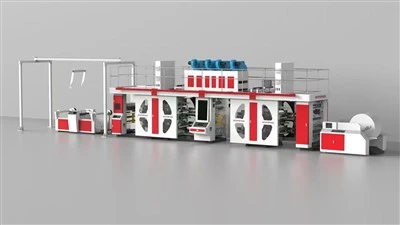
If you’re ready to stop dealing with siloed equipment and start maximizing your production, let’s talk. We can audit your current line, show you how a slitting machine integration fits your specific products and needs, and provide a custom quote that aligns with your budget. No generic solutions, no pressure—just straight talk about what will work for your facility.
Flexo Printing Machine References:
- Manufacturing Extension Partnership. (2022). Integrating Production Equipment: Best Practices for Small to Medium Manufacturers. U.S. Department of Commerce.
- Slitting Technology Association. (2023). Modern Slitting Line Integration: Efficiency and Quality Improvements. International Manufacturing Trade Journal.
- Industrial Equipment News. (2021). Retrofit Integration: A Cost-Effective Alternative to New Production Lines. Endeavor Business Media.
- Journal of Industrial Engineering. (2022). The Impact of Line Integration on Production Downtime and Waste Reduction. Institute of Industrial and Systems Engineers.
Wenzhou Haidobao Machinery Technology Co., Ltd.
As one of the most professional slitting machine manufacturers in China, we have world-leading production equipment and strong manufacturing capabilities. Please rest assured to wholesale durable slitting machine for sale here from our factory. All customized machines are with high quality and competitive price.
Address: No. 116, Xinglong Road, Wanquan Town, Pingyang County
E-mail: 214949666@qq.com
WebSite: https://www.hdbmachinery.com/
