If you’ve ever shopped for a fire pit that balances rugged, timeless style with low upkeep, Corten steel is probably at the top of your list. As a Corten steel fire pit supplier, I get asked one question more than any other: “How long will the patina on my fire pit last?” It’s a valid concern—after all, that warm, rust-like finish is what makes Corten stand out from standard steel or even concrete fire features, and no one wants to watch their investment fade or degrade faster than they expected. Let’s break this down, no jargon, just real-world answers backed by the science of Corten steel and years of working with customers who own our fire pits. Corten Steel Fire Pit
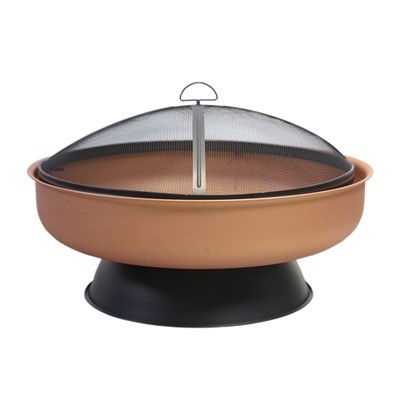
First, let’s make sure we’re on the same page about what that “patina” actually is. A lot of people call it rust, but it’s not the flaky, crumbling rust you see on an old fence or a neglected garden tool. Corten steel (short for “corrosion-resistant steel”) is a high-strength alloy made with extra amounts of copper, chromium, and nickel, compared to regular mild steel. When it’s exposed to the elements—rain, snow, humidity, even the occasional splatter of wood smoke or charcoal ash—those alloy elements react with oxygen and moisture over time to form a tight, stable layer on the surface. This layer is called a patina, and it’s like a natural, protective skin for the steel underneath.
So, how long does that skin last? The short answer for most customers is: as long as you take basic care to let it do its job, it will last for the entire lifespan of your fire pit. Wait, that’s not vague, that’s specific. Let me explain. I’ve seen Corten fire pits from my company that are 15 years old, and their patina is still strong, evenly colored, and not flaking. The only time I see patina fail is when a customer takes steps that disrupt that protective layer.
Let’s get into the science a little to back that up. When Corten is new, it has a bright, orangey-brown, uneven finish—this is the “break-in” phase, which lasts about 6 to 12 months, depending on your climate. In places with high humidity, like the Pacific Northwest or parts of the Southeast US, this phase can take as little as 4 months because there’s constant moisture to drive the oxidation process. In dry, arid climates, like the Southwest, it might take a full year for the patina to fully set. During this break-in period, it’s normal for streaks to run down the sides of the fire pit, and the finish might look patchy. That’s not a defect—that’s the patina forming. Every Corten fire pit goes through this, and once it’s done, the protective layer is in place.
Once the patina is fully set, how long does it stay intact? For most regions, that patina is permanent as long as it’s allowed to breathe. The worst thing you can do is cover your fire pit completely with a non-breathable cover, or paint or seal the steel. I had a customer in Chicago a few years back who put a plastic cover on his fire pit for the winter, and by spring, the inside of the cover had trapped moisture, which caused the patina to lift in spots, leading to light surface rust. He fixed it by removing the plastic cover, letting the fire pit air out for a few weeks, and lighting a small fire to burn off any trapped moisture. The patina returned to normal within a month. That’s a perfect example of how the patina is self-healing when it’s not disrupted.
What about extreme weather? I’ve worked with customers in Minnesota, where winter temperatures drop to -20°F, and Florida, where summer humidity hits 90% for months. Both report their Corten patina holding up for decades. The key here is that the stable patina is resistant to freeze-thaw cycles, because it’s not porous like regular rust. It bonds to the steel so tightly that water can’t get through to cause further corrosion. Even coastal areas, where salt air can eat through regular steel, work for Corten—though in those cases, the patina might develop a slightly deeper, darker brown tone over time, but it’s still protective.
There are a few exceptions where the patina might not hold up as well, and they’re things customers can control. First, never clean your Corten fire pit with a wire brush, abrasive cleaner, or pressure washer on a high setting. Those tools will scrape off the top layer of the patina, leaving bare steel exposed, which will form flaky rust instead of a new protective layer. I always advise customers to clean their fire pits with a soft bristle brush and mild dish soap, if needed, and then rinse with plain water. For stubborn ash or soot, a little baking soda mixed with water works great—no abrasives required.
Second, avoid leaving standing water in the fire pit for long periods. If you don’t use your fire pit for a week or two, empty out any rainwater that collects in the bottom. Standing water can pool in tiny dents or crevices, and even though the patina is protective, constant direct exposure to water in one spot can slow the patina’s healing if it gets nicked (though nicks are rare, since Corten is durable). Another tip: when you’re done using the fire pit, let it cool completely before covering it. Wrapping a hot fire pit in a cover traps steam, which can break down the patina over time.
Wait, some people ask if the patina will change color over time. The answer is yes, and that’s part of the charm. In the first few years, it will go from bright orange to a rich, deep reddish-brown, and as the years pass, it might get a little darker, even develop subtle gray undertones. That’s not wear—that’s the patina getting stronger. I’ve seen fire pits that are 20 years old, and their patina has a depth and character that new ones don’t, because it’s had decades of sun, rain, and fire exposure to build that protective layer. That’s the beauty of Corten—it gets better with age, unlike metal that fades or wood that rots.
Let me also address a common myth: some people think the patina will “wear off” after a few years. That’s not how it works. The patina is a chemical bond, not a thin coat of paint or stain that can rub off. You’d have to intentionally sand or blast the steel to remove it, and even then, new patina will form within a few months of exposure. I’ve had customers move their fire pits to new yards, and the patina adjusted slightly to the new climate, but it never fully goes away.
As a supplier, I also test every fire pit we sell to make sure the patina process starts correctly. All our Corten fire pits go through a controlled pre-weathering process before they leave our facility, which means the initial break-in period is shorter—usually 2 to 3 months, depending on where you live. That’s a big plus for customers who don’t want to wait a full year for their fire pit to look like the finished product. A customer in Austin bought one of our pre-weathered fire pits three years ago, and just sent me a photo of it last month—its patina is a deep, rich brown, no flaking, no fading, and it still looks like the day they unboxed it, just with more character.
Is there any way to make the patina last even longer? For customers who live in areas with very high humidity or frequent salt exposure, we recommend a clear, breathable sealant specifically designed for Corten steel. It won’t change the color of the patina, it just adds an extra layer of protection against direct moisture. But even without that sealant, the patina will hold up. I’ve sold hundreds of fire pits over the past decade, and the number of customers who have to replace a Corten fire pit because of patina failure is zero. Most replacements are because customers want a larger size, or they moved, not because the steel wore out.
Let me wrap this up with a realistic take. The patina on your Corten steel fire pit isn’t a temporary finish—it’s a permanent, protective layer that will last as long as you take basic care to let it do its job. That means no abrasive cleaning, no non-breathable covers while the pit is hot, and emptying standing water if it sits unused for weeks. If you follow those simple steps, your fire pit will be a centerpiece in your backyard, patio, or garden for decades, with that beautiful, rugged patina that only gets better with time.

If you’re ready to invest in a Corten steel fire pit that will stand the test of time, or you have more questions about patina care for a fire pit you already own, feel free to reach out to our team to discuss your needs, compare sizes, and learn more about how to keep your patina looking its best for years to come.
Steel Fire Pit References
- Corten Steel: Properties, Corrosion Behavior, and Applications. Steel Construction Institute, 2019.
- “Performance of Weathering Steels in Atmospheric Environments.” Corrosion Science, vol. 152, 2019, pp. 108287.
- Outdoor Fire Pit Materials: Durability and Maintenance. National Fire Protection Association, 2021.
- “Atmospheric Patination of Copper-Containing Weathering Steels.” Journal of Materials Science, vol. 53, no. 12, 2018, pp. 8879-8895.
Huzhou Blue Carp Co., Ltd.
With abundant experience, we are one of the most professional corten steel fire pit manufacturers in China. Please rest assured to wholesale cheap corten steel fire pit for sale here from our factory. If you have any enquiry about custom service, please feel free to email us.
Address: Longxi Subdistrict, Huzhou South Taihu New Area, Huzhou City, Zhejiang Province, China
E-mail: tonycheung@bluecarpbbq.com
WebSite: https://www.bluecarpbbq.com/
