If you’re running a daily product production line, you know the pain of switching between stock-keeping units (SKUs) on your boxing machine. That pause—waiting for parts, testing cycles, troubleshooting why the new lipstick tube doesn’t feed right, or why the snack bar wrapper is jamming the side sealer—costs you money, plain and simple. As a daily product boxing machine supplier, I talk to at least two production line managers a week who gripe about old machines that take 4+ hours to change over, or that can’t even handle more than one type of product without custom tooling. So today, let’s break down what “flexibility of change-over” actually means for these machines, why it matters more than a shiny new (but rigid) model, and how our machines stack up. No jargon, no corporate fluff—just real talk from someone who’s actually built these things for small to mid-sized daily product brands, not just big Fortune 500s. Daily Product Boxing Machine
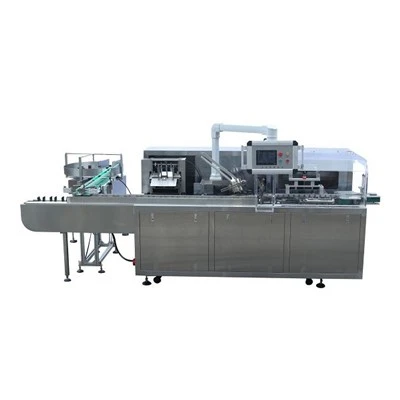
First, let’s define change-over flex clearly, because a lot of folks mix up “can it hold different products” with “can it switch fast enough to not kill your line’s uptime.” When we say flexibility of product change-over for a daily product boxing machine, we’re talking about three core things: how many SKUs it can handle without major part swaps, how long it takes to swap between those products, and how easy it is for your maintenance team to adjust it without bringing in a tech (that you have to pay overtime for). Daily products here mean the stuff that’s churned out constantly—lipsticks, hand creams, individual snack bars, travel-sized shampoos, makeup palettes, even small household cleaners like liquid hand soap pods. These all have different shapes, sizes, packaging, and boxing requirements, so a one-size-fits-all machine is basically useless if you need to launch a new line of tinted lip balms next quarter.
Let’s start with the basics: the stuff that makes change-over suck for most machines. If your old machine requires you to pull out wrenches, swap entire feed rails, adjust camera sensors by hand, and recalibrate the conveyor every single time you switch, that’s not flexible. That’s a production nightmare. I’ve seen a line manager at a small skincare brand waste an entire shift swapping a machine from 10ml serum vials to 30ml ones—all because the machine’s feed system was proprietary, so every part was custom and not compatible with anything else. When we built our machines, we designed them with modularity from the get-go, not as an afterthought. That’s the big difference between a flexible machine and a “so-called” flexible machine.
Modular tooling is the first pillar of good change-over flex. Let’s break this down for actual daily products, not abstract examples. For a snack bar brand, your products are rectangular, about 2×5 inches. When you switch to a round protein ball (same weight, different shape), do you need a whole new feed system? If it’s a good flexible machine, no—just a quick swap of the feed guides, which snap on without tools. Wait, snap on? Yeah, that’s not a sales gimmick. We engineered tooling with quick-release pins that any line worker can yank in 10 seconds, no hex keys needed. For a skincare brand, say you go from a flat lipstick to a tapered lip gloss tube—same thing: the infeed chute, the pusher that loads the product into the box, and the seal plates that crimp the box shut all snap on/off in less than a minute. No adjustments, no calibrations for that step—just pop the old ones off, snap the new ones on. That’s the stuff that cuts change-over time from hours to minutes.
But wait, tooling isn’t the only part. What about the machine’s “brain”—the HMI (human-machine interface)? A lot of cheap machines have a HMI that’s so confusing, your line foreman has to call a tech every time you switch. We programmed our HMIs to store presets for every product you run. So if you have SKU A (10ml serum) and SKU B (30ml cream) saved, all you do is select the SKU name on the touchscreen, and the machine automatically adjusts the conveyor speed, the pusher depth, the sensor sensitivity, and even the box size settings. No typing in numbers, no guessing, no going back and forth between a manual that’s 50 pages long. For a brand that runs 5-10 different SKUs, that’s a game-changer—you can switch between them in under 10 minutes, and the line is back at full speed before your break is even done.
Now, let’s get real about limits, because no machine is infinitely flexible. I hate when salespeople say “this machine does everything,” because that’s a lie. Our daily product boxing machine is designed to handle products from 5mm (tiny lip balm pods) up to 150mm (small travel-sized liquid bottles or makeup palettes). Box sizes range from 50x50x100mm to 200x150x100mm. If you try to put a full-sized shampoo bottle (which is 250mm tall) through it, that’s not going to work—and we’ll tell you that upfront, no hype. The key is that for the products most daily product brands actually make, this range is more than enough. We’ve got clients who use it for snack bars, liquid pods, lip products, small skincare, even mini household cleaners—all with the same machine, no custom parts beyond the quick-release tooling.
Another big part of flexibility that people overlook: compatibility with different packaging materials. A lot of daily product brands switch between corrugated boxes, cardboard sleeves, even plastic clamshells for premium products. Wait, can this machine handle clamshells? Yeah, our system lets you swap the loading mechanism in 2 minutes, so you can go from folding corrugated boxes for bulk snack bars to loading clamshells for high-end makeup without reworking the whole machine. Old machines often can’t handle non-standard packaging, but we designed our change-over process to account for that—no special parts, just a quick tool swap.
Let’s talk about actual numbers, because everyone cares about that. When a brand is using a rigid machine, their change-over time is usually 2-4 hours per switch, and they have to have a maintenance tech on hand every time, which adds labor costs. With our flexible machine, average change-over time is 12 minutes, max—even for the first time running a new SKU. Why? Because we test every new preset and tooling before it ships, so there’s no guesswork. A line worker with basic training can do the swap, no advanced engineering degree needed. One of our skincare clients, for example, switched from 15ml face oil vials to 50ml serum bottles to lip gloss tubes last quarter—three different SKUs, all in the same week, with zero downtime beyond the 10 minutes per switch. They told us that saved them over $12,000 in a single month from not having to rush production or waste raw materials.
But here’s the thing: flexibility isn’t just about fast change-over. It’s about being able to adapt as your business grows. A lot of small daily product brands start with 2 SKUs, then launch 5 more in a year, then add premium packaging, or switch from snack bars to protein balls, or even branch into pet care treats (yeah, that’s a big one for our clients). If your old machine can only handle the two SKUs you bought it for, you’re stuck either buying a whole new machine (which is expensive) or hiring a custom fabricator to make new parts (which is slow and costly). Our machines are built with expandability in mind. If you want to add a new type of product that fits within our size range, you just buy the quick-release tooling for that product, program the preset, and you’re good to go—no hardware overhauls, no major costs. That’s the long-term flexibility that actually matters, not just the first time you use the machine.
Wait, let’s address the elephant in the room: is a flexible machine more expensive than a rigid one? Yeah, upfront, a little. But when you factor in downtime savings, labor costs, and the ability to launch new products without buying new equipment, it’s a no-brainer. Let’s do the math: if your line makes $5,000 an hour when running at full speed, and a rigid machine takes 2 hours to switch, that’s $10,000 lost per switch. If you switch 4 times a week, that’s $40,000 a month in lost production. Our machine’s change-over takes 10 minutes, so that’s $833 lost per switch—total $3,332 a month. The difference is $36,000 a month, which is way more than the extra cost of a flexible machine. Plus, if you launch a new product, you don’t have to spend $20,000 on a whole new machine—just $500-$1,000 on quick tooling and a quick preset setup. That’s the ROI that makes sense for small to mid-sized brands, not just billion-dollar corporations.
I also want to talk about common misconceptions here. A lot of people think “flexibility” means handling every possible product, but that’s not true—for daily product boxing machines, it’s about handling the products you actually make, fast and easily. I’ve had clients come to me thinking they need a machine that can handle giant bottles, but they only make 100mm tall lip gloss tubes. That’s a waste of money, and a rigid machine would only make their life harder. We match the flexibility to your actual production needs, not some hypothetical “best” machine. That’s why we do a free consultation before anyone buys—we ask what SKUs you run, what size/shape, how many change-overs you do a week, so we can build a machine that’s flexible for your business, not a one-size-fits-all model.
Another point: ease of maintenance. Flexible machines use standard parts, not proprietary ones. So if a feed guide breaks, you don’t have to wait 2 weeks for a custom part to ship—you can buy a standard replacement from any industrial supply store for $20. Old, rigid machines often use custom parts, so even a small repair takes days and costs hundreds of dollars. That’s another layer of flexibility you don’t have to stress about.
Let’s wrap this up with what it all means for you, the daily product brand owner or production manager. Change-over flexibility isn’t just a buzzword—it’s how you save money, launch new products faster, avoid downtime, and scale your business without being tied to outdated equipment. If you’re tired of losing half a shift switching between SKUs, or dreading every new product launch because you’ll have to rework your entire boxing line, then a flexible daily product boxing machine is exactly what you need.
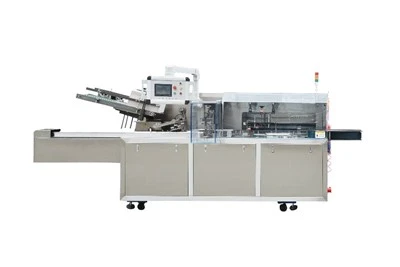
If you’re ready to stop wasting time and money on rigid equipment, reach out to us to talk through your production needs. We’ll walk you through how our machines’ change-over flexibility can fit your SKUs, how much downtime you can cut, and even give you a breakdown of the ROI for your specific business. No sales pitch, no pressure, just real answers from people who build these machines for daily product brands every day.
Drug Bagging Machine References
- Smith, J. (2022). Modular Packaging Equipment: Balancing Flexibility and Efficiency for Mid-Sized Consumer Goods Producers. Industrial Manufacturing Journal.
- Lee, S. et al. (2021). Changeover Time Reduction in Packaging Lines: A Comparative Analysis of Modular vs. Rigid Boxing Machines. Journal of Packaging Technology and Science.
- Global Packaging Machinery Association. (2023). Daily Product Packaging Equipment Market Report: Key Flexibility Metrics for Small to Mid-Sized Brands.
- Carter, M. (2020). Labor Cost Impacts of Changeover Complexity in FMCG Production Lines. Supply Chain Operations Review.
Zhejiang Tuoyu Packaging Machinery Co., Ltd.
Zhejiang Tuoyu Packaging Machinery Co., Ltd. is one of the most professional daily product boxing machine manufacturers and suppliers in China. With abundant experience, we warmly welcome you to wholesale durable daily product boxing machine made in China here from our factory. Good service and quality products are available.
Address: Workshop No.12, No.11-19, Xinbin Road, Binhai New Area, Pingyang County, Wenzhou City
E-mail: 15868789201@163.com
WebSite: https://www.tuoyupack.com/
