As a supplier of Solar DC Cables, I’ve encountered numerous technical inquiries regarding the products we offer. One of the most intriguing and frequently asked questions is about the skin effect in solar DC cables. This phenomenon is both fascinating from a scientific perspective and has practical implications for the performance and efficiency of solar power systems. In this blog, I’ll delve into what the skin effect is, how it relates to solar DC cables, its impact on these cables, and why it matters to those in the solar energy industry. Solar DC Cables

Understanding the Skin Effect
The skin effect is a well – known electromagnetic phenomenon that occurs when an alternating current (AC) flows through a conductor. In a conductor carrying an AC, the current density is not uniformly distributed across the cross – section of the conductor. Instead, the current density is highest near the surface of the conductor and decreases as you move towards the center. This results in the majority of the current flowing through a thin layer near the surface, which is called the "skin."
The reason behind the skin effect is the self – inductance of the conductor. When an AC passes through a conductor, it creates a magnetic field around it. The magnetic field induces eddy currents within the conductor. These eddy currents oppose the flow of the original current, and the opposition is stronger in the center of the conductor compared to the surface. As a result, the current is pushed towards the outer surface of the conductor.
The depth of the skin, known as the skin depth (δ), can be calculated using the following formula:
[
\delta=\sqrt{\frac{2}{\omega\mu\sigma}}
]
where (\omega = 2\pi f) is the angular frequency of the AC, (\mu) is the magnetic permeability of the conductor material, and (\sigma) is the electrical conductivity of the conductor material.
Skin Effect in Solar DC Cables: A Paradox?
Solar power systems primarily deal with direct current (DC). In a pure DC system, the current flows uniformly across the cross – section of the conductor because there is no changing magnetic field to induce eddy currents. So, the traditional skin effect, as described for AC, does not occur in a steady – state DC situation.
However, in real – world solar DC cables, the situation is more complex. Solar DC systems are not always in a perfectly steady – state condition. There are several factors that can introduce alternating components or ripple in the direct current:
- Inverters: In a solar power system, an inverter is used to convert DC to AC for grid connection or use in AC – powered devices. Some inverters can cause a small amount of ripple in the DC input. This ripple is a small – amplitude alternating current component superimposed on the DC current.
- Switching Devices: In modern solar power electronics, there are various switching devices such as MOSFETs and IGBTs. These devices operate at high frequencies and can introduce high – frequency components in the DC circuit.
- Environmental Factors: Variations in sunlight intensity, such as due to clouds passing over the solar panels, can cause fluctuations in the DC output of the panels. These fluctuations can also introduce small alternating components in the DC current.
Impact of the Skin Effect on Solar DC Cables
Although the alternating components in solar DC cables are usually small, the skin effect can still have some notable impacts:
- Increased Resistance: As the current is concentrated near the surface of the conductor due to the skin effect, the effective cross – sectional area available for current flow is reduced. According to the formula (R=\rho\frac{l}{A}) (where (R) is resistance, (\rho) is resistivity, (l) is length, and (A) is cross – sectional area), a reduced cross – sectional area leads to an increase in resistance. Higher resistance means more power is dissipated as heat ((P = I^{2}R)), which can reduce the overall efficiency of the solar power system.
- Heating Issues: The increased power dissipation as heat can cause the temperature of the cable to rise. Excessive heating can degrade the insulation material of the cable over time, leading to potential safety hazards and a shorter lifespan of the cable.
- Signal Interference: High – frequency components in the DC current can also cause electromagnetic interference (EMI). This interference can affect the performance of other sensitive electronic components in the solar power system, such as inverters, charge controllers, and monitoring devices.
Considerations for Solar DC Cable Design and Selection
As a Solar DC Cables supplier, we take the skin effect into account when designing and manufacturing our cables. Here are some key considerations:
- Conductor Material: Different conductor materials have different electrical conductivities and magnetic permeabilities. Materials with higher conductivity, such as copper, are preferred as they can reduce the impact of the skin effect. Additionally, some alloys can be specifically designed to minimize the skin – effect related losses.
- Cable Geometry: The shape and size of the cable can also influence the skin effect. For example, stranded cables can reduce the impact of the skin effect compared to solid cables. Stranded cables consist of multiple small individual strands, which effectively increase the surface – area – to – volume ratio, allowing more current to flow near the surface.
- Shielding: To reduce electromagnetic interference caused by the high – frequency components, shielding can be added to the cable. A shielded cable can prevent the electromagnetic fields from radiating out and affecting other components in the system.
Why the Skin Effect Matters in the Solar Energy Industry
The solar energy industry is constantly striving for higher efficiency and reliability. Even small losses due to the skin effect can have a cumulative impact on the overall performance of a solar power system, especially in large – scale solar farms.
- Efficiency: By minimizing the impact of the skin effect, we can reduce power losses in the cables and improve the overall efficiency of the solar power system. This means more of the energy generated by the solar panels can be converted into usable electricity, resulting in higher energy yields.
- Cost – effectiveness: Higher efficiency also translates to cost – effectiveness. Less power loss means less wasted energy, which can save money in the long run. Additionally, by reducing the risk of cable damage due to heating, the need for frequent cable replacements is minimized.
- System Reliability: A solar power system with minimal interference and reduced heating issues is more reliable. This is crucial for ensuring continuous and stable power generation, especially in remote areas or off – grid applications.
Conclusion
As a supplier of Solar DC Cables, we understand the importance of addressing the skin effect in our products. While the skin effect is typically associated with AC, the presence of alternating components in real – world solar DC systems means that it can still have a significant impact on cable performance.
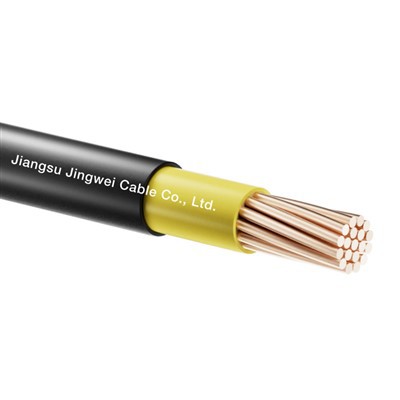
By carefully considering conductor materials, cable geometry, and shielding, we can design and manufacture solar DC cables that minimize the effects of the skin effect. This, in turn, leads to more efficient, cost – effective, and reliable solar power systems.
Power Cable If you’re in the market for high – quality Solar DC Cables that take into account the latest scientific understanding of the skin effect and other relevant factors, we’re here to help. Whether you’re working on a small residential solar project or a large – scale commercial installation, our team of experts can provide you with the right cables and technical support. We encourage you to reach out to us to discuss your specific requirements and explore how our products can enhance the performance of your solar power system.
References
- Electric Circuits (8th Edition) by James W. Nilsson and Susan A. Riedel.
- Power Electronics: Converters, Applications, and Design (3rd Edition) by Ned Mohan, Tore M. Undeland, and William P. Robbins.
- Solar Power Engineering Handbook edited by Subhendu M. Mukherjee.
Jiangsu Jingwei Cable Co., Ltd.
As one of the leading solar dc cables manufacturers in China, we warmly welcome you to buy bulk durable solar dc cables made in China here from our factory. All cables are with high quality and competitive price. For pricelist and free sample, contact us now.
Address: Industrial Concentration Zone C, Guanlin Town,Yixing City, Jiangsu Province
E-mail: marilyn.wang@jingwei-cable.com
WebSite: https://www.jwcable.com/
