As a JIS flange supplier who’s spent over a decade working directly with manufacturers, construction firms, and process engineers across Asia, Europe, and North America, I get asked this question more often than you might expect: “Are JIS flange standards updated regularly?” It’s a fair question, especially because flange standards—whether JIS, ANSI, or DIN—aren’t just arbitrary rules. They’re the backbone of every pipeline, pressure vessel, and industrial system that relies on tight, leak-proof connections. If a standard is outdated, parts don’t fit, safety risks spike, and whole projects can get delayed. So let’s cut through the confusion, pull from real experience on the shop floor and in client meetings, and break down exactly how JIS flange standards evolve, why those updates matter, and what that means for anyone sourcing JIS flanges right now. Jis Flange
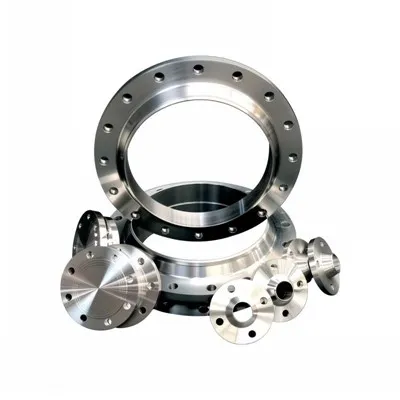
First, let’s get one thing straight: JIS stands for Japanese Industrial Standards, and it’s developed and maintained by the Japanese Industrial Standards Committee (JISC), a body that brings together engineers, manufacturers, trade groups, and even end-users to review and revise standards every 3 to 5 years on average—though that timeline can shift based on industry pressures. This isn’t just a box-ticking exercise. I’ve seen first-hand how a client will call in a panic because a 2018 JIS 10K flange they ordered won’t line up with a new 2022 piping component they sourced from a newer supplier. That mismatch isn’t a mistake on anyone’s part—it’s exactly why standard updates happen.
Take a concrete example from my own work: a major petrochemical client in Osaka came to me two years ago with a request for flanges for a new refining unit. They initially asked for JIS B2220 (the core standard for steel flanges) as it was published in 2018, but their engineering team later flagged a notice that JISC had released an amendment to B2220 in early 2021. The update adjusted the dimensional tolerances for bolt holes to align more closely with global standards (like ISO 7005) to reduce cross-border supply chain friction. Before that, Japanese manufacturers and importers had to either source strictly JIS-compliant bolts from Japan or machine custom bolts, which added weeks and thousands of dollars to lead times. The 2021 amendment fixed that. That’s the kind of real-world driver behind JIS updates: not just internal changes, but keeping pace with global industrial needs.
Another key area of JIS flange updates is material performance. For decades, JIS flanges used carbon steel A105 equivalents (we call it JIS S25C carbon steel) for most low-to-medium pressure applications. But around 2019, JISC revised the material specification for high-pressure flanges (JIS B2205, the standard for pressure vessel flanges) to include a new alloy variant: JIS F316L-Mod, a modified 316L stainless steel with improved corrosion resistance for use in desalination plants and coastal facilities. A couple of our largest marine clients had been reporting that standard 316L flanges were corroding prematurely in saltwater environments, and their feedback was directly cited in JISC’s revision meetings. As a supplier, that meant we had to update our stock—we now keep JIS F316L-Mod flanges in stock for sizes from ½” to 24”, something we didn’t carry before the 2019 update.
It’s not just materials and dimensions either. Safety is a huge driver of JIS standard revisions, and that’s something I pay extremely close attention to, because it affects the flanges we produce and the clients who use them. Back in 2015, JIS released a major update to JIS B2210, the standard for cast iron flanges. The old version didn’t require any pressure testing for flanges over 12” in diameter, but a string of leaks in municipal water pipelines across Hokkaido in the early 2010s led JISC to mandate a 100% hydrostatic pressure test for all cast iron flanges 16” and larger. At the time, this meant we had to invest in a new testing bay on our production line—an expense that was worth it, because it meant our clients knew every flange we shipped was tested to meet the latest safety requirements. We also updated our packaging to include a test certificate number that clients could cross-reference with JISC’s database, which gave them peace of mind for their regulatory audits.
Now, I know some people will hear “regular updates” and worry that JIS flanges are too unstable to source consistently. That’s a myth, and it’s one we work hard to counter as a supplier. The updates don’t scrap old standards overnight—JISC always allows a 5-year transition period, which means we can still fulfill orders for flanges to older JIS versions as long as the client specifies clearly. For example, if a client is working on a vintage industrial restoration project that requires a 2008 version of JIS B2220, we have a section of our warehouse dedicated to surplus old stock (and we can even produce new flanges to the older spec if needed, as long as we have the dimensional drawings). The transition period is crucial because it prevents disruptions for projects that rely on legacy JIS systems. That’s a detail I always highlight for clients who are hesitant to switch to newer standards; we don’t force anyone to use the latest version if their project needs an older one.
But here’s the thing: most of our clients these days do want the latest standards. Why? Because JIS updates often bring efficiency and cost savings. Take bolt compatibility again: the 2021 amendment to JIS B2220 I mentioned earlier meant that JIS flange bolt holes now match ISO standard bolt holes, so clients can source bolts from any global supplier instead of only Japanese bolt manufacturers. A food and beverage client we work with in Singapore recently told us that this cut their bolt costs by 18% and reduced lead times from 2 weeks to 3 days. That’s a direct benefit of JISC keeping standards aligned with global best practices.
Another area of frequent update is for niche applications. JIS used to have separate standards for flanges for nuclear power plants, but in 2020, JISC merged those into a single overarching standard (JIS B8270) to bring consistency across the Japanese nuclear industry. After the Fukushima disaster in 2011, there was a push to standardize safety requirements for all nuclear components, including flanges, and that’s exactly what happened. The update added strict guidelines for material traceability, non-destructive testing, and impact resistance at low temperatures. As a supplier, this meant we had to implement a full traceability system for our nuclear-grade JIS flanges—each one has a serial number that links to the raw material batch, production records, and test results. This has become a non-negotiable requirement for nuclear project clients, and without JISC’s updates to align standards with post-Fukushima safety needs, those projects would be far more risky.
I also want to address a common misconception: some people think that since Japan is a major industrial hub, JIS standards are only relevant for Japanese projects. That couldn’t be further from the truth. JIS flanges are used in projects across Southeast Asia, Australia, and even parts of Europe because they’re engineered to be durable, cost-effective, and aligned with many regional requirements. For example, in Vietnam, many construction firms specify JIS flanges for water and sewage projects because JIS standards are recognized by the Vietnamese Ministry of Construction. In Australia, some mining companies use JIS flanges for slurry pipelines because the alloy variants used in JIS standards are better suited for abrasive environments than some other regional standards. So when JIS updates its standards, it’s not just a change for Japan—it’s a change for global industries that rely on JIS-compliant parts.
As a supplier, staying on top of these updates is non-negotiable. We have a full-time standards manager on our team who monitors JISC’s announcements, attends annual JIS flange workshops in Tokyo, and works directly with our production team to adjust processes when new updates are released. Last year, when JISC released a 2023 amendment to JIS B2220 that adjusted the pressure ratings for flanges in temperatures above 200°C, our standards manager coordinated with our engineering team to recalculate our production parameters for high-temperature flanges, so we could start shipping the updated version within 6 months of the announcement. That kind of agility is what our clients expect, because if we’re selling flanges that don’t meet the latest standard, they could face regulatory fines or project delays.
Now, let’s talk about what this means for you, whether you’re a project engineer, a procurement manager, or someone who just needs to source JIS flanges for a specific job. The key takeaway is that JIS flange standards are indeed updated regularly, but those updates are purpose-driven—they fix gaps in safety, improve compatibility with global systems, respond to real industry feedback, and keep pace with new technologies. That doesn’t mean old JIS flanges are obsolete; they’re still fully usable for projects that require legacy components. It does mean that if you’re working on a new project, checking for the latest JIS update (and specifying that you want the compliant version) can save you time, money, and hassle down the line.
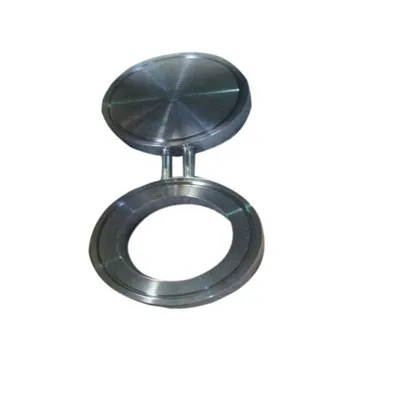
If you’re working on a project right now and aren’t sure which JIS standard your flanges need to meet, or if you have questions about how recent updates might affect your order, we’re here to help. We have a team of flange experts who can walk you through the latest JIS revisions, confirm which version is right for your application, and provide samples, test certificates, and pricing to fit your timeline and budget. Whether you need a small order for a maintenance project or bulk flanges for a large-scale industrial build, we can supply JIS flanges that meet all current and relevant standards, and we can adapt to any legacy requirements you may have.
Gost 33259 Flange References
Japanese Industrial Standards Committee (JISC). (2023). JIS B2220: Steel flanges. Tokyo: Japan Standards Association.
Japanese Industrial Standards Committee (JISC). (2021). Amendment 1 to JIS B2220. Tokyo: Japan Standards Association.
Japanese Industrial Standards Committee (JISC). (2019). JIS B2205: Steel flanges for pressure vessels. Tokyo: Japan Standards Association.
Japanese Industrial Standards Committee (JISC). (2020). JIS B8270: Flanges for nuclear power applications. Tokyo: Japan Standards Association.
Ministry of Land, Infrastructure, Transport and Tourism (Japan). (2015). Update to JIS B2210: Cast iron flanges. Tokyo: Government of Japan.
Shanxi Xinshunda Flange Manufacturing Co., Ltd.
As one of the most professional jis flange manufacturers and suppliers in China, we also support customized service with competitive price. We warmly welcome you to wholesale high quality jis flange for sale here from our factory. For quotation, contact us now.
Address: Zhunagli Industrial Zone,jinchang Town,dingxiang,shanxi,china
E-mail: sales01@xinflange.com
WebSite: https://www.xinflange.com/
