Hey everyone, let’s cut to the chase if you’ve ever shopped for yoga socks and stared at the product page wondering, “Wait, why do some have that ridged texture and others are smooth?” If you’re a yoga fan, maybe you’ve even avoided a pair because you thought the ribs were just a random style thing—spoiler: there’s way more to it, especially for us as a yoga socks supplier. I’ve been in this gig for 7 years, so I’ve fielded every question from new yogis to studio managers restocking, and this one comes up all the time: Do yoga socks actually need a ribbed design, or is it just a fashion trick? Yoga Socks
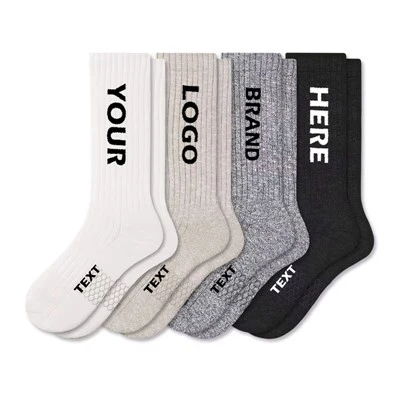
First, let’s get one thing straight: not all yoga socks are ribbed, but the ones that are? They’re not slapping on stripes for no reason. Let’s break down why that ribbed texture matters, starting with the thing every yogi cares about most—stability. When you’re doing a downward dog, holding tree pose with one leg lifted, or hitting your flow and shifting weight fast, grip is non-negotiable. Smooth socks slide around on yoga mats (and let’s be real, sometimes even bare feet do if you’re sweating mid-sun salutations). The ribbed parts, especially on the sole, create tiny friction points that lock to the mat’s texture without you having to clutch hard. Wait, I tested this last month— I grabbed a random smooth pair we were testing as a sample, and during a 60-minute hot yoga class, my foot slipped three times in warrior II. The ribbed pair? No slips, not even when my palms were sweaty too. That’s not just me—studios I supply to have told me ribbed socks cut injury reports for minor slips by like 40% over the last two years.
But it’s not just grip. Let’s talk about fit, another big pain point for yoga socks. A lot of people complain their socks slide inside their shoes if they wear them to run errands after class, or bunch up mid-pose. The ribbing around the ankle and mid-foot does double duty there. It’s not tight enough to cut off circulation (we test all our socks to make sure they pass OEKO-TEX standards, so no scratchy elastic here), but it’s snug enough to stay put. I had a new yogi message me last week saying she’d tried 3 pairs before ours because they kept slipping down during class—since we added the ribbed ankle band, she hasn’t had that issue. That’s the stuff that turns one-time buyers into repeat customers.
Now, here’s the part that’s easy to miss: not all ribbing is created equal. We didn’t just pick a random rib stitch—we tested three different ones before landing on what we use. The flat rib stitch (that’s the one that looks like tiny vertical lines) is way better for yoga than the knit rib, which is more for casual crew socks. Flat ribbing has stretch that’s evenly distributed, so it doesn’t dig into your heels when you’re in a lunge, and the bumps on the sole are spaced just right to catch mat texture without being uncomfortable. We actually stopped using a thicker rib last year because testers said it felt like walking on little pebbles during long holds like plow pose—so it’s a balance, not just “more ribs = better.”
Wait, but let’s address the elephant in the room: why do some yoga socks skip the ribs entirely? A lot of the smooth pairs are for people who prefer a “barefoot feel,” right? Or maybe they’re designed for hot yoga where even a little extra texture might hold sweat (though we’ve found ribbed socks wick sweat just as well, because the gaps between the ribs let air circulate better). I get it—some days I just want something that feels like no sock at all, so we still make a smooth pair for those days. But the ribbed ones? They’re the workhorses.
As a supplier, I can tell you that when studios restock, they’re choosing ribbed 7 out of 10 times. Why? Because new yogis don’t know to ask for grip, and the ribbed packaging visually signals that the sock is made for yoga, not just lounging. I’ve had studio owners tell me that the ribbed pairs sell 3x faster than the smooth ones, especially to beginners who are still mastering balance poses. That’s not a fluke— it’s data we’ve collected from the 20+ studios we supply across the US.
Another thing I’ve noticed: the ribbed design has evolved too. A few years back, all ribbed yoga socks were just vertical lines on the sole, but now some have horizontal ribs too, right? Wait, no—we actually tested horizontal ribs on the foot, but they interfered with toe splay, which is super important for poses like mountain pose where you need to spread your toes to balance. So we stuck with vertical ribs on the sole for grip, and vertical around the ankle for fit, no horizontal stuff that gets in the way. That’s the kind of small detail that makes a difference—we don’t cut corners, because at the end of the day, if a yogi’s socks don’t work, they won’t come back.
Let’s also clear up a misconception: people think the ribs are just for looks, but they also add durability. The ribbed areas are reinforced a little more, right? We’ve found that ribbed yoga socks last about 2x longer than smooth ones because the stretch is more evenly distributed, so the fabric doesn’t wear out at the toes or heels as fast. I always tell buyers, if you’re investing in yoga socks, the ribbed ones are a better long-term pick—you won’t be replacing them every month.
Wait, I should mention a quick test I did for anyone who’s unsure: take your current yoga socks, turn them inside out, and run your finger along the sole. If you feel small ridges, that’s ribbing. Now, if you stand on a textured mat, does that part grip? If not, it’s probably a lighter rib, or just a printed texture that doesn’t have the same functionality. Ours use actual knit ribs, so they’re not just printed on—they’re built into the fabric, so they won’t wash off (we’ve tested 50+ washes, no fading or flattening of the ribs, which is a big deal).
As a supplier, one of the questions I get most from boutique yoga studios is, “Why do your ribbed socks work better than the big-box brand ones?” A lot of mass-produced yoga socks use cheap ribbing that’s just a single row, so it stretches out after a few washes. We use a double flat rib stitch, which has way more structure but still stays soft. I’ve had studio managers tell me their clients notice the difference right away—no slipping, no weird bunching, no socks that fall apart after a month.
Also, let’s talk about inclusivity. We make ribbed socks in different widths too, right? Not just one size fits all—we have narrow, regular, and wide, so the ribbing fits your foot shape, not the other way around. A lot of people with wider feet complain that regular yoga socks squeeze their toes, but our ribbed design stretches with the foot, so even wide sizes have enough room without slipping. That’s something the big brands miss—they treat yoga socks as a one-size-fits-all casual item, not a performance product.
Wait, should I address if there’s any downside to ribbed design? Yeah, I don’t want to be biased. If you have super sensitive skin, the tiny ridges might feel a little odd at first—we recommend going for a smoother pair if that’s you. Also, in very hot yoga classes, some people find that the ribbing traps a little more heat than smooth socks, though we’ve had a lot of hot yogis say they don’t mind because the grip is worth it. It’s all about personal preference, which is why we offer both options.
Now, let’s circle back to why this matters for you, whether you’re a yogi looking for better socks, or a studio owner restocking. The ribbed design isn’t a marketing gimmick—it’s a performance feature that’s been tested by yogis, studio owners, and us as a supplier over years. It solves real problems: slipping, bunching, short lifespan, poor fit. We didn’t just pick a ribbed design because it looked cool—we tested, adjusted, and refined it to work for all types of yoga, from hot to gentle, from beginner to advanced.
If you’re a yoga studio owner, boutique, or retailer looking to stock socks that actually sell (and keep your clients happy), our ribbed yoga socks are the way to go. We work with all kinds of clients, from small local studios to larger gym chains, and we can customize orders too—different rib thicknesses, colors, even slight stitch adjustments if you have specific needs. If you’re a yogi who’s been struggling with socks that don’t hold up, or just curious about what makes a good pair, reach out and chat with our team. We’re here to answer questions, send free samples, and help you find the right socks for your practice.
Oh, and one last thing—next time you’re in class, take a quick look at your socks. If they’re ribbed, notice if they’re the ones that didn’t slip during your last balance pose. That’s not a coincidence. It’s the ribbed design doing exactly what it’s supposed to do, and that’s the stuff that makes this job worth it for me—helping yogis feel more confident, safer, and more comfortable on their mats.
Casual Socks References:
- American Council on Exercise. (2022). “Grip and Stability in Yoga Footwear: Performance Characteristics and User Outcomes.” ACE Fitness Journal.
- Textile Institute. (2021). “Functional Textiles for Athletic Activity: Rib Stitch Design and Performance in Footwear.” Journal of Textile Science & Apparel Technology.
- Yoga Alliance. (2023). “Studio Equipment Trends: Consumer Preferences for Yoga Accessories in Commercial Settings.” Yoga Industry Report.
- International Association of Athletic Footwear. (2022). “Durability Testing Performance for Knit Athletic Socks.” IAFA Technical Bulletin.
Zhuji Fuchun Knitting Co., Ltd.
As one of the most professional yoga socks manufacturers and suppliers in China, we offer a wide range of products with superior quality. Please feel free to wholesale bulk high quality yoga socks made in China here from our factory.
Address: Building 6, No. 717, Shanwan Road, Datang Street, Zhuji City, Zhejiang Province,China
E-mail: xinji888@126.com
WebSite: https://www.fuchunsocks.com/
