If you’ve ever rolled up to a construction site, you’ve probably gawked at a cement mixer truck—those bulky, rotating drums doing the work of hauling wet concrete from batch plants to job sites. As a cement mixer truck supplier, I get asked all the time: “How often do I need to service this thing, anyway?” It’s not a trivial question, either. Skip the right service, and you’re staring at a broken drum, a leaky hydraulic line, or worse—a truck stuck on the side of the road mid-job. Let’s break this down straight, no fancy jargon, just what actually keeps these trucks rolling. Cement Mixer Truck

First, let’s cut to the chase: there’s no one-size-fits-all answer. Your mixer’s service schedule depends on how hard you’re pushing it, what kind of work you’re doing, and even where you’re operating. If you’re only using your truck 2 or 3 times a week on small residential pours, that’s way different than running it 12 hours a day on a highway bridge project. But let’s start with the basics that apply to every mixer, no matter how you use it.
The biggest part of your mixer, obviously, is the rotating drum. That drum isn’t just a hollow metal can—its entire job is keeping concrete wet until it pours out. If it slows down or stops turning, the concrete inside will set like concrete (pun very intended) and you’ll be looking at thousands of dollars in repairs to chip it out, plus a lost load of concrete. Most truck manufacturers—including the ones we supply here—recommend a full drum inspection every 50 operating hours. That’s about every 10 loads if you’re making short hauls, or every 5 if you’re going out to rural sites. This check isn’t just turning a wrench; it’s looking for wear on the internal fins that mix the concrete, checking for dents that could throw off the balance, and making sure the drum’s seal isn’t leaking any of the concrete mix. We’ve seen mixers that skipped this check and ended up with fins so worn they could barely mix new concrete—costing their owners more in downtime than a few scheduled services ever would.
Next up, the hydraulic system. That’s what powers the drum’s rotation, plus the outriggers, the chute hoist, and all the other moving parts on the back of the truck. Hydraulics are the workhorses of your mixer, but they’re finicky if you don’t take care of them. Most OEMs (that’s original equipment manufacturers, for anyone who doesn’t use the acronym) say you should change the hydraulic fluid and filter every 250 operating hours. Wait, you might be thinking, that’s way more than the drum check. Why the gap? Because hydraulic fluid is under constant pressure, even when the mixer’s parked. If you hauled a load of concrete that day, pressure’s been building and releasing nonstop. Skimping on that fluid change leads to clogged filters, overheated pumps, and even broken hydraulic motors—parts that cost way more than a $200 fluid change. A quick side note: if you’re working in dusty environments, like on a road construction site with dirt kicking up everywhere, cut that interval to 200 hours. Dust gets into hydraulic lines faster, so they need more frequent flushes.
Then there’s the daily pre-trip check, which a lot of new mixer operators skip because it seems like a hassle. But let’s be real: this takes 10 minutes max, and it could save you a $10,000 repair. Every morning before you fire up the truck, walk around and check a few things: is the drum’s water tank full? You need that to rinse the drum after every load, not just to clean it, but to prevent leftover concrete from hardening on the walls. Are there any fluid leaks under the mixer? Even a tiny drip of hydraulic fluid or concrete can turn into a big problem if you ignore it. And test the drum rotation for 30 seconds before you take off—if it’s making a weird grinding noise, catch it before you hit the highway. We give a free 30-minute training to every customer who buys a mixer from us, and the number one mistake new owners make is skipping that daily check.
Wait, what about longer intervals? Like, the annual service that most fleets book in the winter, when work slows down? That’s non-negotiable, too. Even if your mixer’s only sitting in the yard for a month, you still need to do a full annual service. That includes checking the drum’s drive gearbox, which is the part that connects the hydraulic motor to the drum. Grease that gearbox every 500 operating hours, and do a full inspection for wear every year. Also, the chassis of the truck—you can’t forget the regular oil changes, tire rotations, and brake checks that any big rig needs. A cement mixer is still a truck, after all; you can’t service the back and ignore the front.
Now, let’s talk about exceptions. If you’re a small owner-operator who only runs one load a week, don’t stick to the same schedule as a big fleet running 20 loads a day. For low-use mixers, adjust the service intervals by time, not just hours. Even if you only put 10 hours on your truck in three months, do the drum inspection and fluid change every 3 months. Moisture can build up in the hydraulic lines when a truck’s sitting, leading to corrosion, and leftover concrete in the drum can harden if you leave it too long between uses. On the flip side, if you’re working in extreme cold (below 30°F) or extreme heat (above 90°F), shorten those intervals by 25%. Extreme temperatures stress every part of the mixer—cold makes hydraulic fluid thick, hot makes it thin, both leading to extra wear.
Let’s throw in a quick real example to make this make sense. Last year, we had a customer out in rural Ohio who bought a single mixer for small farm jobs and residential concrete pours. He was only using it 2 times a week, so he thought he could stretch his service to every 100 hours. After 6 months, his hydraulic pump failed—cost him $8,500 to replace. A quick check of his logs showed he’d run 180 hours in 6 months, but had waited 5 months to do his fluid change. If he’d stuck to the 250-hour interval (or adjusted it for low use, to every 3 months), he would’ve avoided that cost. Another customer out in Texas, where it’s 95°F year-round, cuts his hydraulic fluid changes to every 200 hours, and he hasn’t had a hydraulic issue in 2 years. That’s exactly the kind of adaptation we talk about with our customers.
Now, let’s talk about what happens when you skip service. We see it all the time: a broken drum, a leaky chute, a truck stuck on a job site. Last quarter, a customer in Florida had his mixer’s drum seize up mid-pour. He was using it for a commercial pool project, so that delay cost him $12,000 in late fees plus the cost to chip out concrete from the drum. All because he skipped two 50-hour drum inspections. On the flip side, a customer who did all his scheduled services had his mixer run for 7 years without a major breakdown. That’s the difference between a truck that’s a money pit and one that’s a reliable workhorse.
Wait, one more thing that’s unique to cement mixers: the water system. Most people forget about the water tank that keeps the drum rinsed. You should drain and flush that tank every 50 operating hours, too. Leftover water in the tank can get moldy, or build up mineral deposits that clog the spray nozzles. If your nozzles are clogged, you can’t rinse the drum properly, and concrete will harden on the walls. That’s an easy fix if you do it regularly, but if you skip it, you’re looking at a $500 nozzle replacement, plus concrete buildup that weighs down the drum and causes extra wear on the drive gear.
Now, let’s wrap this up without all the confusion. Here’s the quick cheat sheet we give every customer who buys a mixer from us:
- Daily: Pre-trip check (drum rotation, water tank, no leaks), rinse drum after every load.
- Every 50 operating hours: Drum inspection, flush water tank.
- Every 200–250 operating hours (adjust for dust/extreme temp): Change hydraulic fluid and filter.
- Every 500 operating hours: Grease drive gearbox.
- Every year: Full chassis and drive train inspection, regardless of use.
If you’re still unsure about your specific mixer, or how to adjust the schedule for your work, just reach out. As a cement mixer truck supplier, we don’t just sell trucks—we stick around to help you keep them running. We can help you pull your operating hours logs, adjust the schedule for your job site conditions, and even set up regular service reminders so you never miss a check. Whether you’re a new owner-operator with one truck or a fleet manager with 20, we’re here to make sure you don’t get stuck on the side of the road with a load of spoiled concrete.
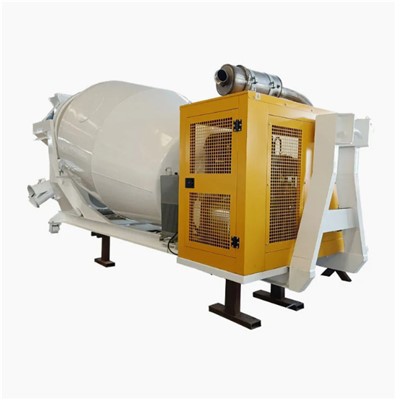
Don’t wait until your mixer breaks to fix it. A little preventive service today saves you way more money and downtime tomorrow. If you’re in the market for a new cement mixer truck, or you need to replace parts for your current one, or even just want to go over your service schedule one more time, don’t hesitate to reach out to us. We’re here to help every step of the way.
Transit Mixer References
- Construction Vehicle Manufacturers Association. (2022). Preventive Maintenance Guidelines for Ready-Mix Trucks.
- Hydraulic Institute. (2021). Fluid Service Intervals for Mobile Construction Equipment.
- National Ready Mixed Concrete Association. (2023). Best Practices for Cement Mixer Drum Care.
- Truck Maintenance Council. (2022). Annual Service Schedules for Heavy-Duty Work Trucks.
Shandong Fuxin Automobile Technology Co., Ltd.
We’re well-known as one of the leading cement mixer truck manufacturers and suppliers in China, featured by quality products and good price. Please rest assured to buy advanced cement mixer truck made in China here from our factory. Contact us for more details.
Address: West of Nanshou Road, Beihai Road, Weifang City, Shandong Province
E-mail: h17616861003@gmail.com
WebSite: https://www.fuxinautomobile.com/
