As a car door trim exterior supplier with over a decade in the auto parts industry, I’ve lost count of how many times I’ve heard shop owners, custom car builders, and even dealership service managers ask the same question: “Why does this trim look so off on my client’s car, even though I matched the color code?” It’s a question that’s never just about slapping a color on a plastic or metal piece—there’s a whole science to how light interacts with different materials, how factory finishes are formulated, and how small oversights can turn a “perfect match” into a glaring eyesore. Car Door Trim Exterior

I first really grasped this a few years back, when a classic Mustang restoration client brought in a pair of door trims he’d had powder-coated to what he swore was the exact factory code for his 1967 model. When he installed them, they looked dull next to the car’s original gloss black paint. He’d spent a few hundred dollars on the coating, and was ready to strip it and start over. I ended up digging into our own old supplier archives, talking to a paint chemist I’d known since my time at a Detroit auto parts warehouse, and even running a few side-by-side tests in our shop. What we found changed how we advise every client who reaches out to our team for door trim exterior parts. It’s not just about color codes—it’s about four key factors that make a match look intentional, not just “close enough.”
First up, material finish compatibility. This is the one most people skip entirely. Door trim exterior parts aren’t all the same; some are made of ABS plastic, some are aluminum, some are steel, even some are composite materials for electric vehicles. Each material holds and reflects light differently, which is what makes a black trim on a matte black car look gray, or a silver trim on a glossy silver car look flat. Let me break that down: ABS plastic, which is super common for most mass-market car trims, has a slightly porous surface. If you paint or powder-coat it without prepping that porosity, the finish will absorb more clear coat, making it look less reflective than the car’s body paint, which is formulated to be glossy. Aluminum, on the other hand, has a smooth, non-porous surface—so a powder coat on aluminum will have a higher gloss level than the same coat on plastic. That’s why the Mustang trim failed: he’d had it powder-coated on steel blanks, not the ABS his car’s original trims were made of. The gloss on the steel trim was 10 points higher than the body paint, which made it stand out like a sore thumb.
We solved that for him by going back to our custom trim shop, which we partnered with to source door trim exterior parts. They sanded the new steel trims to a 220 grit, applied a flexible adhesion primer, then used a satin clear coat that matched the body paint’s reflectivity. The difference was night and day. Now, when we work with a client, we always ask them not just for the color code, but for the material their car’s body panels are made of. If it’s an older car with steel panels, we’ll specify a trim material that matches, or adjust the finish to match the body’s reflectivity. For newer EVs, which often use composite panels with a semi-gloss finish, we use a powder coat that’s formulated for composite surfaces—no more dull trims on a sleek EV.
Second, undertones. This is another thing that trips people up, especially with modern paint jobs. Most car colors aren’t just “red” or “blue”—they have undertones that you can only pick up in natural light. Let’s take a 2022 Ford Maverick with a Cyber Orange Metallic paint code. That’s not just bright orange; it has a hint of yellow and a tiny touch of metallic flake that shifts when light hits it. Last year, a dealer brought us a request for door trims in Cyber Orange, and the first batch they ordered from another supplier came in too red. The team there had matched the base color, but missed the yellow undertone. When we tested them in sunlight (not the shop’s LED lights, which skew warm), the difference was obvious: the trims looked like a burnt orange, not the bright, sunlit orange the car had.
How do we fix that? We use a spectrophotometer, which is a tool that measures the exact wavelengths of light a color reflects—way more precise than a human eye. When a client sends us their color code, we input it into our spectrophotometer, which picks up not just the base color, but the undertones, metallic flake size, and even the texture of the flake. For the Maverick trims, we adjusted the powder coat mix to add 2% more yellow pigment, which pulled the undertone in line with the body paint. We also match the flake size: large flake for paint that’s meant to stand out in sunlight, small flake for paint that’s supposed to be more subtle. That’s why those trims ended up being perfect—they didn’t just look orange, they looked like they were part of the car, not an add-on.
Third, the clear coat layer. I can’t stress this enough. A lot of clients focus solely on the base color, but the clear coat that goes over it is what gives the paint its depth, its durability, and even its color match. Factory car paint has two layers: a base color layer, and a clear coat on top. The clear coat protects the paint from UV rays, scratches, and weather, and it can be glossy, semi-gloss, or matte. If your door trim exterior has a clear coat that’s a different finish than the body’s, it will look mismatched. For example, a car with a matte body paint—common on many off-road trucks and luxury SUVs—won’t work with a glossy trim. The glossy trim will reflect overhead lights like the sun, while the matte body absorbs light. That contrast makes the trim look cheap, not intentional.
We had a client last year with a matte black Jeep Wrangler Unlimited. He’d tried to use a glossy black trim from a big box auto parts store, and it looked so bad he couldn’t stand to drive it. Our team used a matte clear coat on the trim, and we adjusted the base black to be slightly warmer than the Jeep’s body paint, so it didn’t look cold next to the matte finish. The result? His Jeep looked like it came straight from the factory, not like he’d done a last-minute part swap. We also use UV-stabilized clear coats for all our door trim exterior parts, which prevents the trim from fading over time—another common complaint. A color match that fades in two years isn’t really a match at all.
Fourth, light testing in real-world conditions. Here’s a mistake I’ve seen time and time again: shops matching a color under indoor LED lights, which are biased towards warm or cool tones, not natural light. Natural sunlight has a full spectrum of colors, and it’s the only way to tell if a color is a true match. Last month, a classic Corvette client brought in a pair of door trims he’d had painted in his shop’s garage, under fluorescent lights. They looked perfect there, but when he brought them to our shop and held them up next to his Corvette in the parking lot at 10 a.m., he saw they were a shade too blue. The garage’s fluorescent lights are cool-toned, which makes a warm red look blue when you’re matching.
We make a point of testing every door trim exterior part we ship in two types of light: indoor LED (to confirm the base color) and natural sunlight (to confirm the undertones and reflectivity). For mobile installers and shop owners who don’t have a lot of natural light in their workspace, we include a small sample of our trim material in every color we supply, so they can test it against the car in their parking lot, not just in their shop. It’s a small step, but it’s saved so many clients the headache of returning parts because they looked wrong once they were on the car.
Now, I know a lot of people will go online, order a trim part from a big retailer based on a color code, and think they’ve done everything right. But from our side, as a supplier that’s worked with thousands of shops and custom builders over the years, those generic parts rarely give a perfect match. Why? Because most of those retailers don’t account for the material, undertones, clear coat, or light conditions. They just spray a color on a plastic or metal part and call it a day.
That’s where our team comes in. We don’t just sell door trim exterior parts—we help you get a match that looks like it was made for your car, not just a part you picked up last minute. Whether you’re restoring a 1950s Chevy pickup, modifying a 2024 electric sedan, or running a dealership that needs consistent color matches for a fleet of same-model cars, we can work with you to source the right material, match the exact undertones, and test the finish in real-world light.
I’ve been in this industry long enough to know that a car’s exterior is more than just a way to get from point A to point B. For a classic car restorer, it’s a labor of love. For a custom builder, it’s a chance to make a car stand out. For a dealership, it’s about keeping customer trust. A mismatched door trim can take away from all that hard work. That’s why we take every step to make sure the trim we supply doesn’t just fit the door—it fits the car.
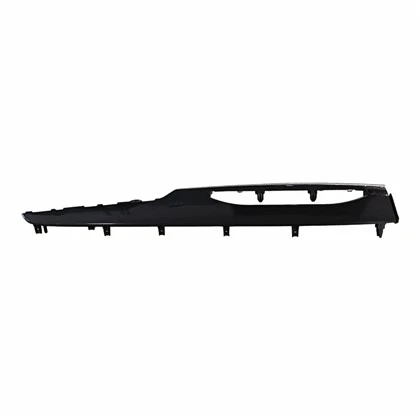
If you’re tired of door trim parts that look like an afterthought, whether you’re a shop owner, custom builder, or restoration enthusiast, reach out to our team to discuss your project. We’ll walk you through the material, color, and finish options, and make sure you get a match that looks intentional, not just “close enough.” You don’t have to settle for a part that’s supposed to match but doesn’t—let’s get it right the first time.
Car Door Trim Exterior References:
- Society of Automotive Engineers (SAE). “Automotive Paint Color Matching and Reflectivity Standards.” SAE International, 2021.
- Automotive Paint and Coating Association (APCA). “Material Compatibility in Exterior Trim Finishes.” APCA Global, 2022.
- Corish, Patrick. Color Science for Automotive Applications. Wiley Automotive Books, 2020.
- Automotive Aftermarket Suppliers Association (AASA). “Best Practices for Exterior Trim Color Matching.” AASA, 2023.
Hebei Xiujie Auto Parts Co., Ltd.
As one of the most professional car door trim exterior manufacturers and suppliers in China, we have world-leading production equipment and strong manufacturing capabilities. Please feel free to wholesale bulk customized car door trim exterior from our factory. Contact us for quotation and free sample.
Address: Industrial New Area, Wen’an County, Langfang City, Hebei Province (State-run Xiaowu Farm)
E-mail: runtaoli87@gmail.com
WebSite: https://www.xiujie-cn.com/
