If you’ve ever stood next to a textile production line in full swing, you’ve probably noticed the thick, misty cloud of dye, lint, and chemical fumes hovering just above the fabric rolls. What you might not have noticed is the quiet, unassuming filter working behind the scenes to keep that process running smoothly—and that’s almost always a sintered wire mesh filter. As a sintered wire mesh material and filter supplier with years of on-the-ground experience supporting textile mills, I’ve lost count of how many times I’ve sat down with plant engineers who dismiss these filters as “one-size-fits-all” accessories. Over time, though, I’ve learned that textile filtration is one of the most demanding, specific applications for sintered wire mesh, and cutting corners on filtration requirements isn’t just a small mistake—it leads to downtime, ruined batches, and extra costs that no mill can afford. Let’s break down exactly what makes sintered wire mesh filters non-negotiable for textile processing, and why getting the requirements right makes all the difference. Sintered Wire Mesh Material and Filter
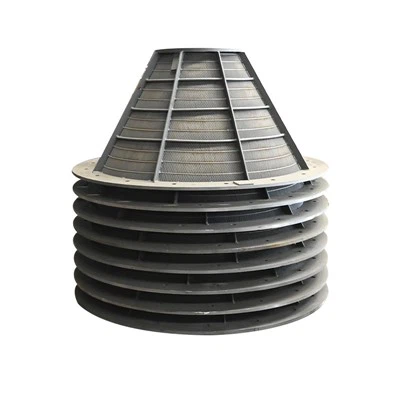
First, it’s important to ground this in the actual processes textile mills run. From spinning raw cotton or synthetic fibers into yarn, to weaving that yarn into fabric, to dyeing, finishing, and finally waterproofing or coating the material, every step generates contaminants that have to be removed before they can damage the final product. Take dyeing, for example: reactive dye baths, the workhorse of cotton dyeing, use tiny dye particles that are only a few micrometers in size. If those particles aren’t filtered out before they hit the fabric, they settle into uneven spots, creating splotches that force entire batches to be scrapped. Or consider the lubricants used in spinning frames—those thin, oily films that keep yarn from snapping. If leftover lubricant residue isn’t filtered out from the process water, it ends up as a greasy stain on the finished fabric, ruining its ability to be dyed evenly or absorb coatings later. These aren’t hypothetical issues; I’ve seen a mid-sized mill lose $20,000 worth of premium linen fabric in a single week because they used a cheap, generic filter that let 10-micron dye particles pass through. That’s why sintered wire mesh filters are so valuable here—they’re not paper or cloth filters that tear or clog after a few uses; they’re rigid, layered meshes fused together to create a porous structure that’s tailored to capture specific contaminants while letting critical process fluids flow.
Now, let’s get into the core filtration requirements, starting with the most fundamental one: pore size precision. This is the make-or-break specification for any textile sintered wire mesh filter, and it’s non-negotiable because textile contaminants fall into such a narrow, specific micrometer range. Let’s do the math: dye particles for reactive or acid dyes are typically between 1 and 10 micrometers. Lint and fiber fragments from carding and spinning range from 5 to 50 micrometers. Lubricant particulates and coagulated sizing agents (the sticky material used to stiffen yarn for weaving) are usually 2 to 20 micrometers. If your filter’s pore size is too large, all those tiny particles slip through. If it’s too small, it clogs within hours, forcing production lines to shut down for filter changes—costing a mill thousands of dollars in lost output every hour.
Here’s where sintered wire mesh has a huge advantage over other filter media: unlike non-woven fabrics or even pleated membrane filters, which have inconsistent pore sizes that shift as they’re cleaned, sintered wire mesh has pore sizes that are uniform across the entire surface. When we produce these filters, we control every step: we select wire with a precise diameter (often between 20 and 100 micrometers), arrange the mesh layers in a specific order, then fuse them together under high heat and pressure to lock in the pore structure. For a dyeing application, for example, we’d recommend a sintered mesh with a nominal pore size of 5 micrometers, because that’s small enough to capture dye particles without restricting flow too much. For spinning process water, we’d go up to 15 micrometers, since the main contaminants are larger fiber fragments that don’t require as fine a filter. I can’t tell you how many times a mill has come to me saying they tried a 3-micron filter to get clearer dye, only to have to change filters every 4 hours because the small pores clogged with lint. The key here is matching pore size to the exact contaminant load of the process, not just guessing that smaller is better.
Next, chemical compatibility. Textile mills use an extremely wide range of harsh chemicals, and most standard filters can’t hold up. Let’s list a few: strong acids like sulfuric and hydrochloric acid used to adjust dye bath pH; alkaline solutions like sodium hydroxide for scouring and bleaching fabrics; solvents like acetone and toluene used in synthetic fiber processing; and surfactants, detergents, and optical brighteners in finishing steps. If a filter isn’t resistant to these chemicals, it will degrade, leach unwanted particles into the process fluid, or even break apart mid-production. I once had a client who used a polypropylene filter for a polyester coating process that used xylene as a solvent. After 2 days, the filter began to dissolve, leaving plastic residue all over their fabric lines, and they had to shut down production for 3 days to deep-clean their entire system. Sintered wire mesh, on the other hand, can be made from a variety of metals that are compatible with all these chemicals. Stainless steel 316L, for example, is our most popular option for textile applications because it resists both strong acids and alkalis, doesn’t react with dyes or solvents, and won’t leach contaminants. For mills processing high-temperature dye baths (which can reach 100°C or higher), we also offer Hastelloy sintered mesh, which stands up to even the most aggressive chemical blends. The bottom line here is that chemical compatibility isn’t a “nice to have” for textile filtration—it’s a requirement that prevents catastrophic production delays.
Then there’s thermal stability. Textile processes run at temperatures that would destroy most filter media. High-temperature scouring, for example, uses water at 95°C to remove impurities from raw fabric. Continuous dyeing lines for polyester often use dye baths at 120°C to 130°C, and some finishing processes go even higher, up to 180°C for heat-setting synthetic fabrics. Paper filters, cloth filters, and even some membrane filters can’t withstand these temperatures; they shrink, warp, or melt, altering their pore size and filtration performance after just a few uses. Sintered wire mesh, though, is made from metal that maintains its structural integrity at temperatures ranging from -200°C all the way up to 1,000°C, depending on the alloy. This means the pore size stays consistent even after hundreds of thermal cycles, so a sintered filter doesn’t lose performance over time like other media. A mill we work with in South Carolina runs a continuous indigo dye line that operates at 125°C, and they’ve been using our 316L sintered filters for over 5 years now—they only replace them when pressure drop gets too high, not because the filter itself has degraded from heat. That kind of long-term consistency is impossible to get with any other filter type for this application.
Another critical requirement for textile sintered wire mesh filters is pressure drop control, which directly impacts production efficiency. Pressure drop is the difference in pressure between the inlet and outlet sides of the filter. When a filter is new, pressure drop is low, which means process fluids flow easily through it, so pumps don’t have to work as hard to move the fluid through the system. As the filter captures contaminants, pressure drop rises—if it gets too high, the pump has to run faster, which increases energy costs, and eventually, it can cause the pump to fail. For textile mills, which run 24/7, this is a big deal. Let’s say a mill has 10 dye lines, each with a filter. If each filter’s pressure drop increases by 1 bar, that’s an extra 10 bars of total pressure the pumps have to generate. Over the course of a year, that adds up to thousands of dollars in extra electricity bills. Sintered wire mesh filters let us control pressure drop by adjusting the thickness of the filter and the number of mesh layers. A thinner filter with fewer layers will have a lower initial pressure drop, while a thicker filter with more layers will capture more contaminants before needing cleaning. For most textile applications, we aim for an initial pressure drop of less than 0.5 bar, which keeps energy costs low while still providing enough filtration to catch contaminants. The alternative, cheap filters that have high initial pressure drops, aren’t worth the small upfront cost—they end up costing much more in energy over time.
Cleanability is another requirement that’s often overlooked, but it’s one of the biggest advantages of sintered wire mesh filters for textile use. Textile filters have to be cleaned repeatedly—most are cleaned every 8 to 24 hours, depending on the process—to remove captured lint, dye particles, and sludge, so they can be reused. If a filter is hard to clean, mills either replace it more often (adding to material costs) or don’t clean it properly, leading to built-up contaminants that cause uneven filtration. Sintered wire mesh, with its open, uniform structure, is extremely easy to clean. We’ve designed our sintered filters to work with three common cleaning methods used in textile mills: backflushing with compressed air, high-pressure water jetting, and chemical cleaning with mild acids or alkalis. Unlike paper filters, which turn to mush when backflushed, sintered mesh can withstand high-pressure air or water to dislodge contaminants, and its chemical resistance means it can be soaked in cleaning solutions without degradation. One of our European clients runs a denim dyeing plant where each filter is backflushed every 12 hours, and each filter has lasted over 10,000 cleaning cycles in the last 3 years. That’s a level of durability you’ll never get from disposable filters. And because the pore structure doesn’t change after each cleaning, the filtration performance stays consistent batch after batch, so they don’t get uneven dye results.
I also can’t talk about filtration requirements without mentioning particulate load capacity. Textile processes generate a lot of contaminants, especially when mills are working with raw fibers or recycled materials. If a filter can’t hold a high volume of particulates between cleanings, it has to be cleaned more often, which stops production. Sintered wire mesh filters have a much higher particulate load capacity than other filter types because of their layered structure. We arrange the mesh layers in a gradient: the first (coarsest) layer captures the largest lint and fiber fragments, then each subsequent layer gets finer, catching smaller particles as they flow through. This design means contaminants are distributed across the entire filter surface, rather than building up on the top layer like in a single-layer cloth filter. For a mill processing recycled cotton, which has more lint and dye residue than virgin cotton, we recommend a gradient-layer sintered filter that can hold up to 10 times more particulates than a standard cloth filter, so cleaning cycles can be extended from 8 hours to 72 hours. That’s three full days of continuous production without stopping to change or clean filters—a huge productivity boost for any mill.
Now, let’s talk about how all these requirements come together in real-world use. A few months ago, a mill in Pakistan that produces high-quality cotton bed sheets reached out to us. They were having constant issues with their finishing stage, where they apply a water-repellent coating to the fabric. Their existing filters were letting small sizing particles from the weaving process pass through, which were mixing with the coating and causing uneven water repellency on the fabric. They were also replacing their disposable cloth filters every shift, which was adding $15,000 a month in filter costs. We worked with their engineering team to map out their process: sizing agents in their weaving baths were 5 to 12 micrometers, and they needed a filter that could handle the alkaline coating chemicals at 80°C. We recommended a 316L stainless steel gradient-layer sintered filter with a 7-micron nominal pore size. Within a week, their problems were solved. The new filters caught all the sizing particles, so the coating was even across every batch, and they only needed to clean the filters once every 3 days. Their filter costs dropped by 75%, and they reported that fabric defect rates went down by 22% in the first month. That’s the kind of result that makes all the work of getting the filtration requirements right worth it.
I’ve seen too many mills waste money trying to use generic filters for their textile processes, and it almost always ends in frustration. Sintered wire mesh filters aren’t a luxury—they’re a necessity for textile production, because they meet all the specific requirements that keep fabric high-quality, production lines running, and costs under control. The key is to tailor every part of the filter to the exact process: pore size matched to the contaminants, alloy chosen for chemical and thermal compatibility, layered design for pressure drop and load capacity, and a structure that’s easy to clean repeatedly. At the end of the day, the best filtration for textiles isn’t about the most expensive filter or the smallest pore size—it’s about a filter that works with your specific process, not against it.

If your textile mill is dealing with filter-related issues like ruined batches, frequent downtime, or high filter and energy costs, I can help you design a sintered wire mesh filter that fits your exact needs. Reach out to our team to discuss your process challenges and find a solution that will improve your production efficiency and product quality.
Sintered Metal Powder Filter References
- International Textile Manufacturers Federation. (2021). Technical Guide to Filtration in Textile Wet Processing. ITMF Publications.
- ASTM International. (2019). Standard Specification for Sintered Metal Filters for Process Fluid Applications. ASTM B956-19.
- Textile Institute. (2020). Chemical Compatibility of Filter Media for Textile Finishing Processes. The Textile Institute.
- Vossen, A. (2018). Filtration in Continuous Textile Dyeing: Pressure Drop, Pore Structure, and Long-Term Performance. Journal of Textile Engineering, 64(3), 45-52.
Henan Easy Filter Equipment Co., Ltd.
As one of the leading sintered wire mesh material and filter manufacturers and suppliers in China, we offer a wide range of products with superior quality. Please rest assured to buy advanced sintered wire mesh material and filter from our factory. We also accept customized orders.
Address: Apartment No.1, Building No.2, Zhengshang Jinyushijia, Xinzhong Street, Xinxiang, Henan, China.
E-mail: vivian@easyfiltertech.com
WebSite: https://www.easyfilter-china.com/
