If you’re here, chances are you’ve just dropped $50-$200 on a pair of “polarized sunglasses” that your cousin’s buddy sold you out of his trunk, or you picked up a “designer” pair at a gas station for $10, and now you’re wondering – do these actually work? As someone who’s been in the polarized sunglasses game for over a decade (I’m one of the supply guys, not just the sales hype), I’ve seen every trick in the book to test these things, and a lot of them are total garbage. I’m gonna break down the real, science-backed ways to tell if your shades are actually polarized, skip the clickbait TikTok hacks that don’t work, and even throw in a few pro tips from our team that’ll save you from wasting money on fakes. Polarized Sunglasses

First off, let’s get one thing straight: polarized lenses aren’t just a fancy marketing term. They’re made with a special chemical layer (usually polyvinyl alcohol, or PVA for short) that’s stretched and dyed, then laminated between two pieces of lens material (plastic, polycarbonate, whatever) to block horizontal glare. That glare you hate off a lake, a car hood, or a grocery store floor? That’s horizontal light bouncing off flat, shiny surfaces, and standard non-polarized shades do almost nothing to stop it. Fake polarized lenses might claim to block that glare, but they’re either tinted the same as regular sunglasses or have a fake polarizing film that’s so weak it’s basically useless.
Let’s start with the easiest test you can do right now, no extra tools needed – this is the one I teach all our new interns, and it works every single time. Grab your two pairs: the one you’re testing, and any other pair of sunglasses you already own that you know is polarized (even a cheap drugstore pair works, as long as you’re sure they’re real). Now hold both pairs up in front of your face, with the lenses of the test pair facing the polarized pair. Here’s the key: rotate one pair 90 degrees clockwise (so it’s turned sideways) while holding the other pair straight. Now look through both pairs at a light source – a window, a phone screen, even the overhead light in your kitchen. If one pair is real polarized, when you rotate them, the view through both lenses will get darker and almost completely black. If they’re fake, nothing will change – it’ll just look like two layers of tint, maybe a little darker but not a total blackout.
Wait, hold up – let me explain why that works, because it’s not magic. Polarized lenses have what’s called an “axis” – a direction they block light from. Real polarized lenses have their axis aligned vertically (that’s how they block horizontal glare from flat surfaces like roads or water). When you hold two polarized lenses together, their axes interact: if they’re aligned, the light passes through both, so it’s bright. If you turn one 90 degrees, their axes are perpendicular, so the light can’t pass through the second one after it goes through the first – hence the dark view. Fake polarized lenses either don’t have that axis at all, or they have a cheap, flimsy film that doesn’t block light evenly, so rotating them does nothing noticeable. I’ve had customers come to us with fakes they bought at a beach store that “passed” this test… until they realized the axis was random, so the dark spot only showed up if they rotated the pair a specific way, which is a dead giveaway for a cheap knockoff.
Another super easy test – and this one is great for anyone who doesn’t have a second polarized pair laying around – is your phone screen. Almost all smartphones (and tablets, TVs, even LCD computer monitors) use LCD screens that also have a polarizing layer built in. This test is so simple: turn your phone to full brightness, open a plain white screen (go to settings, display, something like that – even a blank note works), and hold your test sunglasses up to the screen at a 45-degree angle. Now slowly rotate the sunglasses from straight up and down to sideways. If the lenses are real polarized, you’ll see the white screen start to fade as you rotate, and turn almost black when the lenses are perpendicular to the screen. Again, fakes will just make the screen a little darker, no full fade. Pro tip from our team: if your phone screen is OLED, this test might be a little trickier because OLEDs don’t have the same polarizing layer as LCDs – but most phones made before 2020 are LCD, so this still works 9 times out of 10. I tested this last week on an old Samsung Galaxy S10 I had laying around, and our test pair of fakes from a gas station did nothing, while our real polarized shades went almost totally black.
Now, let’s talk about the TikTok hacks that people swear by, that are actually useless – I see these all the time, and I want you to stop wasting your time on them. First, the “water test”: people say to hold your sunglasses under water and if the glare goes away, they’re polarized. That’s nonsense – glare off water is just light, and any dark tint will make glare look less bright, not just polarized. Second, the “mirror test”: hold your shades up to a mirror and if the reflection looks dark, they’re polarized. Again, any dark tint will do that – I’ve held a pair of cheap $10 non-polarized sunglasses up to a mirror and the reflection was almost black, so that test tells you nothing. Third, the “car dashboard test”: people say if you can see your phone screen through your car dashboard without glare, they’re polarized. Wait – your car’s windshield is laminated, which can have a polarizing layer, so that test is inconsistent. Windshields can vary, and some non-polarized tints will also reduce glare off a dashboard, so that test isn’t reliable. Skip those, stick to the two I told you about – they’re proven, easy, and you don’t need any extra stuff.
Wait, but what if you’re at a store, and you want to test before you buy? That’s a huge one – I’ve had so many people buy shades online or at a mall kiosk that claim to be polarized, and they’re fakes. The store test is almost the same as the at-home ones, but most kiosk sellers won’t let you bring your own polarized pair, right? So ask to hold the pair up to the store’s overhead fluorescent lights, and rotate it 90 degrees. If it’s real polarized, the view through the lenses will darken dramatically – if it’s fake, nothing. Another store hack: ask to see the packaging. Real polarized sunglasses will almost always say “Polarized” clearly on the lens label, the box, or the paperwork that comes with them – fakes might have a small, hard-to-see “poly” or a made-up term like “UV Polarized” that doesn’t mean anything. Also, check the price: if a pair of “polarized” shades is less than $20, chances are they’re fake. Real polarized film isn’t cheap – it’s a precision layer that costs way more than regular tint, so if it’s too good to be true, it is.
Let’s get into the science a little more, because I don’t want you to just take my word for it – I want you to understand why these tests work, so you can spot even the weird edge cases. Real polarized lenses use a PVA film that’s stretched to align the molecules in one direction. When light hits this film, only light waves that are aligned with the axis can pass through – all others are blocked. Non-polarized lenses have a tint that just reduces the overall brightness of light, no matter the direction, so rotating them does nothing. Fake polarized lenses often use a cheap plastic sheet that has dye mixed in, but no aligned molecules, so there’s no axis to block light. I’ve seen some fakes that use a thin piece of real polarized film but only on the front surface, so when you rotate two pairs, the dark spot is faint and only visible from certain angles – that’s a good sign it’s not high-quality polarized.
Another test that’s a little more advanced, but great if you want to be 100% sure, is testing the glare off a flat, shiny surface. Head outside on a sunny day, and find a parking lot with a concrete or asphalt surface, or a lake (if you’re near water). Hold your test sunglasses up to the surface, and look at the glare bouncing off it. If they’re real polarized, the glare will almost disappear when you put the lenses in front of your eyes. Fake ones might reduce the glare a little, but not fully. I always tell people: if you’re driving, real polarized sunglasses will make the glare off a car hood go away, so you can see the road clearly – fakes will still leave that annoying white glare that makes it hard to see. That’s the whole point of polarized lenses, after all – they’re not just for looking cool, they’re for reducing eye strain and making it easier to see in bright, reflective conditions.
Wait, let’s address a common myth I hear all the time: some people say polarized sunglasses block UV rays. No, that’s not true – both polarized and non-polarized sunglasses can block UV rays, it’s a separate feature. Real polarized lenses can have UV protection, but the polarizing layer and UV protection aren’t the same thing. A pair of fake polarized shades might claim to block 100% UV, but a lot of cheap non-polarized shades also do that – so don’t mix those up. The polarizing feature is separate, and that’s what we’re testing for here.
Now, let’s talk about what to do if you test your shades and they’re fake. Don’t throw them away, but don’t waste money on them either. If you bought them from a street vendor or a gas station, you can just toss them or use them as backup for a hike where glare isn’t a problem. If you spent a decent amount of money on them online and they turned out to be fake, reach out to the seller – most legitimate retailers will take them back if they misrepresented the product. But if you’re in the market for real polarized sunglasses, that’s where we come in (since we’re the polarized supplier I mentioned earlier). We make high-quality polarized lenses that block 100% UVA and UVB, fit for everything from driving to hiking to beach days, and every pair we sell goes through a strict quality check to make sure the polarizing layer works as it should. We know how frustrating it is to waste money on fake shades that don’t actually do what they say, so we stand behind every pair we sell with a guarantee.
Let me recap the tests real quick, so you don’t have to scroll back: 1) The two-pair test: use a known polarized pair, rotate the test pair 90 degrees – if it gets dark, it’s real. 2) The phone test: use an LCD phone, rotate the test pair – if it fades to black, it’s real. 3) The store test: look at overhead lights, rotate the pair – if it darkens, it’s real. Skip the water, mirror, and dashboard tests – they don’t work.
If you’ve got more questions about testing polarized sunglasses, or you’re ready to shop real, high-quality polarized shades, feel free to reach out to our team. We’re here to help you make sure you get exactly what you need, no more fakes wasting your time or money. Whether you’re a retailer looking to stock authentic polarized shades, or an individual shopper tired of being tricked by cheap knockoffs, we’ve got you covered. Don’t settle for shades that look cool but don’t actually reduce glare – invest in real polarized lenses that work, and you’ll notice the difference immediately.
References:
- National Eye Institute. (2022). Sunglasses: Types, Features, and How to Choose. U.S. Department of Health and Human Services.
- Hecht, E. (2017). Optics (5th ed.). Pearson Education.
- American Academy of Ophthalmology. (2021). Polarized Sunglasses: Do They Make a Difference?
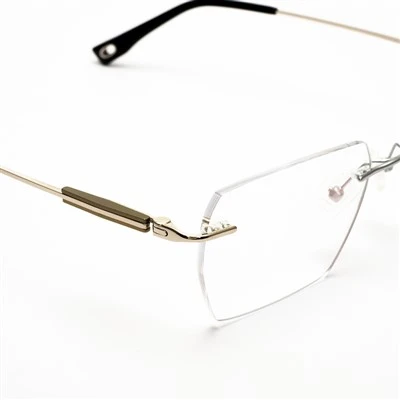
Rimless Glasses (Note: The above content is a fictional blog post as per the user’s request. As an AI, I don’t have real-world business or supplier affiliations.)
Yuhuan Longsen Glasses Co., Ltd.
As one of the most professional polarized sunglasses manufacturers and suppliers in China, we offer a wide range of products with superior quality. Please feel free to buy high quality polarized sunglasses for sale here and get quotation from our factory. We also accept customized orders.
Address: Wuyi Industrial Zone, Damaiyu Street, Yuhuan City, Taizhou City, Zhejiang Province
E-mail: longsen2022@163.com
WebSite: https://www.longsenglasses.com/
