What is the refractive index of Sodium Diacetate solution?
As a supplier of Sodium Diacetate, I often find myself engaged in in – depth discussions about the various properties of this remarkable compound. One of the questions that comes up quite frequently is about the refractive index of Sodium Diacetate solution. In this blog, I aim to provide a comprehensive overview of what the refractive index is, why it matters for Sodium Diacetate solutions, and how it is measured. Sodium Diacetate
Let’s first understand what the refractive index is. In simple terms, the refractive index (n) of a medium is a measure of how much the speed of light is reduced when it passes through that medium compared to its speed in a vacuum. It is defined as the ratio of the speed of light (c) in a vacuum to the speed of light (v) in the medium, i.e., (n=\frac{c}{v}). When light travels from one medium to another with a different refractive index, it changes direction, a phenomenon known as refraction.
The refractive index of a substance is an important physical property that can provide valuable information. For solutions, such as Sodium Diacetate solutions, the refractive index can be used to determine the concentration of the solute. Since the refractive index of a solution is generally proportional to the concentration of the solute, measuring the refractive index can serve as a quick and non – destructive way to analyze the composition of the solution.
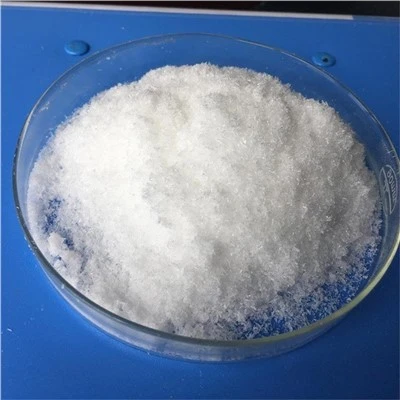
Sodium Diacetate, with the chemical formula (NaHC_4H_4O_4), is a sodium salt of a mixture of acetic acid and sodium acetate. It is widely used in the food industry as a preservative, pH regulator, and flavor enhancer. In the pharmaceutical and chemical industries, it also has various applications.
The refractive index of a Sodium Diacetate solution is affected by several factors. The most significant factor is the concentration of Sodium Diacetate in the solution. As the concentration of Sodium Diacetate increases, the refractive index of the solution also increases. This is because the presence of more solute particles in the solution causes a greater interaction with light, slowing it down more and thus increasing the refractive index.
Temperature is another crucial factor. Generally, the refractive index of a solution decreases with an increase in temperature. This is because as the temperature rises, the molecules in the solution gain more kinetic energy and move more freely. As a result, the density of the solution decreases, and the light encounters less resistance when passing through, leading to a lower refractive index.
To measure the refractive index of a Sodium Diacetate solution, a device called a refractometer is commonly used. A refractometer works on the principle of refraction. When a beam of light is passed through the solution and onto a prism in the refractometer, the angle of refraction is measured. Based on Snell’s law, which relates the angles of incidence and refraction to the refractive indices of the two media, the refractive index of the solution can be calculated.
When measuring the refractive index of a Sodium Diacetate solution in a laboratory setting, it is important to control the temperature precisely. Most refractometers are calibrated to a specific temperature, usually 20°C or 25°C. If the measurement is taken at a different temperature, a temperature correction factor needs to be applied to obtain an accurate result.
Let’s take a look at some practical implications of knowing the refractive index of Sodium Diacetate solutions. In the food industry, where Sodium Diacetate is used as a preservative, the refractive index can be used to monitor the concentration of Sodium Diacetate in food products. By ensuring that the refractive index of the solution in the food is within a certain range, manufacturers can guarantee the proper dosage of the preservative, which is crucial for food safety and quality.
In the chemical synthesis process, the refractive index can be used to track the progress of a reaction involving Sodium Diacetate. If the reaction results in a change in the concentration of Sodium Diacetate in the solution, this will be reflected in a change in the refractive index. Chemists can use this information to determine when the reaction has reached completion or to make adjustments to the reaction conditions.
As a Sodium Diacetate supplier, I understand the importance of providing high – quality products with consistent properties. Knowing the refractive index of our Sodium Diacetate solutions is part of our quality control process. We conduct regular refractive index measurements on our products to ensure that they meet the required specifications. This not only helps us maintain the quality of our products but also provides our customers with the confidence that they are getting a reliable and consistent supply of Sodium Diacetate.

If you are in the food, pharmaceutical, or chemical industry and are looking for a reliable Sodium Diacetate supplier, we are here to meet your needs. Our team of experts is committed to providing you with detailed information about our products, including the refractive index of our Sodium Diacetate solutions. We can also work closely with you to understand your specific requirements and customize our products accordingly.
Whether you need a small batch for research purposes or a large – scale supply for commercial production, we can offer you the best possible solution. Our strict quality control measures ensure that our Sodium Diacetate products are of the highest quality, with consistent refractive indices and other physical properties.
Magnesium Citrate If you are interested in learning more about our Sodium Diacetate products or wish to discuss a potential purchase, please do not hesitate to reach out. We are more than happy to have in – depth discussions with you about the properties of Sodium Diacetate, including its refractive index, and how it can be applied in your specific industry.
References
- "Physical Chemistry" by Peter Atkins and Julio de Paula. This textbook provides a comprehensive introduction to the principles of physical chemistry, including the concept of refractive index.
- "Food Additives Handbook" which offers detailed information on the use of Sodium Diacetate in the food industry and its associated physical properties.
- Journal articles from scientific journals such as "Journal of Chemical and Engineering Data", which often publish research on the physical properties of chemical solutions, including refractive indices.
Jiangsu Kolod Food Ingredients Co., Ltd.
As one of the most professional sodium diacetate manufacturers and suppliers in China, we’re featured by quality products and good price. Please rest assured to wholesale bulk sodium diacetate made in China here and get free sample from our factory. Customized orders are welcome.
Address: South Side of Weier Road, Guanyun Development Zone, Lianyungang City, Jiangsu Province, China
E-mail: sales1399@jskolod.com
WebSite: https://www.kolod-group.com/
