When someone comes to my shop asking about a 40-foot fire extension ladder, the first thing I don’t do is blurt out a price. I’ve been in the fire fighting ladder supply business for 12 years, and I’ve learned that fire chiefs, volunteer fire departments, and even private industrial safety teams don’t just need a number—they need to understand why that number is what it is. Last week, a volunteer fire chief from a small town in western Pennsylvania called me panicking because their old 40-footer had rusted through a rung, and they needed a replacement before the next fire season. We ended up talking for 45 minutes, not about the price, but about what makes a 40-foot ladder work for their crew. By the end, they told me they thought they’d be paying $1,200, but left understanding the range of costs and why some ladders are worth every extra dollar. If you’re in the market for a 40-foot fire extension ladder, let me walk you through what actually determines the cost, so you don’t overpay or end up with a ladder that can’t do the job. Fire Fighting Ladder

First, let’s get one thing straight: a 40-foot fire extension ladder isn’t a straight ladder that’s 40 feet long. It’s two (sometimes three) sections that slide out, so when it’s fully extended, it reaches 40 feet. For context, that’s tall enough to reach the third or fourth floor of a standard residential building, which is why it’s one of the most versatile ladders for both structure fires and rescue calls. But not all 40-foot extension ladders are created equal. The biggest factor in the cost is the material it’s made from. I see three main materials on the market today: aluminum, fiberglass, and carbon fiber. Each has its own pros, cons, and price tag.
Aluminum is the workhorse of fire service ladders. It’s lightweight, which is huge for firefighters who have to carry it up stairs or across uneven ground. For a long time, aluminum was the go-to because it’s cheap to manufacture, durable, and easy to repair. A basic aluminum 40-foot fire extension ladder will cost anywhere from $800 to $1,500. Wait, that’s a big range—why? It comes down to the gauge of the aluminum, the thickness of the rungs, and the quality of the locking mechanisms. Cheaper aluminum ladders use thinner gauge metal, which makes them lighter, but they can bend or twist under the weight of a firefighter and gear (OSHA recommends a ladder can support at least 750 pounds for fire service use). I sold a ladder like that to a small volunteer department five years ago, and six months later, they called me saying the top section had buckled when a firefighter climbed it with a hose. They got a free replacement, but that’s a cost no department wants to deal with, even if it’s under warranty.
Fiberglass ladders are more expensive, and for good reason. Aluminum conducts electricity, which is a huge safety hazard if you’re working near power lines. Fiberglass is non-conductive, so it’s the only material that meets NFPA 1931 standards for ladders used in areas with live electrical lines. A fiberglass 40-foot fire extension ladder will cost between $1,800 and $3,200. Again, the range depends on the quality of the resin used and how the sections are bonded. Cheaper fiberglass ladders can be flimsy, and if they get cracked (which happens often in rough fire ground conditions), they can become brittle and fail. The top-of-the-line fiberglass ladders I supply use a high-grade epoxy resin that’s 20% stronger than standard fiberglass, and they come with a 10-year warranty against defects. Most municipal fire departments go for fiberglass these days, because the risk of electrocution is too high to skip that extra safety feature.
Then there’s carbon fiber. It’s the new kid on the block, and it’s changing the game for fire service ladders. Carbon fiber is stronger than both aluminum and fiberglass, but it’s 30% lighter than aluminum and non-conductive, too. That makes it ideal for teams that have to carry ladders long distances or up multiple flights of stairs. The only downside? It’s pricey. A 40-foot carbon fiber fire extension ladder will set you back $3,500 to $5,000. The departments that buy these are usually urban fire services with large crews that do a lot of high-rise rescue work, or industrial teams that use ladders in electrical substations or power plants. I’ve only sold three carbon fiber ladders in the last two years, but each came with a note from the chief saying their crew’s fatigue levels dropped by almost half during ladder drills. It’s a big investment, but for the right team, it pays off in safety and efficiency.
But material isn’t the only thing that affects cost. There are a dozen other features that can add a few hundred dollars to the price, and most of them are worth considering. Let’s start with the locking system. The two most common locking mechanisms for extension ladders are the rope-and-pulley system and the telescoping lock. Rope-and-pulley is standard on most older ladders, and it’s reliable, but the rope can fray over time, especially if it’s exposed to heat or chemicals on the fire ground. Telescoping locks, on the other hand, use metal latches that engage automatically when the section slides into place. They’re faster to deploy, which is a big deal during an emergency when every second counts. A ladder with a telescoping lock will cost $200 to $400 more than one with a rope-and-pulley.
Next, there’s the rung design. Standard rungs are flat, but some ladders have “shoe rungs” with a textured surface that prevents boots from slipping, even when they’re wet or covered in soot. That might sound like a small thing, but I’ve seen a firefighter slip off a flat rung during a roof rescue last year, and it almost turned into a tragedy. Shoe rungs add $100 to $200 to the cost, but they’re a non-negotiable for most modern fire departments. Also, the spacing between rungs matters. NFPA standards require rungs to be 12 inches apart, but some manufacturers make rungs 10 inches apart for better grip, especially in bad weather. That’s another small upgrade that adds a bit to the price but makes the ladder much safer to use.
Then there’s certifications. Any fire service ladder you buy should be certified to meet NFPA 1931, the National Fire Protection Association’s standard for fire department ladders. That certification isn’t cheap to get, and manufacturers that skip it to cut corners can sell ladders for $200 or $300 less, but they’re not legal for use in most municipal departments. I always tell my customers: if a ladder doesn’t have an NFPA 1931 label, don’t buy it. Even if it works for a weekend project, it’s not rated to hold the weight of a firefighter with full gear, and it could get someone hurt. That certification adds a few hundred dollars to the cost, but it’s the most important part of the price.
Warranty is another factor. I offer a 5-year warranty on all the ladders I supply, which covers defects in materials and workmanship, including the locks, rungs, and metal sections. Some cheaper ladder suppliers only offer a 1-year warranty, which tells you they don’t stand behind their product. A longer warranty means the manufacturer has tested the ladder to last, not just pass a quick safety check. Last year, a customer had a ladder with a faulty locking mechanism, and I replaced it for free under warranty. It cost me a little, but it also built trust with a customer who came back to buy two more ladders for their station.
Wait, let’s talk about something most people don’t consider: condition and sourcing. If you’re looking for a used 40-foot fire extension ladder, you can find one for as little as $500, but I never recommend that. Used ladders might have hidden damage—cracks in the aluminum, frayed ropes, or weak locking mechanisms—that you can’t see on the surface. A friend of mine who runs a used equipment business had a used fiberglass ladder come in that had a tiny crack from a fall, and it broke when a firefighter tested it. They had to scrap it, so the $500 they got for it was a total loss. New ladders might cost more, but they come with a warranty and you know exactly what you’re getting. Also, make sure you’re buying from a reputable supplier, not a generic hardware store. The big box stores sell ladders for $300, but those are for residential use, not fire service. They don’t meet NFPA standards, and they won’t hold up under the conditions you’ll face on a fire ground.
Let me give you a real example from last month. A fire chief from a small department in Ohio called me, and they had a budget of $1,200 for a 40-foot ladder. I looked at their station’s needs: they work in rural areas, often near power lines, so non-conductive was a must. The aluminum ladders were too dangerous, and their budget couldn’t stretch to fiberglass. Wait, but we have a mid-grade fiberglass 40-foot ladder that’s on sale for $1,150, which fit their budget perfectly. It’s not the top-of-the-line epoxy resin, but it meets all NFPA standards, has a telescoping lock, and a 5-year warranty. The chief picked it up last week, and he sent me a text saying his crew already tested it during a training drill, and it’s the most reliable ladder they’ve had in years. That’s the kind of fit I love—matching the right ladder to the department’s needs, not just selling the most expensive one.
So putting it all together, let’s recap the typical costs for a quality 40-foot fire extension ladder: basic aluminum (no frills, rope-and-pulley) $800-$1,200; mid-grade aluminum with safety upgrades $1,200-$1,500; basic fiberglass $1,800-$2,200; mid-grade fiberglass with shoe rungs and telescoping locks $2,200-$2,800; top-of-the-line fiberglass or entry-level carbon fiber $2,800-$3,500; premium carbon fiber $3,500-$5,000. That’s a wide range, but every dollar is tied to safety, durability, and performance.
Here’s the thing I want you to remember: a fire ladder isn’t a tool you shop for on price alone. When you’re on a fire, every second counts, and every part of your equipment has to work when you need it to. A $800 ladder that fails during a rescue is a bad investment, even if it’s cheaper. A $3,000 ladder that lasts 15 years and saves lives is a great investment.
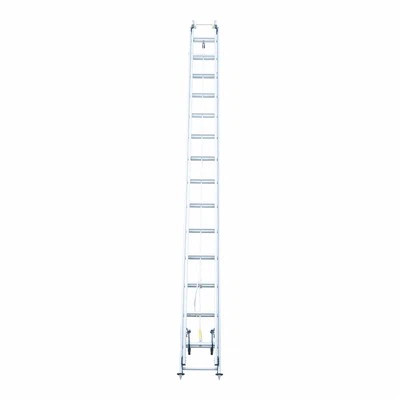
If you’re a fire chief, safety officer, or part of a team looking for a 40-foot fire extension ladder, I’m here to help. I don’t just sell ladders—I help you pick the right one for your needs, your budget, and your community. We can talk about your training drills, the areas you respond to, and the specific hazards your crew faces, and I’ll give you an honest breakdown of what you need, no hidden fees, no upselling. Let’s connect to discuss your requirements.
Fire Exhaust Fan References
National Fire Protection Association. (2020). Standard for Fire Service Ladder Design, Performance, and Service Life (NFPA 1931). National Fire Protection Association.
International Association of Fire Chiefs. (2021). Fire Department Ladder Procurement Guide. International Association of Fire Chiefs.
OSHA. (2022). 29 CFR 1910.25 – Ladders. Occupational Safety and Health Administration, U.S. Department of Labor.
Taizhou Mingxin Fire Protection Technology Co., Ltd.
As one of the most professional fire fighting ladder manufacturers in China, we warmly welcome you to buy bulk high quality fire fighting ladder made in China here from our factory. Good service and low price are available.
Address: Group 3, Xinzhouqiao Community, Jingtai Road Subdistrict, Hailing District, Taizhou City (within Taizhou Station North Logistics Management Co., Ltd.)
E-mail: mingxinxf@163.com
WebSite: https://www.mxfiretech.com/
